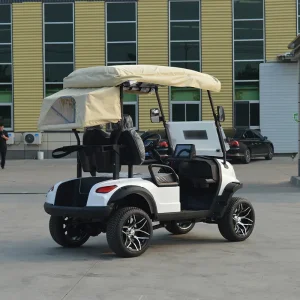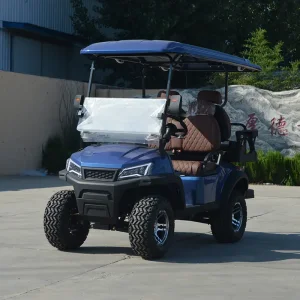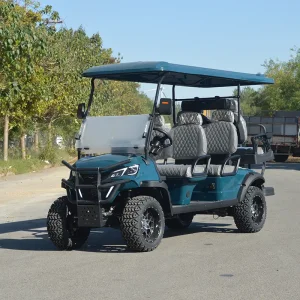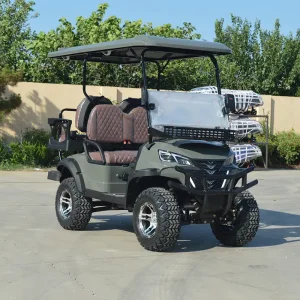
High-Efficiency Motorized Bag Carts & Electric Utility Buggies
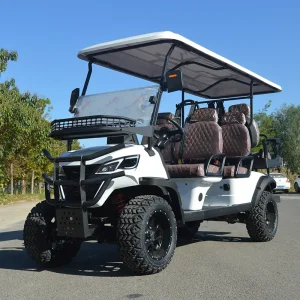
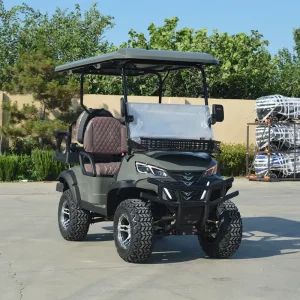
Explore Tier-1 engineered electric golf carts, multi-passenger transports, and heavy-duty utility bag haulers directly available from our Dezhou manufacturing facility.
The Global Economics of Motorized Bag Carts & Low-Speed Utility Fleets
A rigorous examination of procurement trends, supply chain dynamics, and structural total cost of ownership (TCO) shifts across the worldwide light electric mobility sector.
The global demand for cheap motorized bag cart suppliers and factories has evolved beyond recreational golf applications into an indispensable pillar of commercial intra-facility logistics. Worldwide, high-end golf resorts, international passenger terminals, luxury hospitality compounds, and massive automated distribution campuses are aggressively modernizing their service fleets. The traditional paradigm of high-cost, heavily branded Western intermediaries is being dismantled by direct engineering collaborations with original equipment manufacturing (OEM) hubs in China, where integrated chassis fabrication, advanced motor manufacturing, and scalable battery assembly converge.
Historically, commercial fleet operators paid significant markups to regional brand distributors for motorized bag haulers, caddie carts, and light utility vehicles. However, global market indicators reveal that institutional buyers are increasingly prioritizing capital expenditure efficiency without compromising lifecycle resilience. By establishing direct sourcing pipelines with dedicated factories, commercial operations eliminate multi-tiered distributor margins, securing custom vehicle specifications at a fraction of Western landed retail prices.
Furthermore, decarbonization mandates adopted by municipalities and private corporations across North America, the European Union, the Middle East, and Southeast Asia have accelerated the obsolescence of small internal combustion engines (ICE). Facilities that formerly relied on petrol-driven utility tugs and bag haulers face strict emissions compliance protocols and escalating maintenance overheads. Direct-from-factory motorized bag carts and electric golf platforms operating on 48V and 72V architectures offer zero tailpipe emissions, silent operation, and up to a 75% reduction in recurring preventative maintenance expenditures.
For sourcing managers and corporate procurement teams, the critical objective is distinguishing between generic low-cost consumer buggies and heavy-duty, factory-engineered industrial-grade motorized carts. A authentic OEM manufacturer maintains rigorous control across the entire production matrix: robotic chassis welding, cathodic electrodeposition (e-coating) for corrosion resistance, programmable intelligent motor controllers, and automotive-grade battery management systems (BMS).
55% CAPEX Reduction
Eliminate three tiers of importer and dealer overheads by contracting directly with vertically integrated Chinese vehicle manufacturing plants.
Lithium LiFePO4 Transition
High-density lithium iron phosphate chemistries deliver over 3,500 continuous discharge cycles, eliminating lead-acid watering routines entirely.
Customized Payload Engineering
Reinforced dual-rail tubular steel spaceframes engineered to transport oversized bag racks, dual-caddie equipment, and up to 800 kg total payload.
Homologation Compliance
Factory-supported CE certification, ISO 9001 quality audits, and configurable lighting/braking packages conforming to FMVSS 500 and EU L6e/L7e guidelines.
Inside Tier-1 Factory Engineering: Reliability Beneath the Shell
A technical whitepaper breakdown of motor torque dynamics, intelligent controller programming, and electrodeposition anti-corrosion defense mechanisms.
AC Induction vs. Permanent Magnet
Modern motorized bag carts utilize brushless AC asynchronous or Permanent Magnet Synchronous Motors (PMSM) operating at 4 kW to 7.5 kW nominal power. Unlike archaic DC brushed designs, brushless powertrains offer zero carbon-brush wear, regenerative braking on downslopes, and superior hill-holding torque essential for undulating golf terrains and elevated industrial ramps.
Automotive BMS & Thermal Balancing
Integrated 48V/72V LiFePO4 packs feature multi-channel CAN-bus Battery Management Systems. Real-time telemetry monitors cell voltage delta, internal impedance, and thermistor arrays. Automated cell equalization prevents thermal runaway and guarantees balanced depth-of-discharge, ensuring pack health remains above 80% capacity after 6+ years of heavy daily utilization.
Cathodic E-Coat & Suspension Geometry
Factory chassis structures undergo hot-dip degreasing and cathodic electrophoretic immersion coating exceeding 1,000 hours of ASTM B117 salt spray testing. Front independent MacPherson-style struts paired with rear leaf springs and hydraulic damping absorb continuous shock loads on uneven turf, shielding electronic bag racks and golf gear from vibrational fatigue.
Localized Application Scenarios: Where Motorized Bag Carts Excel
Deployment metrics across high-throughput commercial, hospitality, sports, and aviation micro-transit environments.
Championship Golf Courses & Country Clubs
Navigating 18 to 36 holes on demanding topographies requires reliable motorized bag carts and caddie buggies. Configured with quick-release multi-bag racks, sand bottles, and score card displays, 72V electric units easily conquer 25% slopes without bogging down or disturbing golfers with mechanical noise.
Luxury Resorts, Spas & Private Gated Communities
In high-end eco-resorts and gated villa neighborhoods, motorized bag buggies pull double-duty: seamlessly shuttling guest luggage and personal equipment from main gates to private chalets. Custom automotive paints, plush ergonomic seating, and silent electric drives elevate guest satisfaction.
Airport Terminals & VIP Baggage Handling
Inside expansive aviation concourses and inter-terminal tarmac walkways, motorized baggage carts provide safe, zero-emission point-to-point transit for VIP bags and expedited luggage. Low-profile tire configurations protect polished indoor terminal flooring while maintaining precise maneuvering.
Mega Warehouses & Manufacturing Campuses
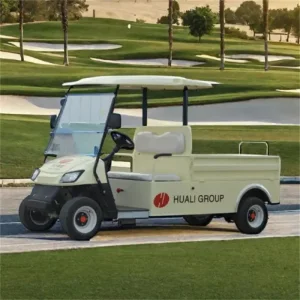
Intra-logistics at 100,000+ m² manufacturing plants require maintenance engineers and quality inspectors to carry tools, testing gear, and cargo bags across facilities. Our heavy-duty 48V cargo truck buggies offer robust drop-side aluminum beds capable of all-day tool and parts transport.
Municipal Parks, Botanical Gardens & Zoos
Conservation zones and botanical exhibits enforce strict noise and fume bans. Electric motorized bag buggies allow maintenance and horticulture personnel to carry heavy supplies, guest gear, and equipment across pedestrian walkways without alarming fauna or disrupting visitors.
Sports Complexes & Athletic Stadium Fleets
From university athletic campuses to international soccer stadiums, moving medical stretchers, training kits, and heavy equipment bags swiftly along sidelines requires high-maneuverability buggies with instantaneous electric reverse and compact turning radiuses under 3.5 meters.
Comparative Specification Matrix: Selecting Your Powertrain
A systematic technical evaluation comparing standard lead-acid platforms with advanced 48V and 72V lithium-ion architectures for fleet procurement directors.
| Evaluation Parameter | Legacy Lead-Acid 48V | Factory 48V LiFePO4 System | Industrial 72V AC Lithium System |
|---|---|---|---|
| Continuous Cycle Life | 500 – 750 discharge cycles (2–3 years) | 3,000 – 4,000 cycles (8–10 years) | 3,500 – 5,000 cycles (10+ years) |
| Peak Motor Torque | Moderate (sluggish on steep inclines) | High linear torque (instantaneous delivery) | Extreme torque reserve (tackles 30% grades loaded) |
| Vehicle Weight & Payload Impact | Adds 140–180 kg ballast; reduces payload | Saves ~110 kg; preserves chassis dynamics | Optimized weight ratio; supports 8-passenger or cargo bed |
| Daily Charging Duration | 8 to 10 hours slow trickle charging | 2.5 to 4 hours with high-speed DC onboard charger | 2 to 3.5 hours; supports opportunity fast-charging |
| Maintenance Routine | Bi-weekly distilled water topping, post cleaning | Zero scheduled fluid maintenance; sealed pack | Zero pack maintenance; automated remote BMS monitoring |
| Primary Deployment Scenarios | Budget-restricted private single carts | Flat courses, standard 2-seater bag carts, gated villas | Heavy-duty 4–6 seat buggies, hilly resorts, utility cargo |
Technology Roadmap: The Next Era of Intelligent Motorized Carts
How artificial intelligence, IoT telematics, and regenerative solar integration are transforming light commercial utility vehicles.
Solar Canopy Integration
Factory-integrated monocrystalline solar roofs continuously trickling 150W–300W clean solar energy directly into the traction battery, extending daily operating range by 15–25% in high-irradiance climates.
IoT Cloud Telematics
4G/5G GPS telematics modules allowing fleet controllers to remotely monitor real-time battery status, vehicle geo-fencing, tamper alerts, speed throttling, and automated error-code telemetry from a centralized dashboard.
Automated Follow-Me Radar
Ultra-wideband (UWB) and LiDAR-assisted autonomous follow-me tracking for caddie bag haulers, enabling hands-free automated trailing behind players and ground personnel across complex golf terrains.
Modular Utility Adapters
Standardized quick-docking rear frame hitches enabling rapid 60-second swaps between 4-bag golf caddie holders, enclosed security trunks, hydraulic lift beds, and airport stretcher modules.
Macro B2B Procurement Solutions: From Workshop to Destination Port
Demystifying the export workflow, container loading optimization, and international customs clearance for overseas buyers.
SKD vs. CBU Container Loading
Maximize shipping economics with semi-knocked-down (SKD) steel-frame crating, packing up to 18 units in a standard 40ft HQ container, or choose completely built-up (CBU) roll-on roll-off delivery for immediate turn-key deployment upon dock arrival.
Complete Homologation Dossiers
Export orders ship with comprehensive homologation documentation: CE conformity certificates, UN 38.3 lithium battery transportation safety reports, MSDS dossiers, and factory-issued VIN codes facilitating smooth local Low-Speed Vehicle (LSV) road registration.
Guaranteed Spares & Direct Support
Every commercial bulk order is backed by a 5-year structural frame warranty and access to critical wear-and-tear spares (bushings, brake pads, controller harnesses, solenoid switches). Our engineering team provides direct video diagnostic sessions to local maintenance technicians.
Frequently Asked Questions: Sourcing Motorized Bag Carts
Direct, unhedged answers to the questions commercial buyers, resort fleet managers, and regional distributors ask most often.
What makes sourcing directly from Chinese motorized bag cart factories more advantageous than local dealers? ▼
Can your motorized bag carts and golf buggies be registered as street-legal low-speed vehicles (LSV)? ▼
What is the actual operational lifespan and maintenance cost of a 72V LiFePO4 battery pack? ▼
How does your factory protect the cart chassis against coastal salt-air and tropical humidity? ▼
Can you support custom branding, body colors, and proprietary bag holder designs (OEM/ODM)? ▼
What is the minimum order quantity (MOQ) and standard production lead time? ▼
How are replacement parts handled when overseas technicians need troubleshooting support? ▼
Explore Additional Factory-Direct Carts & Heavy-Duty Models
Review additional commercial configurations including solar-assisted touring carts, 4-wheel off-road buggies, and high-capacity multi-seater transporters.