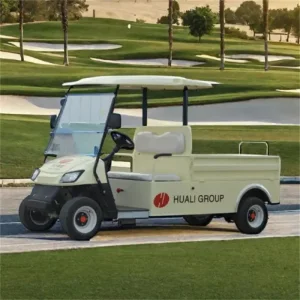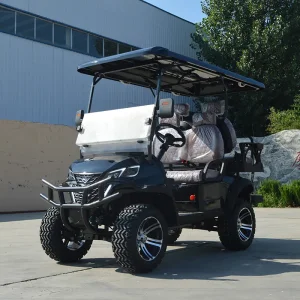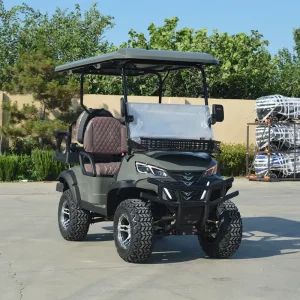
Integrated Fleet & Body Shell Configurations
Explore high-tensile, factory-fitted electric golf carts and low-speed sightseeing architectures manufactured with premium aerodynamic body contours.
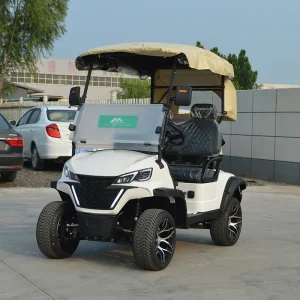
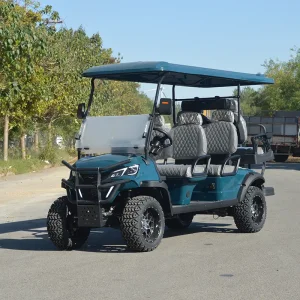
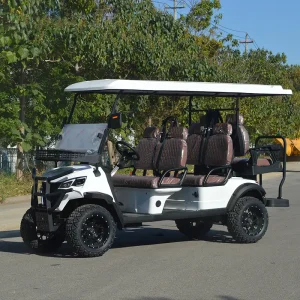
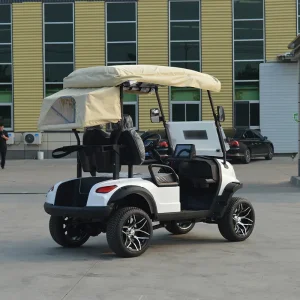
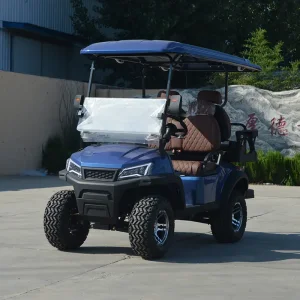
The Global Landscape of Golf Car Body Manufacturing
A macroeconomic paradigm shift from standard golf course fairways to multi-utility Low-Speed Vehicles (LSVs) and urban Neighborhood Electric Vehicles (NEVs).
The Proliferation of LSV & PTV Classifications
Over the past decade, the global golf car market has radically decoupled from its traditional habitat of green courses. Municipal low-speed vehicle regulations, resort community expansions across North America, the Middle East, and Southeast Asia, and closed-campus logistics have transformed demand. Body panels are no longer designed merely for cosmetic coverage; they require strict aerodynamic drag optimization, pedestrian collision compliance, and extended payload integration.
Supply Chain Realignment & China Tier-1 Clustered Agility
International OEMs face severe challenges balancing low-volume high-mix production costs in localized facilities. China's sophisticated manufacturing ecosystem in regions such as Shandong and Jiangsu provides unrivaled tooling economics, rapid prototype iterations, and multi-tier material sourcing. By integrating high-precision thermoforming molds, robotic trimming, and automated multi-layer paint lines, China suppliers deliver automotive-grade body shells at structural cost advantages.
Total Cost of Ownership (TCO) & Fleet Survivability
Commercial fleet operators evaluate body hardware based on lifecycle durability rather than purely initial purchase price. In humid coastal luxury resorts, desert temperatures exceeding 50°C, or rigorous multi-shift industrial warehousing complexes, body panels must withstand persistent UV exposure, airborne salinity, and mechanical collisions without structural cracking, chalking, or delamination.
Engineering the Shell: Polymers, Composites & Precision Forming
A rigorous comparative analysis of structural body substrates utilized by leading China golf car body manufacturers to balance impact resistance, mass, and environmental longevity.
| Material Category | Forming Technology | Tensile Strength & Impact (kJ/m²) | UV Resistance & Finish Quality | Ideal Fleet Application Profile |
|---|---|---|---|---|
| Co-Extruded ABS/PMMA (Acrylic-Capped ABS) | Heavy-Gauge Vacuum Thermoforming + 5-Axis CNC Trimming | High flexural modulus; notched Izod impact up to 25–30 kJ/m² | Exceptional Class-A deep gloss; 100% monolithic UV barrier; no post-paint peeling | Premium resort golf carts, urban private low-speed vehicles, and branded commercial rentals |
| Fiberglass Reinforced Polymer (FRP / GRP) | Closed-Mold RTM (Resin Transfer Molding) / Hand Lay-up | Extreme tensile rigidity; brittle failure modes under high localized point collision | Requires pigmented gel-coats; vulnerable to micro-fissures and spider cracking over extended thermal cycling | Heavy industrial utility flatbeds, retro-style sightseeing trams, low-volume custom coaches |
| Sheet Molding Compound (SMC) | High-Pressure Heated Hydraulic Compression Tooling | Exceptional isotropic structural strength; excellent structural creep stability | High heat resistance; supports automated electrostatic E-coat & baking paint lines | Standardized high-volume fleet production, security patrol vehicles, and automotive-adjacent LSVs |
| High-Density Polyethylene (HDPE / TPO) | Rotational Molding or Injection Compression | Unsurpassed impact resilience; self-recovering elasticity under minor dents | Satin/matte texture; challenging for adhesive bonds or high-gloss paint finishes | Rough-terrain utility trucks, maintenance utility beds, agricultural work buggies |
5-Axis Laser & CNC Trimming Accuracy
Traditional manually trimmed fiberglass shells create massive tolerance stack-ups during chassis integration. Chinese Tier-1 suppliers employ calibrated robotic 5-axis routers. This achieves mounting hole and contour positional tolerances within ±0.3mm, eliminating panel stresses, body squeaks, and fastener fatigue during high-vibration operation.
Automotive Polyurethane Paint Infrastructure
To withstand extreme exterior weathering, modern facilities operate multi-stage dust-free painting lines. Formulations incorporate dual-coat polyurethane with concentrated hindered amine light stabilizers (HALS), guaranteeing over 3,000 hours of continuous QUV accelerated weathering exposure without visible delta-E color deviation.
Lightweighting Yields Extended Range
Every 10% reduction in vehicle curb weight translates to a 6-8% expansion in operational battery range or a corresponding reduction in required lithium kWh capacity. Switching from thick-wall fiberglass to precision thermoformed thin-gauge, high-modulus polymers delivers up to 35-40 kg of structural mass savings per 4-passenger golf car.
Industrialized OEM/ODM Solutions for Overseas Brands
End-to-end manufacturing workflows engineered to compress the lead time between initial CAD styling and containerized overseas fulfillment.
Digital Class-A Surfacing & Rapid Tooling
Direct translation of client concept sketches into parametric CAD models with optimized draft angles, rib structures, and parting lines. In-house aluminum and cast epoxy rapid tooling programs compress prototype lead times down to 25 calendar days, cutting initial capital outlay by 60% relative to Western counterparts.
SKD & CKD High-Density Packing
International freight costs dictate container packing optimization. Body modules are engineered with stacking interlocking nesting geometry. A standard 40-foot HQ container accommodates up to 300% more body kits in Completely Knocked Down (CKD) configurations with dedicated microfoam separators that prevent transit abrasions.
Chassis Kinematics Cross-Compatibility
Body sets are engineered for modular adaptability. Front cowls, rear scuffs, rocker panels, and roof canopies are configured to dock onto universal tubular steel or extruded aluminum chassis configurations (including Club Car, EZGO, Yamaha architectures, and custom independent platform designs).
Integrated Lighting & Wire Harness Looms
Body sub-assemblies can arrive pre-fitted with automotive-grade LED headlight/taillight pods, side turn indicators, horn brackets, and watertight IP67 wire harnesses, dramatically streamlining final vehicle assembly takt times on customer production lines.
Field-Validated Resilience Across Global Environments
Specific environmental conditions require differentiated body panel properties to prevent premature aging and structural failure.
Tropical Maritime Resorts & High Salinity Islands
Standard metallic fasteners and inferior paint coatings degrade rapidly under constant salt-laden mist. Our specialized marine-grade body kits integrate SUS304 stainless steel threaded inserts molded directly into the composite, paired with acrylic surface caps that eliminate corrosive oxidation and peeling.
Desert Climes & Extreme Heat Deflection
High ambient thermal exposure (e.g., GCC regions, Arizona) causes cheap recycled polymers to warp and sag. Utilizing heat-stabilized raw resins with a Heat Deflection Temperature (HDT) exceeding 95°C at 0.45 MPa ensures structural shape retention across extended sunbaked outdoor deployments.
Urban Gated Communities & Public Micro-Mobility
For street-legal Low-Speed Vehicles (LSV), body panels must integrate front bumpers certified for low-speed impact energy absorption without transmission into the passenger safety cell, complying with DOT FMVSS Part 500 standards.
Technology Roadmap: 2025–2035 Structural Evolution
Anticipating the technological disruptions that will redefine light electric mobility exterior engineering over the next decade.
Integrated Photovoltaic (BIPV) Roof Assemblies
The boundary between body panel and electrical powertrain is dissolving. Next-generation roofs feature curved, highly resilient monocrystalline solar cells integrated directly into the polymer encapsulation matrix during the lamination process, generating up to 350W peak charging power without mechanical drag.
Embedded Smart IoT & Telematics Radomes
As autonomous fleet management, geo-fencing, and keyless mobile dispatch enter luxury golf and municipal transport, front cowl shells now feature dedicated RF-transparent apertures that house high-frequency LiDAR, radar arrays, and GPS antennae securely behind automotive-grade radomes.
Recyclable Bio-Polymers & Circular LCA
Strict European Union environmental regulations (including End-of-Life Vehicle targets) demand non-toxic, easily recyclable body polymers. Tier-1 R&D is pivoting toward single-polymer construction—ensuring cowl, rocker, and dashboard components can be shredded and remelted without complex chemical disassembly.
Procurement & Engineering FAQ
In-depth responses to critical engineering, quality assurance, tooling, and supply chain queries raised by procurement teams.
What are the key structural differences between ABS thermoformed body panels and traditional fiberglass (FRP)?
How do China suppliers prevent color fading and surface chalking under extreme UV radiation?
Can custom body kit designs be created for existing legacy golf cart chassis (e.g., Club Car, EZGO)?
What are the tooling costs and minimum order quantities (MOQ) for proprietary body shell development?
How are large-volume body kits packaged to avoid scratching and damage during maritime container shipping?
Do body panels meet safety and flammability regulations for public low-speed transit?
Heavy-Duty, Utility & Extended Passenger Lineup
Discover specialized off-road, cargo utility, and high-capacity low-speed vehicles engineered with durable composite enclosures.