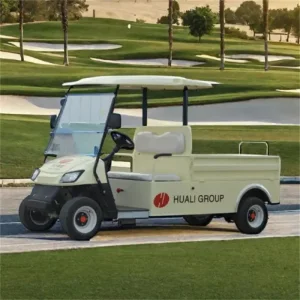
Featured Commercial & Utility Fleet Solutions
Explore precision-engineered 2, 4, and 6-seater platforms direct from China's premier manufacturing lines, equipped with next-generation AC drives and modular LiFePO4 battery infrastructure.
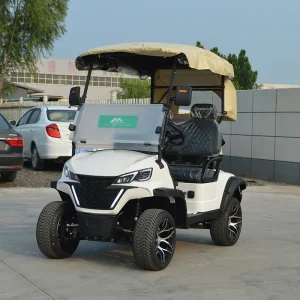
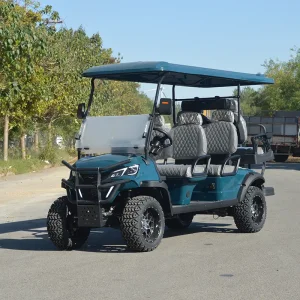
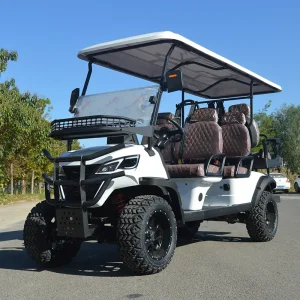
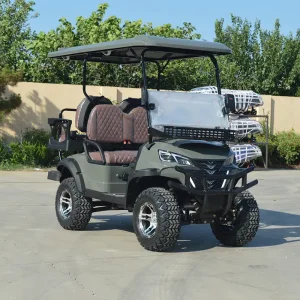
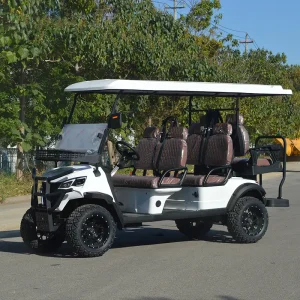
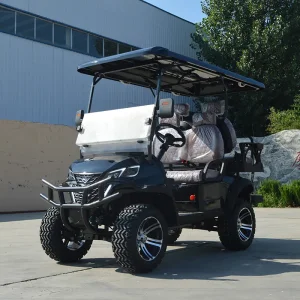
The Evolution of "Golf Car Old" Manufacturing & Global Fleet Transformation
Analyzing the strategic migration from legacy 36V/48V lead-acid DC carts to state-of-the-art modular 72V AC lithium architecture across global municipal, resort, and commercial sectors.
Legacy Fleet Phase-Out
For decades, global fleet operators relied on traditional 36V and 48V series DC powertrains with flooded lead-acid battery packs. Today, the operational overhead of acid watering, terminal corrosion, high tare weight, and low regenerative capability is rendering legacy golf car models obsolete. Modern factories in China now engineer direct drop-in modernization kits and integrated replacement chassis.
The 72V LiFePO4 Revolution
Contemporary fleet operators demand higher current density and rapid turnaround cycles. The industry standard has definitively transitioned toward 72V lithium iron phosphate (LiFePO4) systems. Operating at 72V reduces thermal dissipation and resistive line loss, allowing vehicles to achieve steeper gradeability (up to 30%) while sustaining consistent peak torque throughout the full discharge profile.
Intelligent Telematics & BMS
Fleet management has shifted from manual paper logs to cloud-connected IoT monitoring. Leading Chinese manufacturers now integrate CAN-bus architecture directly linking the motor controller, electronic dashboard, and battery management system (BMS). Remote geofencing, algorithmic speed governs, real-time SoC telemetry, and predictive thermal alerts now come standard.
Global Procurement Demands & Technical Spec Matching
International enterprise procurement managers must evaluate mechanical durability, structural anti-corrosion treatments, and powertrain efficiencies to protect Capex investments across varying climatic zones.
| Evaluation Parameter | Legacy Fleet Standards (Old Spec) | Modern Chinese Factory Platform (72V OEM) | Commercial Value & TCO Impact |
|---|---|---|---|
| Powertrain Architecture | 36V/48V Series DC Motor, Mechanical Brushes | 72V Asynchronous AC Induction / Permanent Magnet Sync (PMSM) | Eliminates Brush Wear +35% Energy Efficiency |
| Energy Storage System | Flooded Lead-Acid / Absorbed Glass Mat (AGM) | Automotive-grade LiFePO4 with Intelligent Smart CAN-BMS | Zero maintenance, 3,500+ deep cycles, 60% payload weight cut |
| Chassis Engineering | Basic painted stamped steel prone to rust | Robotic-welded high-tensile tubular steel, hot-dip electrophoresis (E-coat) | Withstands high-salinity coastal resorts & tropical humidity |
| Control Systems | Resistor step-coils or analogue controllers | Curtis / Enpower Digital Programmable Vector Controllers | Software parameter tuning, geofencing, regenerative braking |
| Charging Infrastructure | External bulky transformers, 8-10 hour cycle | Onboard IP67 high-frequency smart charger with solar roof integration | Opportunity charging (2-3 hrs), reduced grid strain |
Turnkey Solutions Across Diverse Industrial Applications
Engineered for extreme duty cycles: tailoring speed envelopes, seating configurations, and auxiliary cargo beds for specialized operational environments.
Luxury Hospitality & Eco-Resorts
Resort fleets demand ultra-quiet operation, opulent upholstery, and weather-sealed passenger pods. Chinese OEM lines configure custom 4-seater and 6-seater extended wheelbases, custom metallic automotive paints, onboard audio packages, and silent helical-cut gearboxes for seamless guest shuttles on pristine estates.
Industrial Logistics & Warehousing
Heavy manufacturing compounds require rugged utility cargo carts. Replacing vintage vehicles with 48V/72V utility cargo variants featuring diamond-plate aluminum cargo boxes, hydraulic dump beds, and high-capacity tow hitches provides reliable logistics moving payloads up to 1,000 kg across manufacturing campuses.
Municipal Law Enforcement & Patrol
Airports, pedestrian plazas, and gated suburban districts utilize dedicated patrol platforms. Factory upgrades equip specialized low-speed vehicles (LSV) with 360-degree high-candela strobe lightbars, PA speaker public address sirens, lockable storage compartments, and auxiliary 12V DC step-down converters for radio communications.
Localized Homologation, Safety Compliance & Factory QA
Navigating complex international road legalities requires a mature factory with comprehensive testing protocols and authentic certification capabilities.
DOT & FMVSS 500 (USA)
Low-Speed Vehicle (LSV) classification in North America requires strict adherence to Federal Motor Vehicle Safety Standard 500, including AS4 certified tempered windshields, three-point inertia seatbelts, illuminated side reflectors, and speed limits governed strictly between 20-25 mph.
EEC & L6e/L7e (Europe)
For street legality throughout the European Union, vehicles undergo full Whole Vehicle Type-Approval (WVTA). This necessitates electromagnetic compatibility (EMC) testing, dual-circuit hydraulic braking with mechanical parking systems, E-mark lighting, and audited ISO 9001 factory production controls.
Lithium UN38.3 & MSDS
All onboard lithium battery modules are packaged and tested under UN38.3 vibration, altitude, external short-circuit, and impact regimes. Certified sea freight dangerous goods packing guarantees smooth customs clearance at major global ports without shipment holds.
SKD / CKD Supply Support
To optimize customs duties and ocean freight logistics, vehicles can be supplied in Semi-Knocked-Down (SKD) or Completely-Knocked-Down (CKD) configurations with steel transport racking, custom wiring loom plug-and-play harnesses, and detailed bilingual assembly documentation.
Technology Roadmap & Future Outlook (2025–2030)
Leading Chinese manufacturing engineering teams are executing an ambitious development roadmap designed to integrate autonomous transport, bidirectional energy systems, and eco-friendly composite manufacturing.
Photovoltaic Hardtops
Monocrystalline solar cell integration embedded into aerodynamically formed ABS hardtop canopies. Yielding 300W-500W auxiliary charging capability, effectively extending continuous daily operational range by 25-30 km under tropical insolation.
Electronic EPS & EBS
Migration from manual rack-and-pinion steering to electronic speed-sensitive power steering (EPS) combined with 4-wheel electro-hydraulic regenerative disc braking, cutting pedal fatigue and regenerating battery capacity during downhill decelerations.
LiDAR & Vision Guidance
Field deployment of Level 2+ and Level 4 autonomous resort shuttles. Combining multi-line solid-state LiDAR sensors, ultrasonic proximity radar, and RTK-GPS centimeter-accurate waypoint navigation for driverless resort campus operations.
Cradle-to-Cradle Recyclability
Transition toward 100% recyclable PP thermoformed body panels, zero-hexavalent chromium electroplating, and standardized second-life battery pack enclosures engineered for post-fleet stationary energy storage grid applications.
Procurement & Engineering FAQ
Addressing key commercial, logistics, and technical questions asked by professional international fleet buyers, wholesalers, and project developers.
What is meant by "Golf Car Old" from Chinese suppliers?
In global trade and factory search parlance, "Golf Car Old" typically refers to two search intents: sourcing components or direct replacement platforms for traditional/legacy golf carts (such as legacy Club Car, EZ-GO, or Yamaha platforms), or established long-standing ("old-line") Chinese manufacturing factories that possess over 15 to 20 years of continuous specialized production history.
Why is 72V preferred over 48V for modern commercial fleets?
The 72V system allows the electric motor to produce equivalent or greater mechanical power (watts) at significantly lower current (amperage) compared to a 48V system. Lower current dramatically decreases resistive heat buildup inside the controller and wiring harnesses, improves long-term electrical reliability, and delivers vastly superior hill-climbing torque with full passenger loads.
Can Chinese manufacturers produce custom OEM branding?
Yes. Professional Chinese factories provide comprehensive OEM/ODM engineering services. This includes custom molded exterior body styling, unique Pantone/RAL polyurethane automotive paint finishes, laser-cut dealer logos on brush guards, custom stitched marine-grade vinyl seating, and custom programmed motor controller accelerations.
What is the standard container loading capacity for golf buggies?
Depending on whether the vehicles are shipped fully assembled (CBU) or partially knocked-down (SKD), a standard 40ft High Cube (40HQ) shipping container typically holds 6 to 8 fully assembled 4-seater carts. Using specialized steel stacking racks in SKD configuration, the container capacity can be increased to 16 to 24 units, greatly decreasing ocean freight costs per unit.
Heavy-Duty, Off-Road & Multi-Passenger Platforms
Complete your fleet specification review with our high-torque off-road models, multi-passenger touring buses, and versatile utility haulers direct from the factory production lines.