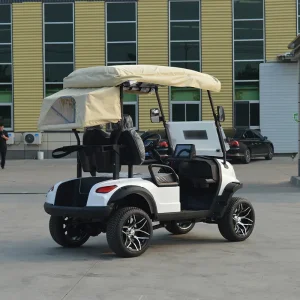
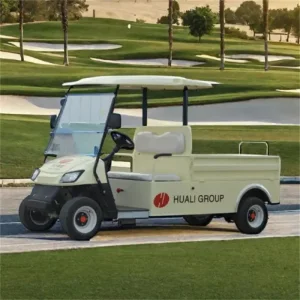
Factory Flagship Electric Vehicles & Rear Seating Platforms
Engineered chassis platforms built with integrated modular rear seating kits, compliant with ISO 9001 and CE low-speed vehicle criteria.





The Macro-Industrial Landscape of Golf Car Rear Seating Systems
In the contemporary low-speed electric vehicle (LSEV) landscape, golf carts have radically evolved from their original 18-hole sporting roots into versatile, multi-purpose Light Electric Vehicles (LEVs) and Personal Transportation Vehicles (PTVs). A pivotal driver behind this structural transformation is the rapid demand for high-grade rear seat assemblies—particularly composite flip-flop seats (flip-seat conversion kits) that swiftly pivot between a two-passenger bench and a heavy-duty cargo utility deck. Across master-planned communities, luxury seaside resorts, high-density academic campuses, commercial industrial parks, and municipal security beats, a golf buggy without rear utility seating is increasingly viewed as an under-leveraged asset.
From an engineering and regulatory perspective, rear seat systems represent far more than a simple cosmetic addition. They alter vehicle center-of-gravity (CoG), impose specific shear-stress demands on chassis subframes, and require rigorous safety standards including integrated automotive-grade retractable seatbelts (FMVSS 209 compliant), structural safety handrails, and non-skid, high-impact diamond-plate footrests. As procurement bodies worldwide seek to optimize vehicle lifecycle efficiency, sourcing directly from mature, vertically integrated Chinese engineering factories has transitioned from a cost-reduction tactic to a premier strategic imperative.
Structural Integrity & Metallurgy
Precision-cut robotic MIG/TIG welded tubular steel or aerospace 6061-T6 aluminum alloys. Laser-welded joint tolerances prevent mechanical fatigue, frame distortion, and weld cracking over rugged and unpaved topographies.
UV & Marine-Grade Weathering
High-density expanded virgin polyurethane cold-cure foam paired with marine-grade vinyl upholstery. Formulated with UV inhibitors (1000+ hrs QUVA) and mildew antimicrobial blockers to resist microcracking and color fade.
2-in-1 Dual Deck Ergonomics
Dual-axis balanced hinges facilitate seamless single-operator switching between passenger benches and reinforced cargo beds. Incorporates textured thermoplastic or extruded aluminum flatbeds with perimeter anti-spill lips.
China Factory Efficiency & End-to-End Supply Chain Hegemony
Analyzing the operational synergies, tooling precision, and cost structures that make Chinese suppliers the premier choice for global LSV distributors.
Hyper-Localized Industrial Clusters
Located in specialized manufacturing nodes such as Dezhou, Shandong, Chinese golf car factories benefit from complete Tier-1 to Tier-3 supplier ecologies. From raw steel tube extrusion to advanced multi-axis CNC bending, electrodeposition coating (E-coat), and rotational molding, entire production chains operate within an ultra-efficient 50km radius.
E-Coating & Automotive Surface Treatment
Unlike small retrofitting workshops reliant on single-layer spray painting, Chinese manufacturing giants integrate automated cathodic electrophoretic deposition (E-coat) accompanied by thermoset outdoor-grade polyester powder coating. This delivers an impermeable barrier surpassing 1,200 hours of ASTM B117 salt fog exposure.
Agile OEM/ODM Co-Development
With veteran in-house R&D teams proficient in SolidWorks, CATIA, and Moldflow simulation, Chinese plants readily engineer customized mounting brackets for Club Car Precedent/DS/Onward, EZGO TXT/RXV, Yamaha G29/Drive/Drive2, as well as proprietary vehicle chassis without excessive re-tooling lead times.
Material Science & Structural Testing Criteria
A rigorous engineering comparison between generic aftermarket assemblies and Chinese Tier-1 factory-grade OEM rear seat systems.
| Evaluation Parameter | Generic Aftermarket Retrofit Seat | Chinese Tier-1 OEM Standard (Leibin Grade) | Impact on Commercial Operations |
|---|---|---|---|
| Structural Subframe | 1.2mm - 1.5mm standard carbon steel pipe | 2.0mm - 2.5mm cold-rolled Q235 structural steel or 6061-T6 alloy | Prevents frame bending under continuous 400kg+ commercial loads. |
| Anti-Corrosion Finish | Single-stage direct aerosol/wet spray | Double-step: Cathodic E-coating + Polyurethane Powder Coat | Zero structural blistering or rust in high-saline coastal resorts. |
| Cushion Foam Core | Recycled bonded scrap foam (Density < 28kg/m³) | High-resilience high-density molded PU (Density > 48kg/m³) | Zero cushion sagging, retains ergonomic contour over 7+ years of daily use. |
| Cargo Deck Substrate | Brittle thin PVC / unreinforced plywood | UV-stabilized HDPE composite or embossed aluminum diamond plate | Impervious to water logging, acid, chemical spills, and heavy tool impacts. |
| Restraint Mounting | Non-reinforced sheet metal drill-outs | Integrated weld-nut reinforced FMVSS compliant harness bars | Ensures full compliance with local municipal safety and liability criteria. |
Worldwide Localized Application Scenarios
How versatile rear seat engineering adapts low-speed electric mobility across divergent commercial and industrial verticals.
Luxury Hospitality & Eco-Resorts
High-end resorts demand whisper-quiet transportation. Rear seats with built-in folding drink holders, integrated luggage containment rails, and luxury diamond-stitched leatherettes ensure guest comfort while maintaining rapid luggage transit utility on the fold-down deck.
Gated Residential & PTV Mobility
Across suburban master-planned developments in North America, Europe, and Australasia, golf carts operate as Primary Neighborhood Electric Vehicles (NEVs). Rear seats accommodate children and grocery provisions, bolstered by integrated 3-point ISOFIX-ready seat belts.
Industrial Facilities & Warehousing
Massive distribution hubs require agile logistics. When transformed to flatbed mode, rear seat units support maintenance toolboxes, heavy machinery spares, and parts transit, slashing personnel transit times across million-square-foot floorplates.
Campus Patrol & First Response
Security patrols require immediate multi-directional visibility. Rear-facing configurations afford security officers an unobstructed 180-degree situational view, with specialized bracketry accommodating strobes, radio gear, and medical emergency first-aid boxes.
Emerging Industry Trends in Rear Seating & Fleet Architecture
The next generation of golf buggy seating integrates smart hardware, lightweight biomaterials, and predictive manufacturing.
Smart IoT & Heated Cushion Modules
Future-ready rear seating kits are increasingly wired into the vehicle's central CAN-bus telemetry. Innovations include embedded seat occupancy sensors (linking to fleet management software to calculate passenger loads) and low-draw internal heating elements for year-round cold-climate operations.
Sustainable Bio-Polymers & Carbon Blends
Environmental regulations are compelling Tier-1 factories to phase out heavy VOCs. Leading Chinese suppliers are actively deploying soy-based polyurethane foams, solvent-free silicon leathers, and long-glass-fiber reinforced thermoplastic composites that shave 25% off structural weight while augmenting tensile strength.
Integrated Mobile Power & Smart Storage
Modern passengers expect uninterrupted connectivity. Advanced rear systems feature IP67-rated waterproof dual QC3.0 USB/Type-C charging ports built right into the grab bars, coupled with lockable under-seat storage compartments utilizing insulated roto-molded coolers.
Global Enterprise Sourcing & Quality Assurance Protocol
A systematic roadmap for international fleet buyers, importers, and OEM brands seeking direct factory partnerships in China.
Audit of Production Jigs & Automation
Verify that the manufacturer uses dedicated pneumatic clamping jigs for rear seat chassis welding. Jigs ensure millimeter-accurate dimensional repeat accuracy across thousand-unit production batches, eradicating misalignment issues during overseas assembly.
Knock-Down (CKD/SKD) Packaging Optimization
Ocean freight costs dictate landed profitability. Premier Chinese factories engineer rear seat assemblies for compact flat-pack nested shipping. High-density steel palletization and precision cardboard edge guards protect powder finishes while maximizing 40HQ container volumetric capacity by up to 45%.
Regulatory Compliance & Paperwork
Ascertain factory readiness to supply full test reports: tensile strength of safety handles, seat belt anchor pull tests (FMVSS 210), flame retardant upholstery certification (cal 117 or FMVSS 302), and strict REACH/RoHS compliance for all polymeric components.
Frequently Asked Questions: Rear Seat Manufacturing & Procurement
Addressing engineering specifications, customization capabilities, corrosion management, and supply chain logistics.
Specialized Electric Shuttles & Utility Buggy Configurations
Explore our complete commercial vehicle lineup engineered with heavy-duty rear multi-passenger seating and high-capacity cargo adaptations.