
Precision-Engineered Electric Fleet & Individual Utility Vehicles
Explore commercial-grade micro-mobility platforms directly from Chinese original equipment manufacturers, engineered for hospitality, luxury resorts, gated communities, and industrial facilities.
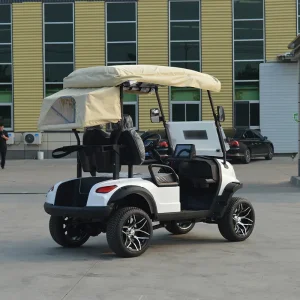
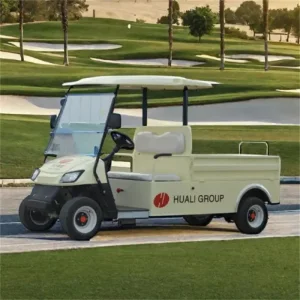
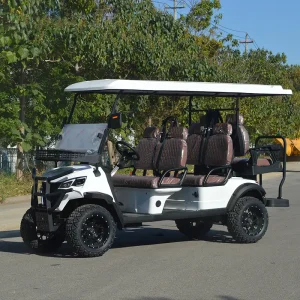
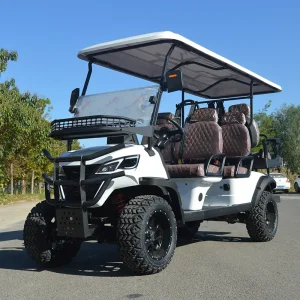
The Paradigm Shift: From Traditional Course Carts to Individual Micro-Mobility
The global low-speed vehicle (LSV) and motorized golf buggy sector is experiencing an unprecedented structural transition driven by urbanization, zero-emission mandates, and lithium battery powertrain breakthroughs.
Total Cost of Ownership (TCO) Dominance
By decoupling reliance on escalating internal combustion fuel prices and maintenance-intensive lead-acid flooded packs, next-generation 72V LiFePO4 lithium platforms reduce operational expenditure by up to 64% over a 5-year operational lifecycle.
Single-Rider & Modular Agility
Enterprise operators, security operations, and modern golf resorts are transitioning toward individual and dual-seater agile chassis. Compact foot-print mobility speeds up course play by 28% while minimizing turf compaction and preserving agronomic root zones.
Stringent Homologation Alignment
China's Tier-1 industrial manufacturers have transitioned from domestic neighborhood vehicles into fully compliant international exports, achieving strict alignment with US FMVSS 500 LSV regulations and European Union L6e/L7e type-approvals.
Procurement Criteria: What Global Fleet Directors Mandate
Enterprise procurement teams across North America, Europe, Australia, and the GCC no longer source low-speed electric vehicles based purely on FOB price points. Technical durability, safety redundancy, and lifecycle ergonomics govern purchasing matrix decisions.
Structural Integrity & Anti-Corrosion
Marine environments, island luxury resorts, and high-salinity coastal fairways rapidly degrade cheap tubular steel. Leading procurement executives mandate robotic welded chassis treated with electrophoretic cathodic dip (E-coating) that reliably exceeds 1,000-hour ASTM B117 neutral salt spray testing.
High-Efficiency AC & PMSM Drive Units
Modern fleets reject antiquated DC brush motors due to frequent commutator servicing and brush carbon dusting. High-torque AC asynchronous and permanent magnet synchronous motors (PMSM) paired with intelligent Curtis or Infore controllers deliver up to 25% continuous gradeability under full gross load.
Intelligent Cloud Telematics & Geofencing
Large-scale rental deployments require embedded CAN-bus communication modules featuring GPS geofencing, real-time battery state of charge (SoC) tracking, remote immobilizers, and automated speed governors to eliminate vehicle misuse across sprawling estates and campuses.
| Evaluation Parameter | Legacy Traditional Golf Buggies | Next-Gen Chinese Factory 4.0 Architecture | Enterprise Fleet Benefit |
|---|---|---|---|
| Battery Chemistry & Life | Flooded Lead-Acid / AGM (500–800 cycles) | LiFePO4 with Smart BMS (3,500–5,000 cycles) | Zero Maintenance / 8-Year Lifespan |
| Powertrain Voltage & Motor | 36V–48V DC Series Motor (3.0–3.8 kW) | 72V AC Induction or PMSM (5.0–7.5 kW Peak) | +35% Torque / High Gradeability |
| Chassis Treatment | Basic Spray Enamel / Dip Primer | High-Strength Alloy + Cathodic E-Coat | Corrosion Proof > 10 Years |
| Braking & Energy Recovery | Rear Mechanical Drum Brakes | 4-Wheel Hydraulic Disc + Dynamic Regen Braking | 40% Shorter Stopping Distance |
| Auxiliary Energy Harvesting | Not Available / External Add-On | Integrated Monocrystalline Photovoltaic Hardtop | +15–25 km Daily Passive Solar Range |
Supply Chain Resilience, Automation, and Industrial Clustering
Why China's specialized EV manufacturing hubs—such as Dezhou, Shandong—deliver unbeatable unit economics, engineering scalability, and comprehensive vertical supply chain control.
Vertical Integration Under One Roof
Unlike Western brand assemblers who outsource fabrication to fragmented third parties, leading Chinese factories integrate CNC laser pipe cutting, automated robotic welding, thermoforming body panel injection, powertrain assembly, and dynamometer road testing within unified 13,000+ m² campuses.
Direct Upstream Lithium Clustered Sourcing
Operating in proximity to the world's foremost lithium refining and cell manufacturing epicenters enables Chinese golf buggy factories to secure Grade-A LiFePO4 cells at baseline factory gate costs. This direct link eliminates tier-2 supply markups and guarantees cells with matched internal resistance.
Extreme Agile OEM & ODM Prototyping
Need custom golf cart stretch chassis, tailored utility cargo beds, specialized EMS stretcher attachments, or custom corporate branding? Chinese manufacturing engineering teams offer rapid CAD-to-prototype lead times of less than 21 days with full tooling and thermoform mold customization.
Tailored Deployment Matrices: Engineering for Local Duty Cycles
Individual motorized golf buggies and low-speed vehicles operate under diverse climatic, geographic, and payload constraints. One single configuration does not fit all duty cycles.
Luxury Resorts & Gated Living
Demands silent, emission-free, high-comfort operation. Configured with independent double A-arm front suspension, hydraulic coil-over dampers, sound-damped hypoid rear axles, and custom two-tone marine vinyl upholstery for seamless guest mobility.
Industrial Parks & Logistics Hubs
Engineered for continuous 24/7 multi-shift logistics. Fitted with heavy-duty drop-side aluminum cargo boxes, reinforced leaf-spring rear suspensions, regenerative descent control, and high-capacity 105Ah–206Ah LiFePO4 packs for continuous material hauling.
Security & Municipal Law Patrol
Configured with street-legal lighting suites (DOT-approved LED headlights, turn indicators, hazards), high-visibility strobe beacons, PA siren systems, heavy-duty brush guards, and digital rearview camera monitoring for municipal patrolling.
Hilly Golf Links & Rugged Terrain
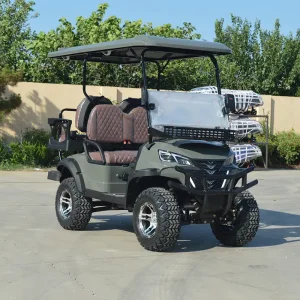
Engineered to climb severe 25%–30% course gradients effortlessly. Configured with 72V AC or high-torque PMSM drivetrains, lifted suspension with 12-inch machined alloys, aggressive off-road knobby tires, and automatic electromagnetic parking brakes (EMB).
Engineering Anatomy: Inside a Tier-1 Chinese Electric Vehicle Facility
Procuring low-speed electric vehicles (LSVs) and individual motorized golf carts from Chinese manufacturers requires understanding the technical divergence between low-tier regional assemblers and advanced OEM manufacturing hubs. An optimized sourcing strategy hinges upon analyzing the sub-tier bill of materials (BOM), structural metallurgy, cathodic coating formulations, powertrain management algorithms, and international compliance certifications.
1. Metallurgy and Robotic Weld Geometry
A vehicle's operating longevity in hostile operational environments—such as oceanfront resorts with airborne sodium chloride or desert courses with high ambient thermal cycling—originates at the frame. Tier-1 manufacturers in Dezhou, Shandong employ Q235B micro-alloyed structural steel tubes cut via six-axis fiber laser systems. Robotic multi-pass gas metal arc welding (GMAW) ensures consistent weld penetration without micro-porosity.
The entire structural chassis undergoes a multi-stage pretreatment process: alkaline degreasing, zinc-phosphate conversion coating, and high-voltage cathodic electrodeposition (e-coating). This guarantees complete immersion coverage inside hollow tube structural cross-members, exceeding 1,000 hours of continuous salt spray testing under ASTM B117 standards. Conventional air-dried paint finishes found in low-cost workshops deteriorate within 18 months, causing stress fractures around suspension mounts.
2. Powertrain Mechanics: 72V Architecture vs Legacy 48V Systems
Historically, the global golf cart industry was standardized around 36V or 48V lead-acid configurations. While adequate for flat golf fairways carrying two occupants, these systems suffer severe thermal dissipation issues and rapid voltage drop under sustained hill-climbing or when towing heavy payloads. The transition to 72V AC and PMSM platforms represents a fundamental engineering upgrade:
- Thermal & Current Efficiency: By increasing system voltage to 72V, electrical current ($I = P/V$) is reduced by approximately 33% for equivalent mechanical wattage. Lower amperage minimizes $I^2R$ resistive heating in high-voltage wiring harnesses, motor windings, and semiconductor inverter switches.
- Regenerative Braking Dynamism: Advanced AC vector controllers (FOC - Field Oriented Control) capture kinetic deceleration energy and feed it back into the LiFePO4 battery pack, increasing operational driving range by up to 18% on undulating courses while preserving brake pads and rotors.
- Smart CAN-Bus Battery Management: Automotive-grade Battery Management Systems (BMS) continuously monitor individual cell voltage balance, thermal sensors, and high-discharge cutoff thresholds. If a thermal anomaly occurs, the BMS safely derates speed rather than abruptly shutting down power, preventing dangerous rollaway events on gradients.
3. International Homologation: Navigating FMVSS 500, DOT, and EEC L6e/L7e
A critical barrier for commercial distributors importing from China is regional road homologation. To achieve street-legal registration in North America as a Low-Speed Vehicle (LSV) under Federal Motor Vehicle Safety Standard (FMVSS) No. 500, carts must have strict physical compliance: certified AS1 or AS4 laminated glass windshields with automotive wipers, three-point DOT-compliant seatbelts, reflex side reflectors, exterior rearview mirrors with wide field angles, dual-circuit hydraulic braking, and reverse notification sounders.
Similarly, entering European markets demands adherence to Regulation (EU) No 168/2013 for category L6e-B (light quadricycles) or L7e (heavy quadricycles). This entails electromagnetic compatibility (EMC) certification under UN/ECE R10, rigorous horn decibel audits, type-approved lighting with E-mark certification, and mechanical impact testing on front bumper crumple zones. Working with direct manufacturers like Dezhou Leibin guarantees these engineering protocols are integrated during factory assembly rather than costly post-import retrofits.
Frequently Asked Questions by Enterprise Fleet Buyers
Key technical answers regarding factory direct supply, compliance validation, and international shipping logistics.
High-Torque, Off-Road, and Solar Commercial Vehicles
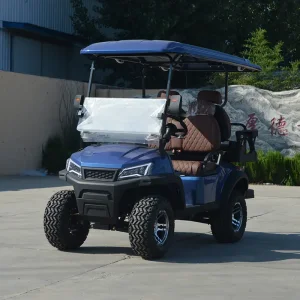
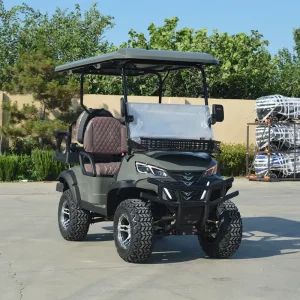
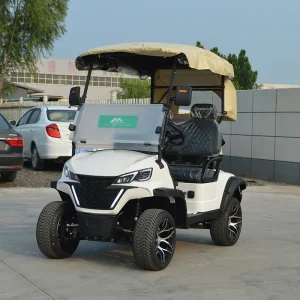
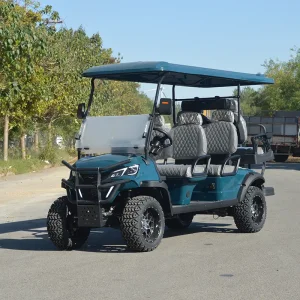
Browse heavy-duty off-road buggies, solar roof platforms, and multi-row executive shuttles built to demanding industrial and resort specifications.
Initiate Direct Factory Procurement & Engineering Consultation
Connect directly with our Dezhou, Shandong manufacturing plant engineers. Request complete CAD dimensional drawings, sub-tier component BOMs, customized sample test drives, and bulk FOB/CIF container shipping quotations.
Request Technical Consultation & Factory Price List