
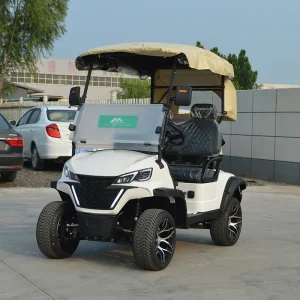
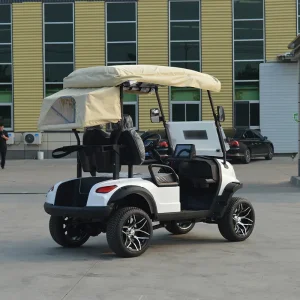
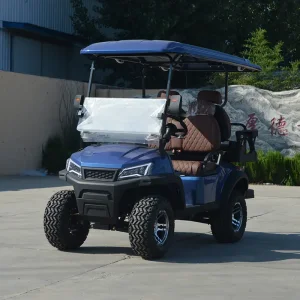
Featured Commercial & Junior Electric Golf Carts (Batch 01)
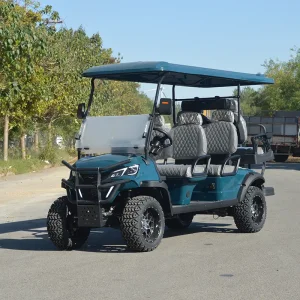
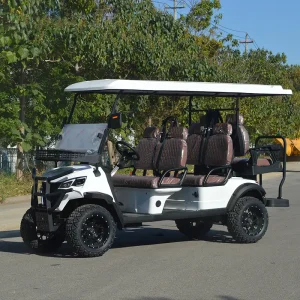
Explore our factory-calibrated utility and junior-accessible low-speed platforms configured for recreational, commercial, and private multi-terrain mobility.
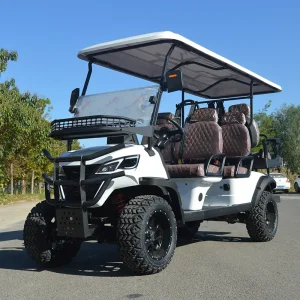
Market Dynamics & Next-Gen Trends in Junior Electric Mobility
The market for junior electric golf carts and compact low-speed vehicles (LSVs) has evolved beyond mere scale models. Today's commercial deployment mandates automotive-grade electrical architectures, customizable speed-governing protocols, and robust secondary safety frameworks.
LiFePO4 Power Architectures
The phase-out of flooded lead-acid batteries in junior and compact platforms is accelerating. Integrated 48V/72V Lithium Iron Phosphate (LiFePO4) systems provide higher thermal stability, 3,500+ lifecycle charges, and native telemetry communication via smart Battery Management Systems (BMS).
Dual-Tier Speed Governor Protocols
Junior fleets operating in hospitality, golf academies, and residential communities require dual-tier operational governors. Factory-configured digital throttles enable operators to toggle via administrative key or RFID between a restricted 15 km/h junior mode and an unrestricted 35 km/h fleet mode.
Fleet IoT & Geofencing
Modern micro-mobility operations integrate telematics modules with GPS/cellular connectivity. Fleet controllers monitor state-of-charge (SoC), set dynamic perimeter boundaries, and automatically decelerate vehicles crossing predefined junior safety perimeters.
Global Procurement Needs: Navigating B2B Fleet Supply
B2B fleet procurement officers, commercial resort managers, and golf academy operators evaluate manufacturers against strict lifecycle TCO, structural integrity, and delivery lead times.
Ergonomic Adaptability
Junior electric carts must support lower seat-to-pedal clearances, modified steering columns, and multi-point harness anchorage while accommodating older supervisors comfortably via modular seating configurations.
Duty Cycle & Hill Climbing
Procurement teams demand certified gradeability metrics. Leibin's high-efficiency 72V AC motors deliver 25-30% climbing performance under full payload, preventing thermal cutoff during heavy summer operations.
Consumables Interchangeability
Maintenance overhead is mitigated through standardized brake pads, automotive tie-rod assemblies, universal electronic speed controllers, and plug-and-play wiring harnesses across 2, 4, and 6-seater platforms.
Macro-Industry Solutions: Technical Platform Comparison
Choosing between entry-level 48V utility drivetrains and commercial-grade 72V AC lithium powertrains dictates performance margins across commercial and junior transit workflows.
| Evaluation Parameter | 48V Standard Junior / Utility Line | 72V High-Torque AC Junior / Commercial Platform |
|---|---|---|
| Primary Application | Flat resort corridors, junior golf training schools, light yard duties | Undulating resort courses, multi-passenger touring, high-gradient campuses |
| Powertrain Motor | 3.0 kW – 4.0 kW DC or Basic AC Induction | 5.0 kW – 7.5 kW Brushless AC Motor with Regenerative Braking |
| Battery Pack Architecture | 48V 100Ah Deep Cycle AGM or Compact LiFePO4 | 72V 105Ah – 160Ah High-Density LiFePO4 with Smart CAN-BMS |
| Max Speed & Governing | 15 – 25 km/h (Mechanical or basic controller limit) | 15 – 40 km/h (Precision dual-mode digital software governor) |
| Hill Gradeability (%) | Up to 15% under standard loading | 25% – 30% sustained slope climbing capability |
| Solar Augmentation Option | Optional auxiliary roof panel (trickle auxiliary only) | Integrated monocrystalline high-efficiency photovoltaic charging canopy |
Global Homologation, Quality Testing & Supply Chain Assurance
From structural chassis e-coating to regional road authority compliance, our manufacturing base enforces strict end-to-end quality control.
Automotive E-Coat Substrate
Every junior electric cart frame undergoes robotized laser cutting, high-precision jig welding, and cathodic electrodeposition (E-coating) to ensure over 1,000 hours of neutral salt spray resistance in marine and tropical resort environments.
CE, EEC & FMVSS Compliance
Vehicles can be fully optioned to fulfill US FMVSS 500 low-speed vehicle (LSV) criteria and European L6e/L7e type-approval specifications, including DOT-stamped windshields, certified safety belts, LED illumination, and hydraulic dual-circuit braking.
SKD / CKD Optimized Crating
To slash ocean freight costs, we provide knocked-down (CKD) and semi-knocked-down (SKD) crating solutions using rigid steel pallets, maximizing container loading density while ensuring rapid local reassembly with standardized torque specs.
R&D Roadmap: The Next Frontier of Micro-Mobility
Our ongoing investment in powertrain innovation, AI assistance, and energy optimization sets the standard for international junior cart distribution.
Phase 1: Ultra-Safe Solid-State & Sodium-Ion Battery Trials
Developing low-temperature-tolerant chemistries eliminating thermal runaway risks in sensitive commercial and school fleet applications.
Phase 2: ADAS Radar & Collision Avoidance Sensor Integration
Incorporating ultrasonic proximity sensors and short-range radar that actively prevent acceleration when junior drivers encounter stationary objects or pedestrians.
Phase 3: High-Yield Monocrystalline Solar Roof Architecture
Scaling curved solar rooftops delivering up to 30-40% continuous daily charging autonomy under daylight conditions for tropical resorts.
Engineered Golf Buggies & Multi-Terrain LSVs (Batch 02)
Discover our ruggedized off-road carts, CE-certified low-speed coaches, and solar-equipped commercial buggies direct from our Dezhou manufacturing line.
Frequently Asked Technical & Sourcing Questions
Clear, authoritative technical answers to assist global import directors and facility managers in evaluating Leibin electric vehicle solutions.