
China Top Golf Car Manufacturers & Supplier
Decoupling Industrial Manufacturing Resilience, 72V High-Torque Powertrain Architecture, and Fleet Micro-Mobility Economics for Commercial Enterprise Deployment.
High-Efficiency Commercial & Utility Fleets
Engineered for low maintenance overhead, extended duty cycles, and superior gradient climb capabilities.
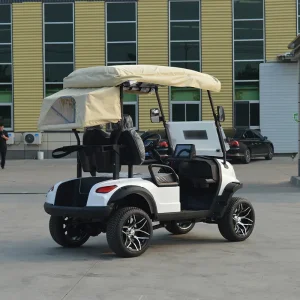


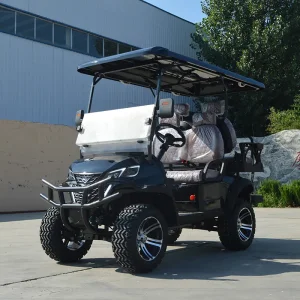
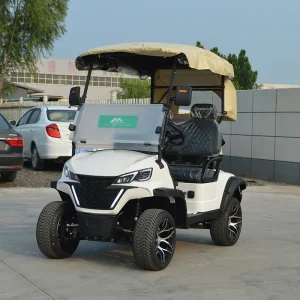
China's Manufacturing Resilience in Low-Speed Electric Vehicles (LSEV)
Analyzing how vertically integrated clusters deliver substantial Total Cost of Ownership (TCO) reductions for global golf cart distributors.
The global golf cart and light utility vehicle market has transitioned from traditional lead-acid country club runabouts to high-performance, street-configurable Low-Speed Vehicles (LSVs). As enterprise operators in North America, Europe, Australia, and the Middle East replace aging fleets, sourcing directly from top-tier Chinese manufacturers has transformed from a cost-arbitrage tactic into a strategic technological upgrade. Chinese industrial manufacturing bases, notably in Shandong (Dezhou), Jiangsu, and Guangdong, leverage complete tier-1 supply ecosystem proximity, dramatically compressing engineering iterations, raw-material lead times, and assembly costs.
Unlike regional assembly outfits that rely on third-party drivetrain integration, Dezhou Leibin Vehicle Industry Co., Ltd. operates with end-to-end manufacturing oversight spanning its 13,000 m² facility. From automated CNC chassis jig welding to automated cathodic electrophoretic dip coating (e-coating) that guarantees high corrosion resistance in seaside resort environments, complete production ownership prevents the supply bottlenecking common to fragmented global supply chains.
Lithium Value Chain Hegemony
Direct supply partnerships with domestic prismatic LiFePO4 cell foundries allow immediate deployment of Tier-A battery packs. Integrated Smart Battery Management Systems (BMS) with CAN bus telemetry deliver active balancing, cell temperature monitoring, and low internal resistance.
Automotive-Grade Stamping & Frames
Reinforced high-strength steel box-section ladders undergo high-precision robotic robotic welding. Hot-dip galvanization and micro-porous electrostatic powder coating provide robust structural resilience against ocean air, salt spray, and extreme humidity.
Agile OEM/ODM Cycle Times
CAD-to-prototype validation turnaround times average under 21 business days. Rapid mold development enables customized commercial coachwork, utility flatbeds, specialized medical stretchers, and localized municipal security chassis adaptations.
Mission-Specific Operational Profiles
Configured specifically for diverse terrain demands, duty-cycle intensities, and regional compliance mandates.
Hospitality & Luxury Golf Resorts
Featuring regenerative electromagnetic dynamic braking systems, near-silent 72V AC induction or permanent-magnet synchronous motors (PMSM), and ultra-smooth MacPherson front strut suspension. Ensures zero vibration and peaceful guest travel in eco-sensitive retreats.
Gated Master-Planned Communities
Street-configurable low-speed utility models equipped with FMVSS No. 500 / EEC L7e road packages: DOT-approved shatterproof windscreens, LED high/low beam headlights, turn signals, 3-point inertial seat belts, and dual-circuit hydraulic disc brakes.
Industrial Warehousing & Campus Logistics
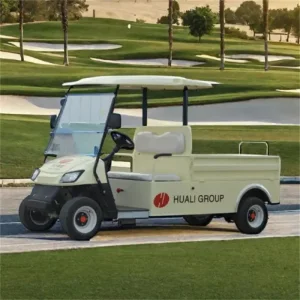
Heavy payload variants (up to 800 kg capacity) built with integrated diamond-plate aluminum drop-side cargo beds, auxiliary 12V tool power taps, and high-amp Curtis/Enpower motor controllers calibrated for constant stop-and-go factory movement.
Architectural Comparison: 48V Flooded vs. 72V LiFePO4
Why commercial fleet operators are rapidly decommissioning legacy 48V setups in favor of high-voltage lithium architecture.
| Performance & Operational Metrics | Legacy 48V Lead-Acid Architecture | Leibin 72V Prismatic LiFePO4 Architecture | Enterprise ROI Differential |
|---|---|---|---|
| Usable Energy Depth of Discharge (DoD) | 50% recommended (Avoids sulfation degradation) | 90%–95% safe continuous discharge | +80% extended functional operating range per run |
| Curb Weight & Ground Compaction | Heavy (~320–380 kg battery bank payload) | Ultra-light (~85–110 kg pack weight) | Reduced turf rutting; 22% lower rolling resistance |
| Continuous Gradeability | 15% - 20% (Notable voltage sag on gradients) | 25% - 35% continuous hill climb rating | Maintains uniform cruising speed on hilly courses |
| Cycle Life Expectancy (80% Capacity) | 500 - 800 cycles (Approx. 2-3 years) | 3,500 - 5,000 cycles (Approx. 8-10 years) | Eliminates 2 full battery replacement capital expenditures |
| Thermal Stability & Safety | Risk of acid spills, terminal corrosion & gas emission | Inherently stable LiFePO4 chemistry with BMS cutoff | Zero maintenance; zero water topping or cleaning |
| Solar Auxiliary Augmentation | Inefficient due to low acceptance current curves | High charge-acceptance roof panels (G90 series) | Adds 15–25 km solar range daily during park cycles |
Intelligent Fleet Management & Telematics
Bridging traditional small EV mechanics with next-generation IoT telemetry, remote geo-fencing, and smart battery health management.
IoT Telemetry & Dynamic Geofencing
Integrated 4G LTE/GPS trackers enable course and resort managers to enforce restricted turf zones, automate speed caps along downhill stretches, and monitor real-time vehicle coordinates via cloud dashboards.
Predictive Cloud BMS Diagnostics
Cell-level algorithmic monitoring streams voltage anomalies, cycle depth, and temperature variance to the cloud. Maintenance teams receive automated dispatch alerts before an individual cell causes field downtime.
Autonomous Level-2 Mobility Pods
Field trials are currently underway on factory campus transit loops deploying LiDAR-assisted automated guidance, collision-mitigation ultrasonic sensors, and smart stop dispatching for controlled holiday village complexes.
End-to-End Export Logistics & Homologation
Engineered to meet specific municipal road vehicle safety directives across Tier-1 import hubs.
Exporting low-speed electric mobility equipment requires precise technical compliance to avoid customs detentions and homologation failures. Leibin vehicles are engineered to accommodate multiple global regulatory frameworks:
- North America (US & Canada): Compliant with Federal Motor Vehicle Safety Standards (FMVSS No. 500) for Low-Speed Vehicles (LSV), including 17-digit VIN stamping, certified DOT AS4 acrylic windshields, back-up camera integration, and certified seatbelt anchors.
- European Union: Models configurable to EEC L6e/L7e light quadricycle standards, complete with homologation-ready E-mark light assemblies, CE electromagnetic compatibility directives, and speed governor certifications.
- Crating & Transport Packing: Customized knockdown (CKD) or semi-knockdown (SKD) steel crate enclosures optimize shipping cube utilization—allowing up to 18–24 units to pack into a 40' High-Cube (HQ) container, lowering ocean freight landing costs per vehicle.
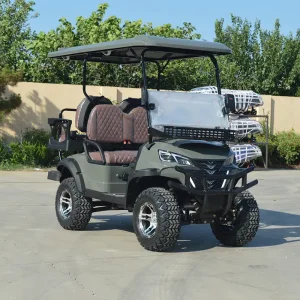
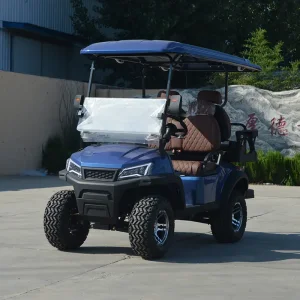
Heavy-Duty, Modern & Off-Road Buggies
Premium 72V AC motor, solar-augmented, and multi-passenger models for specialized transport tasks.

Frequently Asked Sourcing & Engineering Questions
Direct technical answers to common queries raised by international procurement managers and fleet operators.