
Precision-Engineered ODM Series: Ready-to-Ship Platforms
Explore our flagship 48V and 72V commercial chassis platforms. Built under rigorous ISO 9001 and CE compliance protocols, these configurations offer turnkey baseline pricing for international brand owners and fleet operators.

Buy 72V AC Mini Electric Golf Cart for Sale - China Suppliers & Factory, 4-Seat Lithium Battery Model, CE Certified
View Specifications
China Factory 72V Electric Golf Cart - 4-Seater Off-Road Buggy for Sightseeing, 35 km/h Speed, 150 km Range
View Specifications
Cheap Factory Leibin G90 72V Lithium Battery Off-Road Electric Golf Cart - 4 Seaters, Solar Power, 35 km/h Speed
View Specifications
OEM Affordable China 4-Seater Electric Golf Cart - Off-Road Adventure with Custom Battery Options from Trusted Suppliers
View Specifications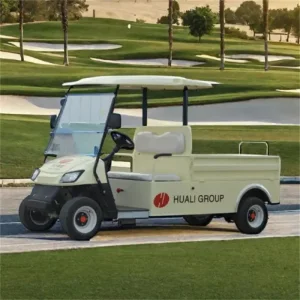
Cargo Electric Utility off Road Truck Golf Cart 48V Utility Gulf Cart Electric Golf Car Suppliers & Factory
View Specifications
Wholesale China 6 Seat Electric Golf Carts, 72V Lithium Battery, Comfortable Customized Golf Buggy from Factory
View Specifications
Best Factory Direct 2-Seater Electric Sightseeing Cars, Golf Carts, Club Cars and Vans for Sale Manufacturers
View Specifications
Wholesale 6 Seat Electric Golf Carts from China Suppliers - Customized 72V Lithium Golf Buggy Factory Direct
View SpecificationsDeconstructing the Cost of an Electric Golf Cart: OEM vs. ODM Direct
Understanding the exact Bill of Materials (BOM) empowers procurement departments to separate baseline hardware engineering from aftermarket brand inflation.
Lithium Pack & BMS (35% - 42%)
The transition from traditional flooded lead-acid batteries to prismatic Lithium Iron Phosphate (LiFePO4) chemistry represents the single largest variable in electric golf cart pricing. A standard 72V 105Ah–150Ah automotive-grade pack with integrated CAN-bus Battery Management System (BMS) commands higher upfront expenditure but unlocks 3,500+ charge cycles, zero maintenance watering, and a 65% reduction in pack weight compared to 48V AGM solutions.
AC Powertrain & Controller (18% - 24%)
High-efficiency permanent magnet synchronous motors (PMSM) or AC induction systems (ranging from 4kW to 7.5kW rated power) coupled with algorithmic motor controllers (e.g., Curtis or Enpower systems) determine operational gradeability, hill-holding security, and regenerative braking recapture. The integration of high-grade copper stator windings and IP67 weather-sealed housings adds marginal manufacturing cost while drastically lowering field failure rates.
Chassis & Cathodic E-Coating (15% - 20%)
Chassis durability dictates real-world service life across coastal golf resorts and chemical-heavy agricultural farms. Premium ODM manufacturers deploy high-strength Q235B micro-alloyed tubular steel welded via robotic fixtures, followed by electrophoretic cathodic immersion coating (E-coat) exceeding 1,000 hours of ASTM B117 salt spray testing. Lightweight aerospace-grade aluminum chassis options represent an elective upgrade for weight-sensitive turf environments.
| Vehicle Tier & Configuration | Powertrain Architecture | Factory FOB Price Band (USD) | Standard Battery Spec | Primary Industrial Use-Case |
|---|---|---|---|---|
| Standard Utility (2-4 Seater) | 48V 4.0kW AC Induction | $2,200 – $3,100 | 48V 100Ah Lead-Acid / Optional LiFePO4 | Light campus maintenance, flat fairway courses, industrial logistics |
| Commercial Resort (4-6 Seater) | 72V 5.0kW PMSM High-Torque | $3,400 – $4,800 | 72V 105Ah Automotive-Grade LiFePO4 | Hospitality passenger shuttles, gated luxury estates, eco-parks |
| Heavy-Duty Off-Road (4-6 Seater) | 72V 7.5kW AC with High-Low Gearbox | $4,600 – $6,200 | 72V 150Ah LiFePO4 with Smart Thermal BMS | Hilly terrains, mountainous resorts, beachfront estates, construction support |
| Eco Solar-Assisted Flagship | 72V AC + Photovoltaic Monocrystalline Roof | $4,900 – $6,800 | 72V 160Ah Lithium + MPPT Solar Controller | Extended patrol rounds, islands, sunny destinations aiming for off-grid top-up |
Localized Application Scenarios: Where Unit Economics Win
The cost equation of an electric golf cart cannot be evaluated in a vacuum. Different commercial applications evaluate return on investment (ROI) through very different operational filters.
Master-Planned Gated Communities & LSV Street Use
In regions such as the Sunbelt of the United States, Southeast Asia's integrated townships, and Gulf Cooperation Council (GCC) compounds, golf carts function as street-legal Low-Speed Vehicles (LSVs). Procurement priorities prioritize FMVSS 500 / DOT compliant windshields, certified three-point seat belts, 4-wheel hydraulic disc brakes, turn signals, and digital instrument clusters. Here, the low operating cost ($0.02 per mile vs. $0.15 for internal combustion engines) drives high consumer and community fleet adoption.
Eco-Tourism, Mountain Resorts & Island Hospitality
Island environments (such as the Maldives or Caribbean resorts) face high electricity production costs, extreme humidity, and intense saline exposure. Heavy gas-powered utility carts suffer from rapid carburetor corrosion and intrusive engine noise. ODM 72V lithium vehicles equipped with stainless steel hardware, electro-coated underbodies, and rooftop solar charging panels eliminate fuel import dependencies while offering silent, zero-emission luxury shuttles for guests.
Heavy Commercial, Industrial Parks & Campus Logistics
Manufacturing complexes, semiconductor clean-room campuses, and international airport terminals operate around-the-clock schedules. Here, the cost of an electric cart is assessed by fast-charging throughput and downtime penalties. Utilizing high-rate onboard chargers (3.3kW to 6.6kW) allows opportunity charging during 30-minute shift changes, effectively maintaining 24/7 availability across cargo box, maintenance, and multi-passenger variants.
China Factory Supply Chain Resilience & Manufacturing Efficiency
Why sourcing directly from specialized Chinese industrial hubs like Dezhou, Shandong slashes landed acquisition costs by 30% to 50% without compromising structural integrity or electrical safety.
Full Cluster Integration
Within a 50-kilometer radius in Shandong's EV manufacturing cluster, our factory sources certified seamless steel tubing, injection-molded automotive PP body panels, wiring harnesses, and transaxles, cutting procurement lead times to days rather than months.
Automated Jig Welding
Precision robotic MIG welding lines eliminate structural chassis variances across high-volume production batches. Each frame is verified against digital laser alignment checks, guaranteeing true wheel tracking and even tire wear throughout years of service.
Lithium Economy of Scale
China produces over 75% of the world's lithium-ion battery cells. Direct long-term factory supply agreements with tier-1 battery cell manufacturers yield unmatched cell-to-pack cost efficiencies and stringent cell-matching standards for higher safety margins.
Container Packing Density
Our modular knocked-down (SKD / CKD) export crating frameworks maximize container payload utility. By fitting up to 18 units in a single 40ft HQ container using specialized steel stacking racks, ocean freight cost per unit is reduced by up to 45%.
Technology Roadmap: Future-Proofing Fleet Investments
Procuring an ODM fleet requires anticipating technical obsolescence. Our R&D engineering matrix aligns vehicle lifecycle stability with emerging IoT, battery chemistry, and automated safety standards.
Smart Cloud Telematics & 4G BMS
Real-time vehicle tracking, geofencing speed limiters for golf fairways, remote battery diagnostic alerts, and automated fleet power scheduling via web dashboard.
Integrated High-Voltage Solid-State
Pilot integration of semi-solid lithium cells offering greater thermal stability under extreme ambient heat (>50°C in Middle East climates) with 20% higher energy density.
Drive-by-Wire & Collision Avoidance
Implementation of radar-based ultrasonic forward collision mitigation, automated pedestrian warning systems, and steer-by-wire modularity for shared transport hubs.
Autonomous Campus Geoguiding
Full integration of low-cost LiDAR and RTK-GPS guidance systems enabling autonomous passenger shuttling along predetermined resort, airport, and university paths.
Global Commercial Landscape: Electrification Trends & Fleet TCO
The global electric golf cart and light utility vehicle market is projected to exceed $4.2 billion by 2030, driven by aggressive municipal carbon limits and surging private luxury mobility.
North America: The Street-Legal LSV Surge
Federal and state-level incentives, coupled with the rapid expansion of master-planned golf cart communities in Florida, Arizona, and California, have shifted demand from traditional 18-hole courses to neighborhood personal transportation. Buyers demand higher top speeds (25 mph / 40 km/h), lifted suspensions, premium sound systems, and automotive safety equipment, elevating ODM engineering standards across the board.
Europe: Tightening L6e/L7e Homologation
In the European Union, municipal low-emission zones prohibit fossil-fueled utility carts across historic city centers, botanical parks, and camping grounds. Strict adherence to UNECE automotive safety regulations, electromagnetic compatibility (EMC), and certified mechanical brakes has made CE and EEC homologation mandatory for high-volume commercial importers.
Middle East & APAC: Mega-Project Infrastructure
From the mega-resorts of the Red Sea Project and NEOM in Saudi Arabia to extensive hotel chains across Thailand and Vietnam, high passenger capacity (6-seater and 8-seater) open shuttles are standard. Requirements emphasize high-ambient thermal protection, solar auxiliary charging, and extreme dust resistance (IP65+ motor controller encapsulation).
Localized Support, Certification & Compliance Assurance
A cost advantage vanishes if vehicles cannot pass customs or operate legally on site. Leibin guarantees strict adherence to global safety and homologation standards.
CE, EEC & FMVSS 500 Compliance
Vehicles are engineered with target-market compliance built in: DOT-certified AS1/AS4 laminated glass windshields with electric wipers, SAE-certified LED headlamps, high-visibility hazard arrays, dual side mirrors, and integrated horn decibel calibrators that fulfill municipal road-use requirements.
Guaranteed Spare Parts Lifecycle
Every commercial ODM partnership includes a guaranteed 10-year availability window for core electrical and mechanical wear components. Standardized modular braking pads, tie rod ends, motor controllers, and BMS replacement modules are packaged in organized service packs with barcoded SKU tracking.
Factory Direct Engineering Support
Overseas fleet customers receive direct, unmediated communication lines with factory electrical and mechanical engineers. From bilingual diagnostic wiring diagrams and CAN-bus troubleshooting to live remote video walkthroughs, field technicians resolve technical challenges swiftly.
Frequently Asked Questions on ODM Cost & Manufacturing
Direct technical answers to the most common financial, engineering, and logistical inquiries raised by corporate purchasers and distributors.
What is the realistic factory-direct cost of an electric golf cart when ordering from an ODM manufacturer?
How does LiFePO4 lithium compare against traditional lead-acid in long-term Total Cost of Ownership (TCO)?
What are the primary differences between 48V and 72V electrical architectures?
What customization parameters are available under your ODM vehicle program?
How are electric golf carts packed to ensure zero transit damage and optimal freight cost?
What documentation is supplied to guarantee road-legal registration in North America and Europe?
High-Capacity & Specialty ODM Fleet Lineup
Explore additional certified multi-passenger, utility, and modern club buggy models built to optimize operational efficiency and minimize lifetime maintenance overhead.

Best 72V Modern 6-Seater Electric Golf Cart - Factory Direct from China Suppliers, Ideal for On-Road and Off-Road
View Specifications
ODM Low-Speed Electric Golf Car from China Suppliers - CE Approved 15-40km/H Beemotors G70-4+2 Factory Model
View Specifications
OEM Wholesale Electric Golf Carts from China Suppliers, 72V Lithium 6 Seat Golf Buggy Factory Made
View Specifications
ODM Wholesale 6 Seat Electric Golf Carts - 72V Lithium, Customized Comfort from China Suppliers and Factory
View Specifications
Wholesale Electric Golf Cart 4seated Golf Buggy Sightseeing Bus off-Road 72vgolf Cart Manufacturers, Factory
View Specifications
China 72V Electric Golf Cart - 6-Seater Modern Design | China Suppliers & Factory Quality Golf Buggy
View Specifications
Cheap Small 4 Seater Electric Golf Carts, Golf Cart Battery, off Road Golf Carts Factory & Direct Suppliers
View Specifications
Wholesale 72V AC Mini Electric Golf Cart Buggy Gold Color 4-Seat with Lithium Battery CE Certified and Tail Caddie
View SpecificationsRequest an Engineering Bill of Materials & Wholesale Price Quotation
Eliminate distributor friction and optimize your commercial fleet budget. Connect with our Dezhou technical team to configure battery capacities, powertrain mappings, chassis dimensions, and container shipment plans tailored to your market.