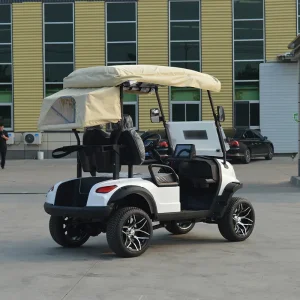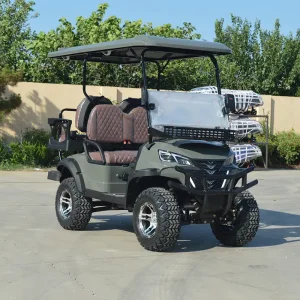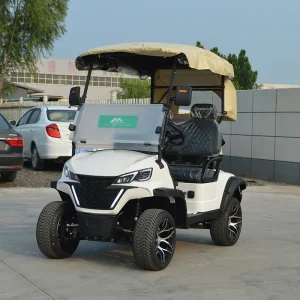
Featured Commercial & Utility Golf Vehicles
Explore our direct-dispatch, CE-certified 48V to 72V production platforms deployed globally across golf clubs, multi-acre luxury resorts, security beats, and municipal fleets.
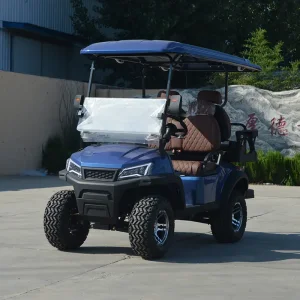
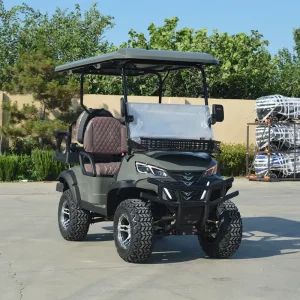
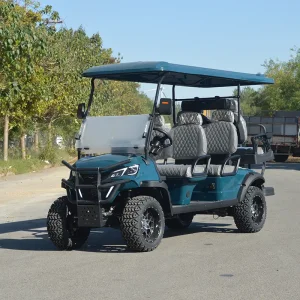
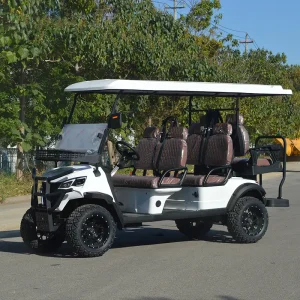
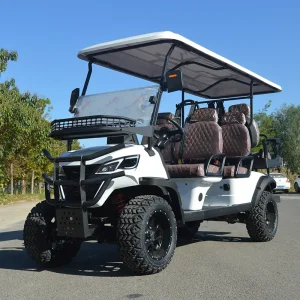
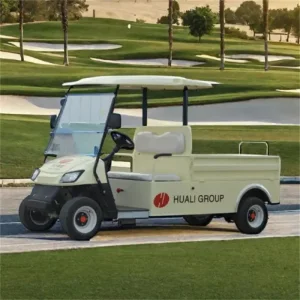
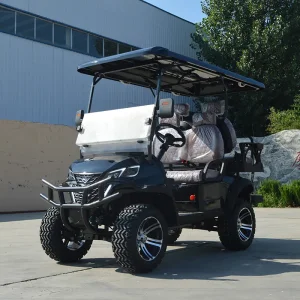
Navigating Global Sourcing for Commercial Low-Speed Electric Fleets
In modern supply chain architecture, sourcing golf cars and commercial low-speed vehicles (LSVs) has transitioned from selecting stock catalog units to orchestrating complete engineering and lifecycle partnerships.
TCO Optimization Model
Global enterprises demand predictable capital expenditures. Traditional lead-acid fleets introduce steep secondary costs through battery electrolyte topping, frequent cycle degradation, and high structural weight. Shifting to an ODM 72V LiFePO4 architecture lowers the Total Cost of Ownership (TCO) by over 38% across a 5-year operational lifecycle.
Configurable Payload & Chassis
Procurement directors manage diverse operational topography—from undulated championship golf layouts to high-traffic industrial manufacturing plants. An accountable ODM supplier provides customizable wheelbases, heavy-duty rear hydraulic drops, leaf spring assemblies, and lifted independent suspensions capable of handling uneven payloads without frame twisting.
Direct Factory Accountability
Intermediary trading entities introduce communication friction, inflated margins, and fractured engineering accountability. Direct partnership with established Chinese manufacturers guarantees traceable supply chains, raw material metallurgy verification, standardized wiring harnesses, and direct CAD/CAM engineering collaboration.
Engineering Blueprint: 48V vs. 72V Lithium & Solar Integration
Powertrain topology dictates gradeability, peak thermal dissipation, and fleet dispatch uptime. Choosing between 48V and 72V architectures must reflect route elevation, passenger payload, and charging windows.
High-Efficiency AC Induction & PMSM Motors
Legacy DC series motors suffer from brush wear, thermal bottlenecks, and minimal regenerative braking capacity. Contemporary ODM platforms integrate AC asynchronous or Permanent Magnet Synchronous Motors (PMSM), reaching peak motor efficiency ratings over 94% with zero mechanical wear points and intelligent hill-hold braking algorithms.
Integrated Monocrystalline Solar Roofs
Factory-fitted solar canopies transform passive roof surface area into an active trickle-charging auxiliary plant. High-efficiency monocrystalline solar panels capture ambient solar irradiance during daytime operations, extending total daily battery operating range by 15-20% and mitigating deep-discharge states during peak holiday operations.
Intelligent CAN-Bus BMS Management
Lithium iron phosphate (LiFePO4) safety relies heavily on digital protection systems. Our Tier-1 battery packs communicate natively over automotive-grade CAN-bus protocols, providing millivolt-level cell voltage balancing, multi-point thermal monitoring, short-circuit isolation, and automated deep-sleep sleep cycles during seasonal storage.
| Engineering Parameter | Standard 48V Fleet Platform | High-Torque 72V Lithium Platform | Solar-Augmented 72V Edition (G90) |
|---|---|---|---|
| Motor Technology | 3.0 kW - 4.0 kW AC Induction | 5.0 kW - 7.5 kW AC / PMSM Motor | 7.5 kW Ultra-Quiet PMSM Motor |
| Operating Voltage / Amperage | 48V Nominal / High Operating Draw | 72V High-Voltage / Lower Current Density | 72V System + Integrated MPPT Charge Controller |
| Maximum Slope Gradeability | 15% - 20% Incline | 25% - 35% Full Passenger Load | 30% - 35% Incline with Sustained Torque |
| Operational Duty Cycle | 60 - 80 km per single charge | 100 - 130 km per single charge | Up to 150 km with daytime solar regeneration |
| Thermal & Wire Harness Stress | Moderate; higher heat under peak torque | Low; high voltage minimizes thermal loss | Optimized heat sink dissipation & sealed harness |
China Factory 4.0: Supply Chain Resilience & Production Scale
Our 13,000 m² advanced manufacturing facility in Dezhou, Shandong represents the intersection of structural automotive engineering and lean high-output assembly.
Robotic Laser Cutting & Jig Welding
Precision chassis geometry is the foundation of vehicle safety. High-strength tubular steel and alloy members are cut via multi-axis CNC lasers and clamped in hydraulic alignment jigs. Automated robotic welding ensures uniform structural penetration, eliminating chassis warping and guaranteeing true tracking over years of fleet service.
Automotive Cathodic Electrodeposition (E-Coat)
Golf carts operating in seaside resorts or high-humidity regions face aggressive salt-spray corrosion. Every Leibin chassis undergoes a multi-stage chemical degreasing, zinc phosphating, and cathodic electrocoat immersion line, followed by electrostatic powder coating to ensure over 1,000 hours of continuous salt-spray resistance.
Full-Spectrum End-of-Line (EOL) Testing
No golf car leaves the factory without thorough computerized inspection. Dynamic dynamometer roller stations verify acceleration mapping and regenerative deceleration curves. Units face extreme 30-degree ramp holding tests, high-pressure monsoon water-deluge chambers, and full CAN-bus electrical diagnostic validation.
Macro-Industry Solutions & Fleet Operations
Fleet requirements diverge sharply across distinct operational domains. We tailor our core chassis and powertrain modules to solve explicit industry challenges.
Luxury Hospitality & Eco-Resorts
High-end resorts require whisper-quiet powertrains, ultra-smooth acceleration ramps, and elegant aesthetics. Leibin delivers multi-seat forward-facing passenger configurations finished in custom automotive metallics, complete with plush marine-grade vinyl seating, on-board refrigeration modules, and weather-proof perimeter enclosures.
Municipal Patrol & Gated Security
Security teams demand around-the-clock reliability and rapid low-end acceleration. Our patrol editions come pre-wired for public address (PA) speakers, multi-mode LED roof warning lightbars, dual side spotlight mounts, secure locking dashboard compartments, and telemetry links for central dispatch coordinates.
Campus Logistics & Industrial Facilities
Sprawling warehousing complexes, aviation hangars, and universities require robust workhorses. Leibin utility models feature heavy-gauge checker-plate aluminum flatbeds, automated hydraulic dumping systems, payload capacities up to 1,000 kg, and integrated 2-inch receiver hitches for auxiliary utility trailers.
Localization Support, Homologation & Fleet Compliance
Importing low-speed electric vehicles demands meticulous compliance with regional road transport safety directives. Leibin provides factory-engineered certification assistance across global jurisdictions.
North America: DOT & FMVSS 500
To qualify as a street-legal Low-Speed Vehicle (LSV) under Title 49 CFR Part 571.500, vehicles require specific safety components. We configure DOT-certified AS4 laminated glass windshields with electric wipers, three-point inertia-reel seatbelts, illuminated digital speedometers, side/rear mirrors, red rear reflectors, and standardized 17-digit VIN coding.
European Union: CE & L6e / L7e Directives
European municipal buyers require strict adherence to Machinery Directive 2006/42/EC, Low Voltage Directive 2014/35/EU, and Electromagnetic Compatibility (EMC) Directive 2014/30/EU. Leibin provides fully certified lighting arrays, E-mark safety glass, dual-circuit split hydraulic braking systems, and certified COC technical dossiers.
Ocean Logistics & Knock-Down Options
Freight optimization significantly impacts landed costs. Leibin offers flexible shipping profiles: completely built-up (CBU) inside reinforced steel anti-rattle crates, or semi-knocked-down (SKD) and completely knocked-down (CKD) configurations. Our engineered shipping racks double 40-foot HQ container packing density from 6 to 18 units, drastically lowering landed ocean freight cost per unit.
Technology Roadmap: Autonomous Shuttles, IoT Telematics & Sodium-Ion
Our engineering R&D center is actively pioneering the next generation of intelligent, connected low-speed transport platforms.
Cloud Fleet Telematics & Dynamic Geofencing
Connected resort fleets require precise operational boundaries. Our next-generation IoT gateways incorporate dual GPS/Beidou tracking modules, real-time battery state-of-charge (SoC) transmission, speed limiting within sensitive zones, and automated collision alert triggers uploaded directly to municipal or resort control centers.
Solid-State & Sodium-Ion Cell Integration
To combat performance loss in freezing winter environments (-20°C and below), our powertrain laboratories are bench-testing sodium-ion battery platforms. Sodium chemistries provide exceptional low-temperature discharge retention, superior thermal runaway resistance, and lower raw material volatility compared to conventional lithium configurations.
L4 Autonomous Resort Shuttles
Addressing rising global resort labor expenses, Leibin is co-developing Level-4 autonomous drive-by-wire chassis. Leveraging solid-state LiDAR sensors, RTK high-definition positioning, and stereoscopic vision systems, these autonomous shuttles navigate complex private paths and transport guests safely without driver intervention.
Frequently Asked Questions (FAQ)
Detailed engineering and commercial answers to simplify your supplier evaluation and import process.
Are Leibin electric golf carts and low-speed vehicles street legal in North America and Europe?
How does an enterprise buyer choose between 48V and 72V lithium battery architectures?
What are the exact capabilities for OEM and ODM custom vehicle design?
How does your factory protect vehicles against shipping damage and maritime corrosion?
What after-sales technical support, warranty terms, and spare parts guarantees do overseas buyers receive?
Specialized Utility, Sightseeing & Passenger Vehicles
Explore our multi-seat passenger buggies, off-road utility vehicles, and solar-equipped shuttles engineered for international resort, campus, and fleet procurement.