
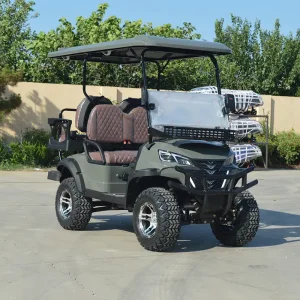
Fleet Portfolio
Precision Fleet Architectures (Top Tier Series)
Engineered for high-duty resort operations, utility support, and community transportation networks requiring custom chassis dynamics and battery safety integration.

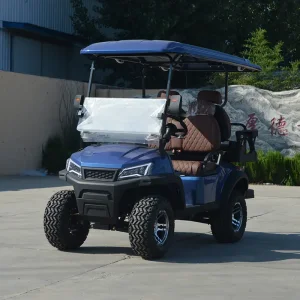
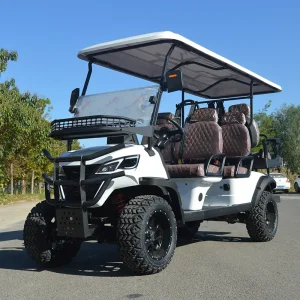

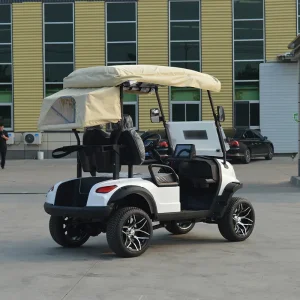
Macro Industry Insight
The Global Shift in Low-Speed Electric Mobility (LSV)
A technical assessment of modern fleet transition: moving beyond recreation into critical intra-campus transit, smart cargo routing, and sustainable urban hubs.
72V AC
Standard High-Efficiency Architecture
3,500+
LiFePO4 Deep Lifecycle Discharge
>30%
Gradeability with Full Payload Capacity
IP67
Powertrain Water & Dust Ingress Rating
Lithium-Iron-Phosphate (LiFePO4) Transition
Traditional flooded lead-acid batteries suffer from thermal decay, heavy parasitic mass, and ongoing acid maintenance routines. Modern OEM/ODM procurement prioritizes high-density LiFePO4 packs integrated with automotive-grade Battery Management Systems (BMS). This switch eliminates terminal corrosion, lowers curb mass by up to 140 kg, supports fast opportunity charging, and extends working operational lifespans past seven years in rigorous resort loops.
AC Asynchronous & PMSM Motor Superiority
Direct-current (DC) brushed systems with mechanical commutators create thermal failure bottlenecks under high ambient load. Engineering 72V AC asynchronous and Permanent Magnet Synchronous Motors (PMSM) paired with intelligent programmable controllers (Curtis/Enpower platforms) enables dynamic regenerative braking, steep-incline anti-rollback holds, and sustained torque curves across fluctuating terrain without brush replacement overheads.
Chassis Kinematics & Anti-Corrosion Metallurgy
Harsh coastal environments and tropical humidity demand advanced metallurgy. State-of-the-art robotic welding fixtures apply micro-alloyed structural tubular steel coated via multi-stage electrophoretic deposition (ED/E-coat). Paired with independent double-wishbone front suspension and variable helical coils, this platform preserves passenger stabilization, reduces tire scrubbing, and resists structural corrosion under continuous UV and saline exposure.
Procurement Engineering
48V vs. 72V Powertrain Evaluation
A comparative engineering reference for institutional purchasers, B2B fleet managers, and municipal utility coordinators.
| Evaluation Parameter | Legacy 48V Powertrain Platform | Next-Gen 72V Lithium Architecture | Fleet Procurement Impact |
|---|---|---|---|
| Current Draw & Thermal Loss | Higher continuous current draw (I²R losses); pronounced thermal build-up under continuous load. | Lower line current at equal mechanical output; cooler running controllers and longer motor duty. | Reduces motor insulation breakdown and extends electronic component longevity by 40%. |
| Incline Gradeability (Loaded) | 15% to 20% max incline before thermal derating; sluggish speed drop with 6 passengers. | Sustained 25% to 35% gradient capacity; instant low-RPM torque delivery on hills. | Critical for tiered resort terrain, undulating links, and heavy multi-passenger transit. |
| Lifecycle Infrastructure Cost | Frequent cell equalizing, water replenishment, terminal scrubbing, and 2-year replacements. | Integrated smart BMS protection, zero watering, 3,500+ full charging cycles, light frame weight. | Reduces total cost of ownership (TCO) across 5 years by up to 38% despite higher initial capital. |
| Solar Range Extension | Limited roof area charging efficiency due to lower voltage differentials and high pack bulk. | Seamless integration with flexible monocrystalline solar roofs for up to 15-20 km daily trickle gains. | Ideal for off-grid operations, remote agricultural estates, and uninterrupted shift duty. |
Global Regulatory Framework
Compliance, Homologation & Territory Customization
Every commercial ecosystem demands strict alignment with national safety mandates, public-road certifications, and fleet tracking protocols.
North America: FMVSS No. 500 & SAE J2358
For street-legal LSV registration, our engineering lines integrate dot-certified three-point seat belts, automotive laminated windshields with electronic wipers, rear-view mirror arrays, precise horn decibel limiters, illuminated license holders, and speed governing calibrated strictly between 20 mph (32 km/h) and 25 mph (40 km/h).
Europe: CE Certification & L6e/L7e Directives
Meeting rigorous European standards demands mechanical dual-circuit hydraulic braking systems, independent parking pawls with audible disengagement indicators, electromagnetic compatibility (EMC) testing, and specialized lighting equipment complying with E-mark requirements across all road-facing lenses.
Oceania & Middle East: Environmental Hardening
Extreme thermal ambient conditions require specialized UV-inhibited polyolefin shells, specialized sealed waterproof harness looms with Deutsch connectivity, high-discharge radiator fans for transaxles, and sand-deflection steering boots for uninterrupted coastal and desert compound operation.
Application Profiles
Tailored Solutions for Industrial and Commercial Scenarios
Targeted engineering configurations designed to solve specific load, route, and duty-cycle challenges.
Hospitality & Eco-Resorts
Quiet, whisper-smooth, zero-emission 4-seat and 6-seat guest transfer buggies equipped with deep plush cushions, split fold-down rear seats, onboard beverage compartments, and low step-in heights for passenger accessibility.
Intra-Facility Manufacturing & Warehousing
Heavy-duty utility bed variants built with reinforced aluminum dropside trays, heavy cargo tie-downs, towing hitches up to 1.5 tons, and non-marking industrial tires designed for interior plant and yard transfer loops.
Campus, Municipal & Security Patrol
Configured with high-output auxiliary emergency LED light bars, two-way telematics mounts, lockable under-seat compartments, high-durability weather curtains, and continuous slow-crawl capability without system overheating.
Technology Horizon
Engineering Roadmap: Connected & Autonomous Fleets
How our R&D pipelines are actively integrating telemetry, predictive lifecycle tracking, and smart grid charging protocols.
Edge Telematics & Predictive Maintenance
Integration of 4G/LTE embedded telematics boxes communicating via standard CAN-bus architecture. Fleet dispatchers monitor state-of-charge (SoC), cell temperature imbalances, geofencing breaches, sudden collision impacts, and brake pad wear indices in real time through unified REST APIs.
Autonomous Navigation & Geo-Limiting
Active pilot programs testing localized LiDAR and stereo vision vision-fusion kits for level-4 low-speed geo-fenced campus mobility. Automated return-to-base docking, route tracking, and automated emergency obstacle avoidance will eliminate operator overhead in structured industrial parks.
Integrated Clean-Tech Solar Canopy Synthesis
Transitioning from aftermarket bolt-on panels to fully integrated structural fiberglass solar cowlings. By utilizing multi-junction shingled photovoltaic cells, energy absorption is optimized under diffuse light, providing perpetual maintenance charging that offsets onboard auxiliary loads (lighting, audio, refrigeration).
Commercial Lineup
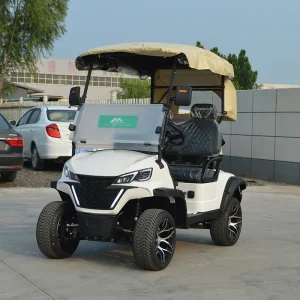
High-Efficiency Utility & Sightseeing Vehicles
Explore our extended series of multi-passenger shuttles, utility haulers, and custom low-speed fleet buggies built to precise OEM specifications.

Technical & Sourcing FAQ
Frequently Addressed Engineering & Sourcing Inquiries
In-depth responses covering chassis customization, battery integration, global container packing, and after-sales support protocols.
What core advantages does an ODM manufacturing model offer over standard OEM white-labeling?
While standard OEM typically provides custom badging and exterior paint adjustments on existing chassis, our ODM (Original Design Manufacturing) service enables institutional clients to dictate ground-up mechanical engineering. This encompasses proprietary CAD-designed tubular chassis configurations, custom load bed dimensions, specialized high-torque gear ratio selection for hilly topographies, custom software profiles within the motor controller, and targeted component homologation for specific regional roadway compliance.
How are high-voltage lithium battery systems protected against harsh oceanic shipping conditions?
Every LiFePO4 battery pack ships in a dry, isolated state compliant with UN38.3 maritime transportation standards. The battery cells reside in an IP67 sealed, vibration-damped aluminum extrusion casing featuring integrated pressure relief valves. The internal Battery Management System (BMS) incorporates automated low-voltage sleep modes to prevent deep parasitic drain during transit, while outer electrical connectors are capped with protective dielectric barriers and vacuum-sealed packaging to eliminate oxidation during ocean freight.
What is the standard container loading density and structural packing methodology?
Depending on wheelbase length and lift kit installations, a standard 40ft High Cube (HQ) container accommodates between 8 to 12 completely built units (CBU) or up to 18 to 24 semi-knocked-down (SKD) assemblies. Vehicles are nested within structural steel jigs that bolt directly to the container floor rings, preventing mechanical deflection, chassis rubbing, or suspension fatigue during high-sea passages. Pre-numbered assembly packs and full torque manuals ensure quick assembly at destination port facilities.
How does your factory handle warranty fulfillment and regional technical troubleshooting?
We provide a tiered global service architecture. Each fleet contract includes designated consumable wear packages (bushings, brake pads, relays, cables) shipped directly with the primary container. For mechanical or electronic diagnostics, our factory provides direct access to CAN-bus diagnostic software, handheld controller programming units, detailed electrical harness schematics, and same-day video engineering consultations. Critical electrical components (controllers, motors, BMS units) are covered under modular rapid-replacement warranty programs.