
Premier Fleet Implementations: Series Production (Batch I)
Engineered for harsh terrain, multi-shift enterprise operations, and passenger transit. Review our standardized high-efficiency electric buggies and off-road mobility configurations direct from our integrated manufacturing plant.

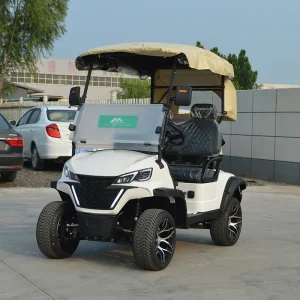
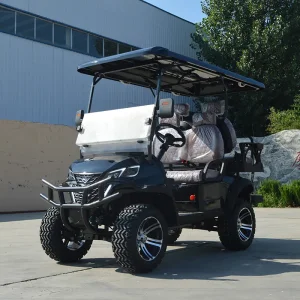
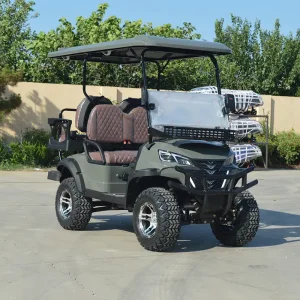
The Paradigm Shift in Commercial Absolute Golf Car Procurement
Strategic institutional evaluation of total cost of ownership (TCO), fleet lifecycle electrification, and regulatory shifts transforming low-speed utility transit from simple sports utility to critical enterprise infrastructure.
Enterprise Fleet Electrification: The 72V Transition
Across the international low-speed electric vehicle (LSEV) landscape, global procurement standards have evolved beyond simple aesthetic recreational buggies. Major international buyers—ranging from multi-property destination resorts in the Mediterranean and the Caribbean to metropolitan closed-campus facilities, high-security government complexes, and international industrial logistics hubs—demand rigorous absolute mechanical integrity and thermal stability.
The traditional 48V lead-acid powertrain, long standard across golf facilities, has proven economically and operationally deficient for modern continuous duty. Lead-acid chemistries present severe TCO bottlenecks: toxic outgassing, labor-intensive water replenishment schedules, catastrophic capacity degradation within 400 to 600 cycles, and steep voltage drops under incline acceleration. Our OEM Absolute Golf Cars Factory infrastructure in Dezhou, China has championed the structural transition to high-density 72V LiFePO4 (Lithium Iron Phosphate) cell matrices paired with intelligent dynamic micro-inverter AC drive motors.
Direct-from-Source Industrial Scaling
Intermediary brokers and regional branding agencies consistently inflate vehicle capitalization expenses while compromising warranty enforcement and custom homologation. Sourcing direct from certified Tier-1 manufacturing facilities like Dezhou Leibin Vehicle Industry Co., Ltd. resolves these systemic procurement liabilities.
Our integrated 13,000 m² heavy-manufacturing complex controls every phase of production: precision robotic chassis welding in dedicated structural jigs, automated multi-stage zinc phosphate anti-corrosion dipping, electro-static powder baking, in-house automotive wiring harness weaving, and rigorous ISO-certified dynamometer load testing. By centralizing core mechanical competencies, we furnish corporate concessionaires with fully auditable bill of materials (BOM), consistent component lineage, and scalable volume throughput.
Engineered Low-Speed Mobility by Industry Vertical
Duty cycles, duty hours, load capacities, and environmental conditions vary dramatically. Our vehicle engineering matrices are tailored precisely for mission-critical deployments.
Luxury Hospitality & Eco-Resorts
For high-end eco-sanctuaries, ultra-quiet zero-emission operation is imperative. Our 72V whisper-quiet AC permanent magnet synchronous motors (PMSM) operate beneath 48dB. Equipped with custom luxury marine-grade vinyl seating, onboard guest USB/Type-C high-speed charging modules, and corrosion-proof powder-coated aluminum trim designed for coastal saline atmospheres.
Academic & Corporate Campuses
Operating across extensive pedestrian thoroughfares requires precise programmable speed limiters (tamper-resistant 15–25 km/h thresholds), electronic hill-hold descent safety protocols, wide-angle LED perimeter projection lamps, and automotive hydraulic four-wheel disc brakes for short, controlled stopping distances in densely populated corridors.
Heavy Industrial & Airport Cargo
Utility models feature heavy-gauge checkerboard aluminum cargo beds, 500kg payload ratings, drop-tail gates, reinforced hydraulic dampeners, and 5kW high-torque AC propulsion systems. Perfect for line-side parts conveyance, aircraft apron baggage support, and multi-shift facility maintenance shifts.
Municipal Patrol & Law Enforcement
Configured specifically with integrated multi-tone emergency sirens, high-visibility 360-degree LED beacon lightbars, heavy-duty ABS impact front bumpers, lockable weatherproof gear compartments, and high-frequency communication radio pre-wiring for security agencies.
Championship Golf Courses
Equipped with specialized wide-tread turf-friendly radial tires designed to minimize ground compaction. Features dual tournament caddie bag holders, split-folding weather-seal windscreens, insulated cooler consoles, sand seed bottles, and onboard telemetry brackets for club fleet management.
Autonomous Solar Micro-Grids
Monocrystalline photovoltaic hardtop canopies harvest continuous solar energy, feeding directly into the auxiliary charge controller. Provides between 15km and 25km of autonomous passive range extension per diurnal cycle in sun-belt operating zones.
Total Cost of Ownership (TCO) & Powertrain Matrix
Data-backed performance divergence over a standard 5-year operating window (35,000 km utilization) evaluating legacy golf cart platforms versus our factory-engineered 72V Lithium platform.
| Evaluation Parameter | Standard 48V Lead-Acid Fleet | Standard 48V Lithium Conversion | Leibin OEM 72V LiFePO4 Integrated System |
|---|---|---|---|
| Nominal Battery Pack Voltage | 48V (6x 8V or 4x 12V Flooded) | 48V Drop-in Pack | 72V High-Potential Industrial Pack |
| Cycle Life Expectancy (80% DoD) | 450 – 650 Cycles (approx. 2 years) | 1,800 – 2,200 Cycles | 3,500 – 4,500+ Cycles (8–10 years) |
| Thermal Rise Under Peak Incline | Severe (+35°C above ambient) | Moderate (+18°C above ambient) | Minimal (< +8°C due to 33% lower current draw) |
| Powertrain Motor Efficiency | DC Shunt Motor (72% – 78%) | AC Induction Motor (84% – 88%) | High-Efficiency AC PMSM (93% – 96%) |
| Pack Weight Impact | 150 kg – 180 kg (High turf wear) | 60 kg – 75 kg | 55 kg – 70 kg (Optimized center-of-gravity) |
| Routine Maintenance Overhead | High: Terminal cleaning, fluid topping | Zero acid; periodic BMS check | Zero maintenance; Cloud CAN-bus diagnostics |
| 5-Year Fleet Power Consumption | Estimated 14,200 kWh per vehicle | Estimated 9,800 kWh per vehicle | Estimated 7,200 kWh (Regen capture active) |
| 5-Year Comprehensive TCO | High baseline (+100% replacement cost) | Moderate (-28% vs lead-acid) | Lowest (-54% overall fleet operating costs) |
Technology Roadmap: 2025–2028 Strategic Outlook
How our factory research and development institute in Dezhou is advancing the intersection of telemetry, automated guidance, solid-state chemistries, and sustainable solar composites.
Next-Gen IoT Telematics
Universal rollout of LTE 4G/5G edge telematics gateway on all commercial golf buggy platforms. Real-time geo-fencing, speed governance zones, digital battery cell balance reporting, and automated crash notification.
Level-2 Campus LSEV Autonomy
Integration of solid-state LiDAR sensors and dual stereoscopic cameras with low-latency edge AI processors for autonomous luggage conveyance and fixed-route hotel shuttle routes without human operators.
Semi-Solid-State Battery Integration
Commercialization of non-flammable semi-solid battery packs for extreme climatic environments (-30°C to +65°C), doubling volumetric energy density and eliminating fire hazard risks in covered resort garages.
Closed-Loop Circularity
100% recyclable thermoplastic outer body shells, bio-composite chassis fairings, and end-of-life battery second-life repurposing into stationary solar storage banks across overseas dealer networks.
Global Regulatory Compliance & Localized Support
Procuring low-speed electric vehicles globally requires exact harmonization with sovereign transportation safety mandates, electrical certifications, and regional logistics frameworks.
North American DOT / FMVSS No. 500 & SAE J2358
For municipal street-legal Low-Speed Vehicle (LSV) operation across the United States and Canada, our manufacturing engineering division prepares vehicles meeting Federal Motor Vehicle Safety Standard FMVSS 500. This mandates certified DOT AS4 automotive glass windscreens with integral wipers, three-point retracting inertial seatbelts, illuminated side reflectors, illuminated license plate brackets, DOT-approved headlamps and turn signals, rear-view panoramic mirrors, and VIN plate embossing formatted under SAE 17-digit ISO standards.
European Union EEC L6e / L7e Directives & CE Marking
For imports destined for EU member states, our export configurations adhere to Regulation (EU) No 168/2013 under L6e-A (Light On-Road Quadricycle) and L7e-A (Heavy On-Road Quadricycle) classifications. Vehicles are provided with verified electromagnetic compatibility (EMC) testing reports (ECE R10), low-voltage electrical safety certifications, CE declarations of conformity, and harmonized COC documentation allowing frictionless customs clearance and regional registration.
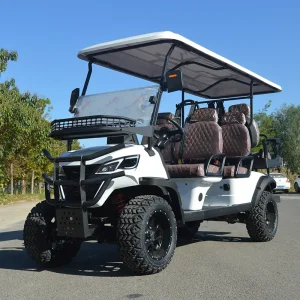
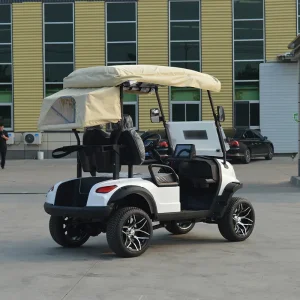
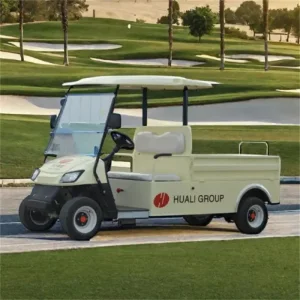
Specialty Electric Vehicles & Advanced Models (Batch II)
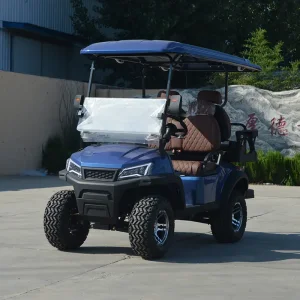
Explore our flagship solar configurations, CE-certified low-speed personal carriers, customized gold edition golf buggies, and heavy cargo truck chassis direct from our production lines.


Frequently Asked Strategic Procurement Questions
Comprehensive commercial, engineering, and logistics answers for global concessionaires, fleet procurement directors, and authorized regional distributors.
What distinguishes an "Absolute Golf Car Factory" from general vehicle trading intermediaries?
An absolute direct OEM manufacturing facility maintains direct capital ownership over foundational structural and mechanical production processes. Unlike commercial trading agencies that re-badge third-party products, our Dezhou industrial base executes robotic jig chassis fabrication, computerized anti-corrosion cathodic immersion dipping, automotive paint shop spraying, powertrain integration, custom harness loom weaving, and dynamometer road simulation under strict ISO 9001 quality audits.
Procuring directly guarantees full supply chain transparency, direct engineering consultations for custom wheelbases or battery enclosures, verified component warranties, and uninterrupted lifecycle access to original mechanical and electronic spare parts.
Why should fleet operators mandate 72V Lithium (LiFePO4) instead of 48V Lead-Acid?
From an electrical engineering standpoint, raising operating nominal voltage to 72V reduces necessary system amperage by approximately 33% to deliver identical output power (Watts = Volts × Amperes). Lower amperage results in substantially less I²R thermal waste within wiring harnesses, motor windings, and motor controller MOSFETs, ensuring cool operation across heavy gradients.
Concurrently, Lithium Iron Phosphate (LiFePO4) chemistry eliminates acid corrosion, requires zero electrolyte topping, maintains flat discharge curves, reduces total pack weight by more than 60%, and yields over 3,500 deep discharge cycles compared to 500 cycles typical of deep-cycle lead-acid batteries.
How does the factory manage container loading optimization and maritime export packing?
Logistics expenses form a substantial component of total landed per-unit vehicle cost. We engineer our buggies with modular assembly architecture, offering two primary shipping methodologies:
- SKD (Semi-Knocked Down) in Modular Steel Crates: Wheels, roof structures, and windshields are packed alongside chassis in stackable high-tensile steel frames with moisture-barrier wrapping, maximizing container capacity (up to 18–24 units per 40ft HQ container depending on seat configuration).
- FBU (Fully Built-Up) Direct Roll-On: Fastened to internal container tie-down tracks with industrial ratchet webbings for immediate operational deployment upon destination port arrival.
Can vehicle speed profiles and acceleration curves be customized for strict campus safety rules?
Yes. Every vehicle equipped with our programmable AC motor controllers (e.g., Curtis or Enpower platforms) allows deep software parameter calibration. Our factory engineering team configures precise top speed governance (ranging from strict 15 km/h school zone limits up to 40 km/h open thoroughfare speeds), throttle response curves, electromagnetic regenerative braking intensity, and automatic zero-roll hill-hold descent safety before ocean shipment.
What is the official warranty coverage and overseas spare parts supply mechanism?
Our standard international B2B warranty provisions provide 5 years of structural coverage on the high-tensile welded chassis, 3 to 5 years (or 3,000 cycles) on LiFePO4 battery modules, and 2 years on electric motors, transaxles, and controllers. Overseas fleet operators receive recommended maintenance wear-parts packages (brake pads, bushings, LED lenses, switchgear) packed inside each container shipment, backed by express DHL/FedEx air dispatch for mission-critical parts and direct remote video engineering support.