
Engineered Low-Speed Patrol & Utility Fleet Platforms
Explore direct factory configurations engineered for multi-shift security presence, resort surveillance, and continuous perimeter monitoring. Built on high-tensile robotic welded chassis and optimized lithium powerplants.

Wholesale China Factory Suppliers of 2-Seater Electric Sightseeing Cars, Golf Carts, and Versatile G70 Electric Vehicle Supplier, Suppliers
Configure Model
Best The Factory Directly Supplies 2-Seater Electric Sightseeing Cars, Golf Carts, Club Cars and Vans for Sale Manufacturers, Manufacturer
Configure Model
Buy 72V AC Mini Electric Golf Cart for Sale - China Suppliers & Factory, 4-Seat Lithium Battery Model, CE Certified Suppliers, Factory
Configure Model
Wholesale Electric Golf Cart 4seated Golf Buggy Sightseeing Bus off-Road 72vgolf Cart Manufacturers, Factory
Configure Model
Cheap 72V New Style Modern Fashion 6 Seat Golf Cart Electric Golf Buggy Manufacturers, Supplier
Configure Model
Wholesale 72V AC Mini Electric Golf Cart Buggy Gold Color 4-Seat Golf Cart with Lithium Battery CE Certified and Tail Caddie Equipment Factory, Factories
Configure Model
Cheap China Supplier Factory Leibin G90 72V Lithium Battery Off-Road Electric Golf Cart - 4 Seaters, Solar Power, 35 km/h Speed Suppliers, Factory
Configure Model
Best China Suppliers Factory 72V AC Mini Electric Golf Cart 4-Seat Buggy Gold Color Lithium Battery CE Certified Manufacturers, Supplier
Configure ModelThe Paradigm Shift in Low-Speed Electric Patrol Vehicles (LSV/NEV)
Modern security logistics, industrial asset protection, and municipal enforcement demand an unprecedented combination of duty-cycle availability, silent tactical maneuverability, zero local emissions, and low lifecycle operating costs. As internal combustion engine (ICE) utility units face decommissioning under ESG and carbon mandates, specialized OEM electric patrol car manufacturers have transitioned from repurposed golf-cart conversions to purpose-built, homologated low-speed electric platforms.
Procurement Insight: Sourcing managers must evaluate patrol vehicle platforms not simply on initial unit procurement price, but on structural durability under repetitive stop-and-go duty cycles, chassis torsional rigidity, brake thermal dissipation, and the intelligence of the integrated Battery Management System (BMS).
Localized Operational Scenarios & Duty-Cycle Alignment
Different environments introduce distinct mechanical strains, ambient exposure conditions, and speed regulation brackets. Tailored OEM manufacturing guarantees component-level optimization for every specific site architecture.
University & Corporate Campuses
Campus environments mandate whisper-quiet operation during academic hours and high pedestrian-zone safety. Our electric patrol cars incorporate speed governors (configurable between 15 km/h to 30 km/h), ultra-wide peripheral visibility windshields, soft-pedal regenerative braking curves to prevent jerking in crowded walkways, and overhead high-intensity multi-color LED emergency beacons to ensure instant emergency recognition.
Eco-Resorts & National Parks
Environmentally fragile zones cannot tolerate oil drippage, hydraulic spills, or acoustic disturbance. Leibin 72V lithium and solar-boosted variants deliver silent perimeter patrol with zero tailpipe emissions. Anti-corrosive electro-coating (e-coat) protects against high humidity and coastal salt-spray degradation, while ruggedized low-impact all-terrain tires ensure gradeability over loose gravel, sand, and steep trails up to 30% slope.
International Airports & Logistics Hubs
Operating across terminal interiors and exterior aprons requires compliance with stringent industrial electromagnetic compatibility (EMC). Our sealed AC asynchronous and permanent magnet synchronous motors eliminate sparking risks around fueling areas. Vehicles are fitted with high-decibel audible reversing alarms, beacon towers, heavy-duty front bull-bars, and interior computer docks for barcode scanning and flight dispatch radios.
Municipal Police & Urban Public Squares
In dense pedestrian centers, historic plazas, and tourist avenues, standard patrol cruisers are too bulky and disruptive. Compact 2-seater and 4-seater electric patrol vehicles provide rapid officer response through bollard-restricted corridors. Equipped with PA loudspeaker intercom systems, multi-tone sirens, high-definition dash cameras, and lockable onboard compartments for tactical gear and first-aid response kits.
Industrial Petrochemical & Heavy Manufacturing
Continuous 24-hour perimeter security over expansive industrial acreage stresses vehicle suspension and battery systems. Our platforms integrate reinforced trailing arm or independent MacPherson front suspensions, heavy payload rear leaf springs, and rapid-swap battery trays. Fleet managers can execute back-to-back 8-hour guard shifts without pausing for lengthy AC charging cycles.
Gated Communities & Private Golf Estates
Balancing neighborly aesthetics with vigilant deterrence, these models feature automotive-grade split LED headlights, ergonomic marine-grade vinyl seating, weatherproof side rain curtains, and onboard 12V/USB power ports to keep officer tablets and mobile body cameras charged throughout evening surveillance patrols.
Technical Roadmap: Telematics, Solid-State & Autonomous Edge
Electric patrol car platforms are rapidly advancing toward full cloud connectivity, predictive diagnostics, and unmanned autonomous perimeter navigation. Discover the engineering trajectory built into Leibin manufacturing blueprints.
IoT Fleet Telematics & CAN-Bus Integration
Standardization around Open CAN-Bus protocols enables bi-directional telemetry transmission over 4G/5G modules. Central control rooms can monitor vehicle location via real-time GPS, enforce geofencing boundaries, restrict speeds remotely, track battery state of charge (SoC), monitor cell temperatures, and receive instant tamper notifications.
LiFePO4 to Solid-State Energy Migration
While lithium iron phosphate (LiFePO4) remains the industry gold standard for safety and thermal stability, Leibin test benches are currently piloting semi-solid-state cells. The shift targets an energy density leap from 160 Wh/kg to >260 Wh/kg, unlocking sub-zero operating capabilities down to -30°C without significant capacity fade.
Level 4 Autonomous Perimeter Patrol
Drive-by-wire steering actuators, electronic hydraulic braking (EHB), and RTK-GNSS positioning modules lay the foundation for hybrid piloted-and-autonomous operations. Using roof-mounted solid-state LiDAR sensors and 360-degree computer vision cameras, patrol cars can autonomously follow designated night patrol rounds while streaming AI anomaly detection.
Integrated High-Efficiency Solar Ceilings
Integrating monocrystalline curved photovoltaic cells directly into the composite roof structure yields 300W to 500W of supplemental solar generation. In southern climates and sunny resort facilities, this provides an additional 12–20 km of operational patrol range daily, effectively running onboard surveillance electronics without battery penalty.
China Supply Chain Resilience: The Dezhou Automotive Industrial Cluster
Dezhou, Shandong, stands as the epicentre of global special-purpose and low-speed electric vehicle manufacturing. The geographic clustering of specialized Tier-1 component producers provides unmatched structural advantages for international OEM buyers.
Vertical Integration & 30-Kilometer Supply Radius
Within a 30-minute radius of Leibin’s 13,000 m² factory floor lies a concentrated ecosystem of stamped-steel chassis fabricators, thermoformed ABS body molding suppliers, automotive transaxle foundries, and harness assembly facilities. This localized density eliminates ocean/rail sub-assembly delays, slashes lead times, and cushions production schedules against geopolitical supply shocks.
Rapid Prototype Tooling & Mold Customization
Where Western assembly plants require 6 to 9 months for customized patrol vehicle body shells or specialty equipment mountings, our internal tooling and rapid CNC mold milling facilities reduce design-to-prototype iterations to less than 28 calendar days. Custom light-bar housings, prisoner partitions, or specialized canine kennels are engineered quickly and accurately.
Aggressive Economies of Scale & Bill-of-Materials Efficiency
High-volume domestic procurement of automotive-grade components—including Enpower/Curtis programmable AC controllers, CATL/EVE battery cells, and Wuxing electronic differentials—enables Leibin to supply internationally certified low-speed electric patrol vehicles at 40% to 55% lower capital cost than traditional European or North American specialty suppliers.
| Evaluation Parameter | Leibin OEM Factory (China Cluster) | Traditional Regional Assembler (US/EU) | Third-Party Trading Intermediary |
|---|---|---|---|
| Chassis Manufacturing | In-house automated robotic welding & cathodic e-coating | Outsourced third-party frame fabricators | Unknown / Secondary sourcing broker |
| Battery Systems | Automotive LiFePO4 modules with Smart CAN-BMS | Lead-acid standard / Costly lithium upgrade | Generic unbranded battery packs |
| OEM/ODM Flexibility | Deep customization (chassis stretch, roll-cages, paint) | Strict catalog configurations only | Limited to bolt-on cosmetic accessories |
| Lead Times (50-Unit Fleet) | 20 to 30 business days | 12 to 24 weeks | Unpredictable / Staggered delivery |
| Direct Technical Support | Direct dialogue with vehicle R&D engineers | Local dealer network with markups | Non-technical sales agents |
Global Regulatory Homologation: FMVSS 500, EEC L6e/L7e & ISO Standards
Deploying low-speed electric patrol vehicles on mixed-traffic public thoroughfares, corporate property, or military bases requires verified compliance with regional vehicle safety standards. Leibin vehicles are engineered from the ground up for streamlined market homologation.
North America: FMVSS No. 500 & SAE J2358
In the United States and Canada, Low-Speed Vehicles (LSVs) capable of 20 to 25 mph (32 to 40 km/h) operating on public roadways with speed limits up to 35 mph must satisfy Title 49 CFR Part 571.500. We configure our patrol platforms with DOT-approved AS4 laminated glass windshields, automotive wipers, 3-point ELR seatbelts, side/rear mirrors, red rear reflectors, and parking brake interlocks.
European Union: Regulation (EU) 168/2013 (L6e / L7e)
European procurement projects require light quadricycle (L6e-BP) or heavy quadricycle (L7e-CP) commercial type approvals. Our engineering team supplies complete documentation packs—including CE directives, electromagnetic compliance certificates (ECE R10), braking system validation (ECE R13H), and mechanical seat anchor pull-test reports.
Extreme Climate & Tropical Weatherproofing
Vehicles delivered to the GCC / Middle East or equatorial Asia face ambient temperatures exceeding 50°C and relentless UV bombardment. Leibin integrates high-volume thermal fans across battery enclosures, UV-stabilized polycarbonate panels, sealed wiring connectors with IP67 waterproofing, and optional enclosed air-conditioned cabs.
Powertrain Engineering: Why 72V Lithium Dominates Fleet Security
Selecting the wrong electrical voltage and chemical topology compromises patrol vehicle reliability and inflates long-term fleet maintenance costs. Here is the operational reality of 48V versus 72V systems in multi-shift patrol deployment.
| Performance Characteristic | Conventional 48V Flooded Lead-Acid | Advanced 72V LiFePO4 (Leibin Standard) | Operational Impact on Patrol Fleets |
|---|---|---|---|
| Continuous Torque & Hill Gradeability | Moderate; severe torque roll-off below 50% SoC | High constant torque output; climbs >25% grades even at 20% SoC | Crucial for perimeter fences with steep inclines and variable surfaces |
| Pack Weight vs Energy Density | Heavy (~320 kg); reduces payload and accelerates tire wear | Ultra-light (~115 kg); 65% weight reduction | Lower overall curb weight improves braking distances and steering response |
| Operating Lifecycle | 400 to 600 cycles (Requires replacement every 1.5–2 years) | 3,500 to 5,000 cycles (8 to 10 years continuous service) | Dramatically lowers 5-year and 10-year Total Cost of Ownership (TCO) |
| Daily Maintenance Burden | High; weekly distilled water replenishment, terminal terminal acid cleaning | Zero maintenance; hermetically sealed with integrated automated BMS | Eliminates security depot maintenance downtime and chemical hazard liabilities |
| Opportunity Charging Readiness | Poor; frequent partial charges cause premature plate sulfation | Excellent; accepts high-current top-up charges during officer meal breaks | Enables 24/7 continuous dual or triple-shift rotation per patrol vehicle |
Specialty Patrol, Utility & Sightseeing Vehicles
Explore additional customized configurations, cargo utility flatbeds, 6-seater multi-officer transport platforms, and CE-homologated electric buggies engineered for institutional reliability.
Best 72V Modern 6-Seater Electric Golf Cart - Factory Direct from China Suppliers, Ideal for On-Road and Off-Road Use Manufacturer, Suppliers
Configure Model
Best Electric Cars Buggy Golf Beemotors Supply CE Approved 15-40km/H Low Speed Electric Buggy Golf Car Manufacturers, Factories
Configure Model
ODM Wholesale 6 Seat Electric Golf Carts - 72V Lithium, Customized Comfort from China Suppliers and Factory Supplier, Factory
Configure Model
ODM Low-Speed Electric Golf Car from China Suppliers - CE Approved 15-40km/H Beemotors G70-4+2 Factory Model Suppliers, Factories
Configure Model
Wholesale 72V Electric Golf Cart - Modern 6-Seater Buggy from China Suppliers | High-Quality Factory Manufacturing Suppliers, Factories
Configure Model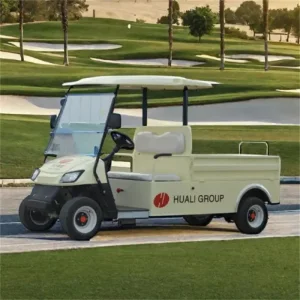
Cheap Cargo Electric Utility off Road Truck Golf Cart 48V Utility Gulf Cart Electric Golf Car Suppliers, Factory
Configure Model
China Wholesale 6 Seat Electric Golf Carts, 72V Lithium Customized Comfortable 4 Seat Electric Golf Buggy Supplier, Suppliers
Configure Model
OEM Affordable China 4-Seater Electric Golf Cart - Off-Road Adventure with Custom Battery Options from Trusted Suppliers & Factory Manufacturers, Supplier
Configure ModelFrequently Asked Questions for Fleet Buyers & Importers
Clear, technically thorough answers addressing electrical engineering, export shipping configurations, spare parts inventory strategy, and custom factory modifications.
While both share low-speed classifications, standard golf carts are designed for light-duty turf driving with low duty cycles (3–4 hours daily). A purpose-built OEM electric patrol car features a heavily reinforced high-strength tubular steel chassis, heavy-duty suspension bushings, automotive-grade four-wheel hydraulic disc brakes, high-torque AC or PMSM motors, higher amp-hour LiFePO4 batteries, dual-circuit wiring harnesses, and reinforced roof pillars engineered to bear the weight of emergency LED lightbars, sirens, and tactical camera rigs.
Every Leibin export shipment includes a comprehensive homologation and logistics pack: Official Certificate of Conformity (COC), CE Declaration, MSDS (Material Safety Data Sheet) and UN38.3 test summaries for lithium battery transport, full electrical wiring schematics, chassis VIN stamping records, container loading diagrams, and manufacturer factory inspection sign-off sheets verifying dyno, brake, and water-spray testing.
Yes. Through our flexible in-house chassis jigging and dashboard thermoforming systems, our engineering team regularly builds Right-Hand Drive (RHD) configurations for clients in the United Kingdom, Australia, South Africa, New Zealand, the Caribbean, and Southeast Asian markets. Steering racks, accelerator/brake pedal boxes, and dashboard gauge clusters are mirrored without aftermarket compromises.
Loading density depends on the vehicle length, roof configuration, and whether Complete Built-Up (CBU) or Semi-Knocked-Down (SKD) packaging is chosen. In a standard 40-foot High Cube (40' HQ) container, we typically load 8 to 10 units in SKD format (with wheels and roofs carefully racked) using welded steel protective crating frames to prevent transit rubbing, or 4 to 6 units fully assembled in CBU configuration for immediate roll-off operation.
We provide a recommended "Year-1 / Year-2 Fleet Maintenance Kit" with every volume order, containing high-wear components such as brake pads, suspension bushings, tie-rod ends, headlight modules, key switches, and electronic relays. Furthermore, we maintain a dedicated technical dispatch desk providing video-assisted diagnostics, firmware calibration files, and express air courier replacement for critical electrical controller or charger assemblies.
OEM/ODM clients can fully customize body color matching (RAL or Pantone codes), institutional vinyl livery and badge branding, police light-bar frequency and lens color, siren amplifiers, fully enclosed aluminum doors with sliding glass, rear cargo utility boxes, hydraulic gun racks, solar-panel ceiling arrays, custom tire profiles, and specialized telematics hardware integrations.
Initiate Your Fleet Specification & Factory Procurement
Speak directly with our senior chassis and electrical design engineers. Review CAD dimensions, discuss regional homologation pathways, or arrange a private live video inspection of our Dezhou manufacturing facility.