
High-Efficiency OEM Commercial Fleet Platforms
Explore our foundational configurations built for golf resorts, luxury hospitality, private communities, and industrial operations worldwide.
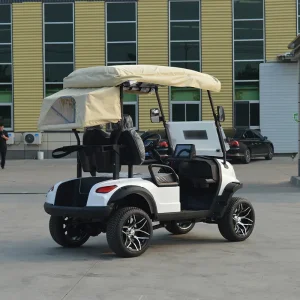
China Affordable Electric 2 Seater Mini Sightseeing Car Golf Cart from China Suppliers and Factory Supplier, Factories
Technical Specs & RFQ
OEM Affordable 2 Seater Mini Sightseeing Car Golf Cart Electric Cars Manufacturer, Suppliers
Technical Specs & RFQ
Cheap Wholesale China 6 Seat Electric Golf Carts, 72V Lithium Battery, Comfortable Customized Golf Buggy from Suppliers & Factory Factory, Factories
Technical Specs & RFQ
Best China Suppliers Factory 72V AC Mini Electric Golf Cart 4-Seat Buggy Gold Color Lithium Battery CE Certified Manufacturers, Supplier
Technical Specs & RFQ
Best The Factory Directly Supplies 2-Seater Electric Sightseeing Cars, Golf Carts, Club Cars and Vans for Sale Manufacturers, Manufacturer
Technical Specs & RFQ
Wholesale 72V AC Mini Electric Golf Cart Buggy Gold Color 4-Seat Golf Cart with Lithium Battery CE Certified and Tail Caddie Equipment Factory, Factories
Technical Specs & RFQ
Buy 72V AC Mini Electric Golf Cart for Sale - China Suppliers & Factory, 4-Seat Lithium Battery Model, CE Certified Suppliers, Factory
Technical Specs & RFQ
Wholesale China Factory Suppliers of 2-Seater Electric Sightseeing Cars, Golf Carts, and Versatile G70 Electric Vehicle Supplier, Suppliers
Technical Specs & RFQTechnological Roadmap & Future Outlook (2025–2030)
The transition from legacy low-speed golf buggies to connected, intelligent low-speed electric mobility (LSV) platforms demands systemic powertrain evolution.
Phase I: 72V High-Density LiFePO4 Transition
Traditional 48V lead-acid configurations are being systematically replaced by high-voltage 72V Lithium Iron Phosphate (LiFePO4) architectures. Higher operational voltage reduces thermal losses by up to 35% through reduced amperage draws, prolonging cable assembly integrity and maximizing battery discharge efficiency under steep gradient operational loads.
Phase II: CAN-Bus Fleet Telematics & Remote Diagnostics
Our OEM vehicles incorporate standardized Controller Area Network (CAN-Bus) protocols linked to 4G/5G IoT telematics transceivers. Fleet operators access real-time cell voltage balance, motor temperature thresholds, localized geofencing limits, and battery state-of-health (SoH) diagnostics directly via cloud dashboards or mobile API webhooks.
Phase III: Autonomous Micro-Transit & Solar Integration
Integrating high-efficiency mono-crystalline solar roofs provides a steady continuous trickle-charge yield of 200W–400W, extending daily operational range by 15–22 km. Meanwhile, drive-by-wire steering and braking matrices prepare the chassis platform for Level-4 Autonomous valet, geofenced campus shuttling, and automated charging integration.
China Factory 4.0: Supply Chain Resilience & Structural Integrity
From robotic chassis jigs to automated electrophoretic bath treatments, our integrated Dezhou manufacturing facility eliminates intermediary costs while guaranteeing automotive-grade tolerance.
Automated Robotic Welding
Every vehicle subframe is produced on modular clamp jigs using robotic CO2 gas shielded arc welding. Structural weld seams achieve consistent penetration depths, delivering exceptional structural torsional rigidity over uneven terrain.
Cathodic Electrocoating (KTL)
To resist coastal salt mist and high humidity, entire metal frames undergo 18-stage degreasing, zinc phosphate pre-treatment, and cathodic electrodeposition primer baking at 180°C, passing 1,000-hour ASTM B117 salt spray ratings.
Dynamometer & Hill-Climb QA
Prior to shipment, 100% of rolling chassis pass computerized dynamometer diagnostics evaluating torque curves, dynamic braking deceleration (FMVSS 500 compliance), electromagnetic compatibility, and IP67 waterproof harness validation.
SKD / CKD Container Engineering
Engineered packaging frameworks maximize cube utilization. Custom-built modular steel shipping racks allow up to 18 units to be safely packed into a standard 40ft HQ container in CKD format, drastically reducing ocean freight costs per unit.
Macro-Industry Solutions for Global Fleet Operators
Custom-engineered low-speed electric mobility designed around route topology, operational payloads, passenger comfort, and infrastructure constraints.
Luxury Hospitality & Eco-Resorts
Engineered for whisper-quiet transit, ultra-smooth hydraulic suspension, and plush ergonomic marine-grade vinyl seating. Designed to navigate 25%+ gradients silently, enhancing guest ambiance across beachfront villas and mountain retreats.
University Campuses & Municipalities
Zero-emission passenger shuttles moving students, personnel, and civic visitors safely across pedestrian corridors. Standard equipment includes programmable speed restrictors, high-visibility LED beacons, and dual-circuit hydraulic braking.
Industrial Logistics & Security Patrol
Cargo-configured platforms sporting heavy-duty diamond-plate aluminum truck beds, lockable toolbox enclosures, reinforced towing couplers, and 48V/72V auxiliary outputs capable of operating external maintenance power tools.
Enterprise Procurement Criteria & TCO Analysis (8-Year Horizon)
A granular look at the total cost of ownership (TCO), powertrain efficiency, and lifecycle sustainability to guide procurement committees and fleet directors.
| Evaluation Parameter | 48V Flooded Lead-Acid | 48V Sealed AGM Battery | 72V High-Output LiFePO4 Platform |
|---|---|---|---|
| Initial Capital Outlay (Capex) | Baseline (Low) | Moderate (+25% vs Baseline) | Premium (+50% to +65% upfront) |
| Operational Lifespan (Cycles) | 500–750 cycles (1.5–2 years) | 800–1,000 cycles (2–3 years) | 3,500–5,000 cycles (8–10 years) |
| Scheduled Maintenance Needs | High (Bi-weekly deionized water top-off) | Low (Terminal cleaning) | Zero Maintenance (BMS Managed) |
| Curb Weight & Payload Efficiency | Heavy (~320 kg pack weight) | Heavy (~340 kg pack weight) | Ultra-Light (~85 kg, +30% payload) |
| Gradient Hill-Climb Ability | 15% to 18% max loaded | 16% to 20% max loaded | 25% to 30%+ Sustained Torque |
| Full Recharge Duration | 8–10 hours (Slow chemical absorption) | 7–9 hours | 2.5–3.5 hours (Fast Charge Ready) |
| 8-Year Cumulative Fleet TCO | High (Requires 3-4 battery pack replacements) | High (Requires 2-3 replacements) | Lowest (-42% overall fleet expenditure) |
Localization Support & Compliance Safeguards
Navigating global market certifications with direct factory documentation, VIN encoding, and customized safety configurations.
North America: FMVSS 500 & SAE J2358
For US street-legal Low Speed Vehicle (LSV) operation, our vehicles can be configured with DOT-certified AS4/AS5 laminated safety windshields, 3-point ELR seatbelts, side-view and rear-view mirrors, illuminated license plate brackets, DOT-stamped tires, and dual-beam headlights.
European Union: EEC / COC Homologation
Supporting EU L6e-A and L7e-CP micro-mobility category approvals. We supply CE Machinery Directive 2006/42/EC documentation, electromagnetic immunity validation (ECE R10), rear fog lamps, integrated acoustic vehicle alert sounders (AVAS), and factory-issued Certificates of Conformity.
Tropicalized & High-Altitude Hardening
For Caribbean, Middle Eastern, and alpine applications, we implement upgraded high-ambient AC motor cooling blowers, conformal-coated circuit boards, UV-stabilized virgin automotive polypropylene body cowlings, and desiccant-protected battery breathers.
Factory Direct Heavy-Duty & Custom Commercial Series
Explore our extended series of multi-passenger shuttles, utility haulers, and high-performance off-road platforms available for immediate OEM/ODM contract production.

Best 72V Modern 6-Seater Electric Golf Cart - Factory Direct from China Suppliers, Ideal for On-Road and Off-Road Use Manufacturer, Suppliers
Technical Specs & RFQ
Best Electric Cars Buggy Golf Beemotors Supply CE Approved 15-40km/H Low Speed Electric Buggy Golf Car Manufacturers, Factories
Technical Specs & RFQ
Buy 72V Modern 6-Seater Electric Golf Cart from China Suppliers | Reliable Factory Golf Buggy for On-Road & Off-Road Use Factory, Factories
Technical Specs & RFQ
Cheap China Supplier Factory Leibin G90 72V Lithium Battery Off-Road Electric Golf Cart - 4 Seaters, Solar Power, 35 km/h Speed Suppliers, Factory
Technical Specs & RFQ
ODM Low-Speed Electric Golf Car from China Suppliers - CE Approved 15-40km/H Beemotors G70-4+2 Factory Model Suppliers, Factories
Technical Specs & RFQ
Wholesale Wholesale 6 Seat Electric Golf Carts from China Suppliers - Customized 72V Lithium Golf Buggy Factory Direct Supplier, Suppliers
Technical Specs & RFQ
Cheap 72V New Style Modern Fashion 6 Seat Golf Cart Electric Golf Buggy Manufacturers, Supplier
Technical Specs & RFQ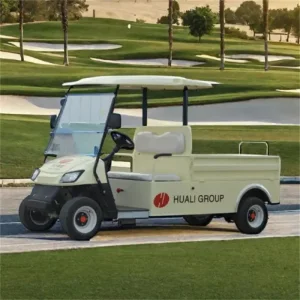
Cheap Cargo Electric Utility off Road Truck Golf Cart 48V Utility Gulf Cart Electric Golf Car Suppliers, Factory
Technical Specs & RFQEnterprise Sourcing & Engineering Inquiries
Direct technical responses covering customization, minimum order quantities (MOQ), homologation support, and lifecycle spare part staging.
What is the standard production lead time for customized OEM / ODM volume orders?
Standard lead time for containerized production orders (10 to 40 units) is typically 20 to 25 business days following technical CAD drawing sign-off and deposit receipt. Sample verification units and bespoke chassis modifications (e.g., medical stretcher integration, specialized hydraulic lift beds) require 30 to 35 calendar days for tooling calibration and dyno stress testing.
Can our engineering department request custom CAN-Bus protocol integration for private telematics systems?
Yes. Our in-house electrical R&D engineering team provides dedicated CAN 2.0B Baud rate mapping, J1939 standard configurations, and open API documentation. We configure the central vehicle control unit (VCU) and battery management system (BMS) to stream telemetry packets directly to your proprietary fleet software or hardware gateways.
How does your factory handle localized spare parts provisioning and warranty administration for overseas distributors?
Every commercial container contract includes a pre-packaged recommended critical spare parts package (switches, brake pads, relays, wiring harnesses, suspension bushings). Major powertrain components, including our AC induction / PMSM motors, Enpower / Curtis controllers, and LiFePO4 battery modules, carry a comprehensive 3-year factory warranty backed by air-express component dispatch within 48 hours of ticket validation.
What container loading configurations are recommended to optimize maritime freight expenditure?
We provide two shipping configurations: Completely Built Up (CBU) inside customized heavy-duty steel skeleton pallets for zero-assembly unloading (typically 6–8 units per 40ft HQ), and Semi-Knocked Down (SKD) / Completely Knocked Down (CKD) packing where roofs, rear seat kits, and wheel assemblies are nested, enabling up to 18 units to be secured safely per 40ft HQ container.
Can you provide custom RAL color-matching, upholstery embroidery, and corporate branding at the factory level?
Yes. Our automated dust-free painting line utilizes high-gloss automotive polyurethane finishes color-matched to any specified RAL or Pantone code. Seat cushions feature UV-resistant, antimicrobial marine-grade vinyl with computerized CNC precision double-stitching and laser-embossed or embroidered resort logos.
Initiate Your OEM/ODM Commercial Fleet Project
Connect directly with our senior automotive engineering team in Dezhou, Shandong. Review structural CAD drawings, request custom battery discharge curves, and schedule a real-time virtual factory walkthrough.