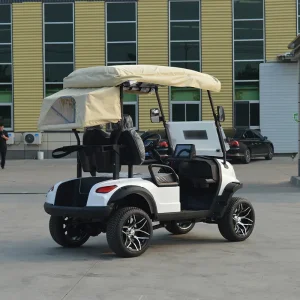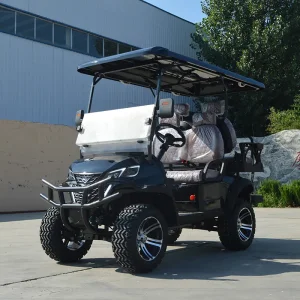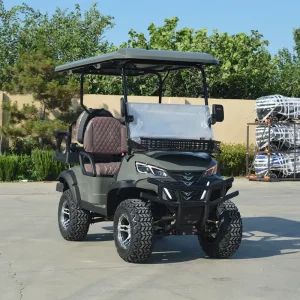
Engineered to Tier-1 factory remanufacturing and OEM standards. Directly available for wholesale procurement, resort electrification, and enterprise fleet leasing.
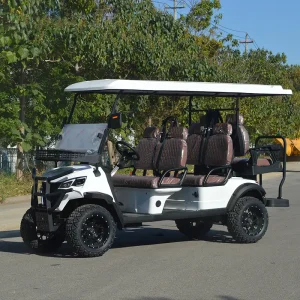
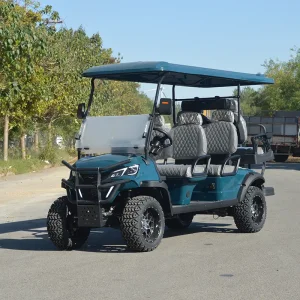
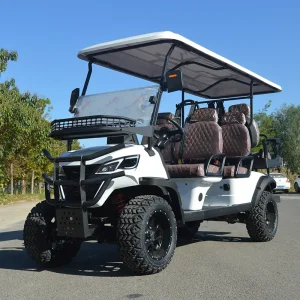
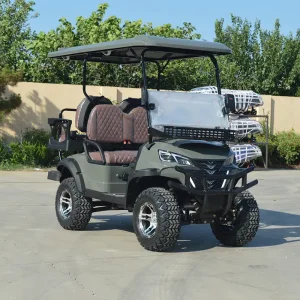
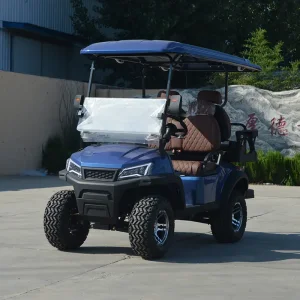
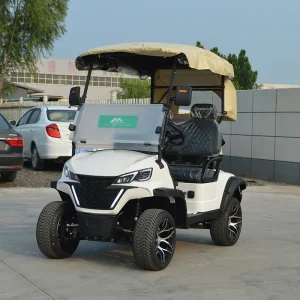
Beyond cosmetic reconditioning: Understanding how industrial OEM-level remanufacturing reclaims structural capital, slashes lifecycle carbon footprints, and outperforms traditional secondhand channels.
Remanufacturing vs. "Used" Reconditioning
Traditional used golf cart brokers patch cosmetic tears and replace worn tires without addressing frame fatigue or motor phase insulation breakdown. Certified OEM remanufacturing involves total tear-down down to bare chassis jigging, ultrasonic testing, chemical dip paint rejuvenation, and complete architectural upgrade to automotive CAN-bus architecture.
ESG Compliance & Embedded Carbon Savings
By retaining the primary metallurgical core—specifically high-tensile steel ladder frames and aluminum sub-assemblies—OEM refurbished processes prevent up to 68% of embedded carbon emissions compared to manufacturing an entirely new vehicle chassis from raw ore, satisfying Scope 3 greenhouse gas reporting requirements for multinational resort chains.
The High-Voltage 72V Lithium Migration
Outdated 36V and 48V deep-cycle lead-acid golf buggies are encumbered by terminal sulfation, high deadweight (over 300 kg in battery ballast), and toxic electrolyte maintenance. Industrial remanufacturing strips these legacy packs, deploying modular 72V LiFePO4 battery enclosures with integrated Smart BMS, reducing gross weight by 40% and multiplying range threefold.
Rigorous procurement executives analyze total lifecycle operating expenditures, not merely initial price per invoice. Discover why international resorts, municipal campuses, and commercial utility managers are pivoting to OEM remanufactured fleets.
| Evaluation Criteria | OEM Factory Remanufactured (72V Lithium) | Brand New Tier-1 Golf Vehicle | Local Market "As-Is" Used Buggy |
|---|---|---|---|
| Initial Capital Outlay (Capex) | Moderate: $3,200 – $5,200 (Benchmark baseline) | High: $9,500 – $14,000+ per unit | Low: $2,000 – $3,500 (Hidden overhaul risks) |
| Powertrain Technology | Modern 72V AC Induction / PMSM Brushless Motor | Standard 48V AC / DC Motor Options | Degraded 36V/48V Series DC Motor |
| Battery Chemistry & Cycle Life | LiFePO4 Lithium (3,500+ cycles, zero maintenance) | Lithium or Lead-Acid (Factory spec) | Flooded Lead-Acid (500 cycles left, acid venting) |
| 5-Year Maintenance Operating Cost | Low: ~ $350 (Brake pads, fluid checks, wipers) | Low to Moderate: ~ $450 (Dealer scheduled fees) | High: $2,800+ (Battery drop-in, harness shorts) |
| Chassis Recertification & Warranty | Full factory weld scan, 2-3 Year Powertrain Warranty | Standard 2-3 Year Factory Warranty | No structural warranty / 30-day dealer guarantee |
| Residual Resale Value (5th Year) | High: 50% – 60% of purchase cost retained | Rapid initial depreciation: 40% – 45% retained | Near scrap value: < 15% original purchase price |
Hospitality & Luxury Resort Operations
Five-star resort corridors demand zero mechanical rattling, whisper-quiet acceleration, and flawless aesthetic presentation. OEM refurbished golf carts provide bespoke luxury upholstery, custom automotive metallic paints, and silent AC synchronous drivetrains at half the fleet renewal investment, accelerating return on invested capital (ROIC).
Industrial Warehousing & Cargo Shuttles
Distribution campuses and manufacturing facilities operate high-frequency duty cycles requiring durable steel utility beds, enhanced coil-over front independent suspension, and high-amp controllers capable of handling heavy payloads across uneven concrete without thermally shutting down.
Gated Communities & Municipal Security
Modern residential communities and private estates require street-legal homologation compliance. Refurbished models equipped with full LED safety packages, hydraulic 4-wheel disc brakes, rear backup cameras, and horn assemblies integrate seamlessly as neighborhood electric vehicles (NEVs).
Every chassis undergoing remanufacture follows a rigorous automotive-grade lifecycle pipeline inside our specialized manufacturing facilities, ensuring complete mechanical integrity.
Total Teardown & Laser Scan
Complete mechanical strip-down. Ladder frames undergo precision 3D laser alignment and ultrasonic testing to identify microscopic stress fractures or torsional bending.
Cathodic E-Coat Pretreatment
Chassis undergo blast cleaning, phosphating, and electrophoretic immersion coating (E-coat) for unmatched anti-corrosion defense against coastal salt fog and humidity.
High-Torque Powertrain Swap
Installation of high-efficiency 72V AC brushless motors paired with programmable Curtis/Toyota-equivalent vector-field controllers for dynamic torque modulation.
Automotive Wire Harness & BMS
Replacement of aged cabling with IP67 sealed wiring harnesses, flame-retardant automotive looms, and intelligent CAN-Bus battery management system telemetry.
Dynamic Load & Dyno Bench QA
Full 100% simulated gradient roll testing (up to 30% incline), computerized brake efficiency verification, and high-current electrical load stress dissipation.
Navigating complex international road certifications, IoT telematics integration, and green energy innovations across North America, Europe, Oceania, and Southeast Asia.
Global Compliance & Homologation
Exporting low-speed electric vehicles demands thorough compliance knowledge. We engineer configurations conforming to United States FMVSS 500 (49 CFR 571.500) and SAE J2358 standards, alongside European Union L6e / L7e-CP light vehicle type-approvals, supplying complete manufacturer CoC documentation, DOT-certified safety glass windshields, and three-point retracting harnesses.
Telematics, GPS Geofencing & Cloud Fleet API
Modern golf course and municipality fleet directors cannot afford blind management. Our refurbished models can be retrofitted with embedded 4G/GPS telematics units. Operations managers can remotely set geofenced speed limit zones (e.g., restricted speeds near water hazards), monitor real-time cell temperatures via cloud dashboard, and run predictive maintenance scheduling.
Solar-Roof Top Up & Carbon Neutral Charging
Leveraging high-efficiency monocrystalline solar cells laminated directly into the extended thermoformed roof canopy, vehicles continuously charge throughout daytime operation. Delivering up to 250W–400W of supplemental solar generation daily, this solar roof array offsets parasitic accessory loads and adds 15–20% practical operating autonomy.
Clear, engineering-backed answers addressing structural warranties, battery lifecycles, logistics containerization, and customized OEM specifications.
What is the definitive engineering difference between a remanufactured and a refurbished golf cart?
Why is a 72V Lithium (LiFePO4) powertrain superior to standard 48V systems in commercial operations?
How are OEM refurbished golf vehicles secured, packaged, and containerized for global shipping?
Can our enterprise customize exterior brand aesthetics, digital displays, and accessory setups?
What warranties and localized technical documentation are provided to corporate importers?
Explore high-torque 4-seater buggies, street-legal solar vehicles, and versatile 2-seater resort utility cars built for commercial longevity and zero downtime.