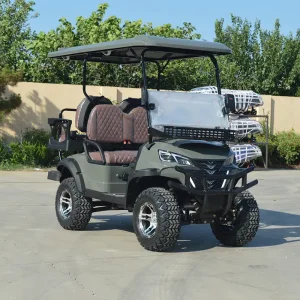
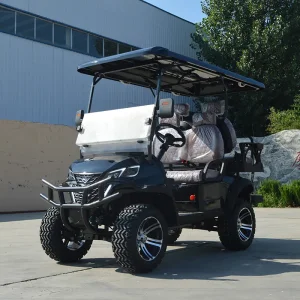
Direct From Factory Floor
High-Torque & Super Fast Fleet Selections
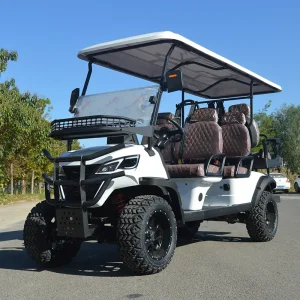
Explore commercial grade 72V lithium and dual-motor electric platforms ready for immediate global configuration, customized badging, and homologation delivery.
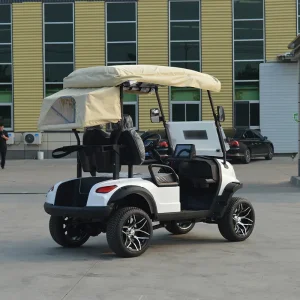
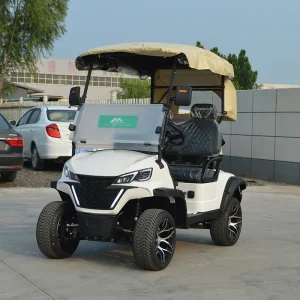

Macro Dynamics & Market Intelligence
The Paradigm Shift: From Turf Utility to Super Fast Low-Speed Mobility
A comprehensive examination of how the global golf buggy market evolved from restricted 15 mph golf course carts to high-efficiency, multi-terrain, fast electric fleet transport.
The global low-speed electric vehicle (LSEV) landscape is undergoing an unprecedented shift. Historically, conventional golf buggies were engineered strictly for turf management, limited to 12–15 mph (19–24 km/h), powered by cumbersome lead-acid batteries, and restricted to flat greenways. However, the rise of planned master communities, massive eco-resorts, airport transit hubs, and private estates has catalyzed intense demand for super fast electric golf carts capable of reaching 25 mph to 40+ km/h safely.
OEM factories and contract manufacturers in China are now deploying automotive-standard architectures. Upgraded components—including automotive-grade four-wheel hydraulic disc brakes, independent double A-arm front suspensions, MacPherson struts, electronic power steering (EPS), and integrated roll-over safety structures—have made high-speed micro-mobility commercially viable, robust, and regulatory compliant.
72V High-Voltage Transition
By transitioning from legacy 36V/48V platforms to high-voltage 72V architectures, internal wiring harnesses experience significantly reduced resistive heat generation. This ensures sustained torque delivery during steep inclines while maintaining a cool-running powertrain under continuous 35–45 km/h operation.
AC Induction & PMSM Motors
Modern fast golf buggies have completely phased out mechanical brush DC motors in favor of permanent magnet synchronous motors (PMSM) paired with intelligent AC pulse-width modulation (PWM) controllers, driving energy efficiency beyond 94% with regenerative braking.
Telematics & Fleet Management
Super fast commercial carts now integrate 4G/CAN-bus telematics for real-time speed monitoring, GPS geofencing, remote lock-out, active load sensing, and automated battery health diagnostics directly accessible via enterprise fleet dashboards.
40+
km/h Rated Maximum Speed Capability
72V
High-Efficiency Lithium Architecture
3,500+
LiFePO4 Deep Discharge Cycles
13,000m²
Standardized Manufacturing Plant Footprint
Procurement Engineering
Enterprise Sourcing Matrix: B2B Fleet Decision Parameters
A multi-dimensional operational framework evaluating total cost of ownership (TCO), route severity, and duty-cycle requirements across international commercial deployments.
Total Cost of Ownership (TCO)
Procuring directly from an OEM factory eliminates tiered trading markups. Furthermore, selecting automotive-grade LiFePO4 cells yields an operational lifespan 4x greater than lead-acid, reducing battery replacement frequency and scheduled maintenance downtime to near zero.
Duty-Cycle & Gradient Dynamics
Commercial campus shuttles require aggressive hill-climbing gradeability (>25%) without thermal saturation. OEM engineering matches coil-over suspension damping and rear-axle gear reduction ratios specifically to route grade requirements and peak passenger payloads.
Brand Customization & Identity
OEM contracts offer full ODM/OEM flexibility: custom automotive PPG metallic paint finishes, embroidered heavy-duty marine-grade vinyl upholstery, custom-molded dashboard enclosures, and tailored front cowls that align with institutional and luxury corporate identities.
| Performance Vector | Legacy Low-Speed Golf Carts | Leibin OEM Super Fast Electric Vehicles | Procurement Advantage |
|---|---|---|---|
| Operating Platform | 36V or 48V Flooded Lead-Acid | 72V Automotive LiFePO4 Lithium Platform | Zero terminal corrosion, 70% battery weight reduction |
| Top Cruise Velocity | 19 – 24 km/h (12 – 15 mph) | 35 – 45 km/h (Configurable Limiter) | Faster round-trip shuttle cycles, improved campus throughput |
| Braking Architecture | Rear Mechanical Drum Brakes | 4-Wheel Hydraulic Disc with Regenerative Assist | Shorter stopping distances, critical safety at high speed |
| Chassis Construction | Pressed Mild Steel, Bolted Frame | High-Strength Robotic Welded Tube with Cathodic Coating | Resistant to salt spray, humidity, and chassis torsional flex |
| Auxiliary Charging | Grid-only AC wall charging (8-10h) | Fast AC charging (3-4h) + Integrated Monocrystalline Solar Roof | Autonomous top-up while parked under direct sunlight |
Industrial Solutions
Enterprise Implementations: Tailored Multi-Sector Applications
Targeted vehicular configurations built to address distinct operational demands across global industrial parks, hospitality hubs, and residential zones.
Luxury Resorts & Eco-Hospitality
Whisper-quiet electric drive systems, luxurious contoured bucket seating, extended wheelbases for 6-8 passenger layouts, and smooth acceleration curves to preserve guest comfort across rolling coastal resort topography.
Security Patrol & Perimeter Defense
Equipped with emergency strobe light bars, multi-tone sirens, high-intensity LED searchlights, weather-enclosed lockable polycarbonate cabins, and rapid acceleration setups to address perimeter security incidents promptly.
Industrial Cargo & Maintenance Fleets
Reinforced diamond-plate aluminum cargo utility beds with drop-down tailgates, heavy-duty rear coil springs, and high-torque gearing designed for transporting 500+ kg loads across manufacturing plants, seaports, and campuses.
Compliance & Reliability
Regulatory Homologation & Comprehensive Export Architecture
How Leibin ensures zero friction during customs clearance, road homologation, and ongoing operational support in North American, European, and Asia-Pacific jurisdictions.
DOT / FMVSS No. 500 & SAE Standards
For US road-legal classification (Low-Speed Vehicle / Neighborhood Electric Vehicle), Leibin vehicles are configured with DOT-certified AS4/AS5 laminated glass windshields, automotive wipers, 3-point seatbelts, side mirrors, turn indicators, reverse buzzers, and factory-preset 25 mph speed ceiling limiters.
CE Machinery & EU L6e/L7e Homologation
All structural electrical harnesses and electronic controllers carry CE certification under electromagnetic compatibility (EMC) regulations. Chassis numbers (VIN) are struck directly to structural members, and complete technical documentation packages are supplied to support regional L6e light quadricycle type approvals.
Spare Parts Logistics & Remote Engineering
To eliminate overseas downtime, every volume container order includes a curated critical-spares kit (controllers, solenoids, brake pads, tie rods, sensors). Global service desks offer bilingual English/Chinese remote video diagnostics and rapid dispatch of replacement components.
Future Mobility Roadmap
Engineering Trajectory: Next-Generation Electric LSV Architectures
A strategic blueprint detailing Leibin’s progressive technical milestones in low-speed electric mobility across powertrain, autonomy, and energy independence.
Phase I: Current Benchmark
High-Density 72V LiFePO4 & Smart BMS
Integration of modular smart battery management systems (BMS) with Bluetooth/CAN-bus health diagnostics, multi-stage regenerative downhill retardation, and standard AC drive units.
Phase II: Emerging Deployment
Semi-Autonomous Campus Pilot & ADAS
Integrating forward collision warning (FCW), ultrasonic pedestrian detection, adaptive speed governors for congested pedestrian areas, and precise geofenced automated speed adaptation.
Phase III: Strategic Horizon
Solid-State Cells & Full Solar Integration
Transition toward solid-state pouch cells for increased energy density and zero thermal runaway risk, coupled with bi-facial high-efficiency monocrystalline solar roofs for extended off-grid range.
Procurement Inquiries
Frequently Asked Questions for Fleet Buyers
Direct technical and commercial answers regarding manufacturing lead times, import compliance, battery specifications, and custom OEM/ODM parameters.
Are Leibin super fast electric golf carts street-legal in my country?
Road legality is governed by local jurisdiction standards. In the United States, our models can be configured to comply with FMVSS No. 500 standards (requiring DOT windshields, 3-point seatbelts, high-visibility lighting, parking brakes, rear-view cameras, and speed restrictors set to 20–25 mph). In the European Union, homologation operates under L6e/L7e type approvals. We supply all requisite factory certificates, VIN stampings, and technical schematics to streamline your local certification.
What are the definitive benefits of a 72V lithium platform over standard 48V setups?
Operating at 72 volts allows the vehicle to deliver identical power output with significantly reduced current draw (amperes) compared to a 48V configuration. This translates to lower thermal stress on the AC controller and wiring harnesses, superior gradeability on inclines (>25%), higher sustained cruising speed (35–45 km/h), and increased battery thermal longevity. Our LiFePO4 cells also provide over 3,500 life cycles compared to roughly 600 cycles for lead-acid batteries.
What OEM/ODM customization options are offered for commercial distributors?
We offer comprehensive contract customization including custom corporate pantone body paint finishes, branded steering hubs and embroidered seats, custom digital instrument gauge clusters, solar roof panel integration, heavy-duty cargo utility beds, lifted suspension kits with all-terrain beadlock tires, and bespoke vehicle body enclosures suited for all-weather conditions.
How are vehicles packed and protected for international ocean freight?
Vehicles are secured using high-strength steel-frame crating or loaded via SKD (Semi-Knocked Down) and CKD (Completely Knocked Down) container-loading configurations to maximize container space efficiency. Carts are protected with moisture-resistant shrink wrapping and rust-inhibiting packaging to safeguard electronic controllers, battery packs, and painted body surfaces during long ocean transits.
What international after-sales support and warranty terms apply to volume purchases?
Leibin vehicles come backed by an extensive factory warranty, typically including up to 3 years on LiFePO4 battery modules and 1 to 2 years on structural chassis and powertrain assemblies. We supply wear-and-tear replacement kits with container dispatches, complete CAD and electrical schematics, and live technical video support with factory engineers in Dezhou.
Factory Inventory & Custom Lineups
Commercial Sightseeing & High-Speed LSV Catalogue
Review additional models engineered for versatile multi-passenger transit, rough-terrain durability, and customizable fleet logistics.