
Precision-Engineered Electric Fleet Models (Series I)
Industrial-grade 48V to 72V electric buggies, utility carts, and personal transport vehicles engineered with automotive-grade electro-coated chassis and smart lithium battery integration.

OEM Affordable China 4-Seater Electric Golf Cart - Off-Road Adventure with Custom Battery Options
Configure Fleet Unit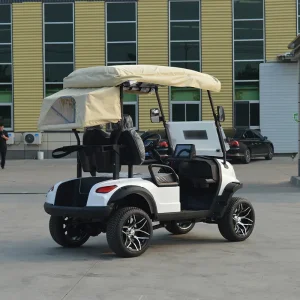
China Affordable Electric 2 Seater Mini Sightseeing Car Golf Cart from Factory Supplier
Configure Fleet Unit
OEM Affordable 2 Seater Mini Sightseeing Car Golf Cart Electric Cars Manufacturer
Configure Fleet Unit
Leibin G90 72V Lithium Battery Off-Road Electric Golf Cart - 4 Seaters, Solar Power, 35 km/h
Configure Fleet Unit
China 72V Electric Golf Cart - 4-Seater Off-Road Buggy for Sightseeing, 35 km/h, 150 km Range
Configure Fleet Unit
Wholesale 72V AC Mini Electric Golf Cart Buggy Gold Color 4-Seat with Lithium Battery CE Certified
Configure Fleet Unit
Best 72V Modern 6-Seater Electric Golf Cart - Factory Direct, On-Road & Off-Road
Configure Fleet Unit
Electric Cars Buggy Golf Supply CE Approved 15-40km/h Low Speed Electric Buggy Golf Car
Configure Fleet UnitGlobal Corporate Procurement Dynamics & Lifecycle TCO
Understanding the transition from obsolete deep-cycle lead-acid platforms to industrial 72V lithium-ion architectures for multi-location resorts, airports, master-planned communities, and university campuses.
In modern industrial procurement, the acquisition of low-speed electric vehicles (LSEVs) has shifted from transactional purchases based solely on sticker price to exhaustive Total Cost of Ownership (TCO) evaluations. Global operations directors managing golf resorts, international airports, municipal green belts, and closed manufacturing hubs must account for downtime penalties, thermal degradation in hot climates, charging cycle efficiencies, and compliance liabilities.
Traditional lead-acid golf carts suffer from volumetric weight inefficiencies, hazardous acid venting, high parasitic internal resistance, and frequent battery replacements every 18 to 24 months. Leibin's OEM direct manufacturing integrates high-density Lithium Iron Phosphate (LiFePO4) chemistries with integrated automotive-grade Battery Management Systems (BMS). This engineering choice eliminates watering maintenance, slashes curb weight by up to 180 kg per unit, and delivers instantaneous torque even under steep 30% incline payloads.
| Evaluation Parameter | Legacy 48V Flooded Lead-Acid | Leibin OEM 72V LiFePO4 Lithium Architecture | Commercial Fleet Advantage |
|---|---|---|---|
| Cycle Life Expectancy | 500 - 800 cycles (50% DoD failure threshold) | 3,500 - 5,000 cycles (80% capacity retention) | Over 5x operating lifespan; eliminates mid-cycle re-battery CAPEX |
| Charging Duration & Efficiency | 8 - 10 hours; significant thermal dissipation | 2.5 - 3.5 hours rapid charge with active BMS balancing | Enables fast turnaround opportunistic charging during operational shifts |
| Routine Maintenance Overhead | High: Bi-weekly deionized water top-off, terminal cleaning | Zero: Sealed IP67 solid-state pack, continuous digital telemetry | Saves 40+ labor hours per cart annually in maintenance staffing |
| Climbing & Continuous Torque | Voltage sag under load; thermal throttling above 15% grade | Flat discharge curve; consistent peak output through 95% depth | Uncompromised safety on steep mountain golf tracks and heavy cargo haul |
| Environmental Resiliency | Sulfation in tropical heat; freezing electrolyte vulnerability | Internal smart heating film option; certified -20°C to +55°C operation | Reliable year-round deployment in Nordic resorts or Middle East deserts |
Macro-Industry Solutions: Structural Integrity & Powertrain Dynamics
How Leibin engineers durability into the fundamental vehicle platform—from robotic chassis fabrication and cathodic electrodeposition to intelligent AC motor flux-vector control.
Automotive-Grade CED Chassis
Manufactured from high-tensile carbon steel using computer-controlled welding jigs. The entire unibody frame undergoes a 14-stage pre-treatment and Cathodic Electrodeposition (CED) electrophoretic coating, passing 1,000+ hours of neutral salt spray testing (ASTM B117) to prevent rust in coastal marine air.
Flux-Vector AC & PMSM Powertrain
Featuring high-torque AC induction and Permanent Magnet Synchronous Motors (PMSM) paired with Curtis or EnPower DSP digital controllers. Enjoy programmable regenerative deceleration, electronic hill-hold anti-rollback technology, and thermal protection sensors integrated into the motor windings.
Heavy-Duty MacPherson Suspension
Front independent MacPherson strut geometry with helical coil springs and hydraulic shock absorbers delivers car-like ride ergonomics. Rear leaf-spring or trailing-arm assemblies are engineered to support payloads up to 800 kg without bottoming out over rough golf paths or gravel terrain.
Application Solutions across Vertical Sectors
Electric golf carts have outgrown the 18-hole fairway. As closed campuses and mixed-use commercial centers expand globally, enterprise buyers require mission-specific configurations designed around real-world duty cycles:
- Eco-Tourism & 5-Star Luxury Hospitality: Zero tailpipe emissions, silent operation under 45 dBA, plush executive upholstery, multi-speaker infotainment, and onboard mini-refrigerators for VIP transfers across secluded villa properties.
- Municipal Security & Border Industrial Patrol: High-illumination LED strobe light bars, lockable utility enclosures, integrated high-gain PA systems, and street-legal DOT homologation for continuous round-the-clock patrol rounds.
- Last-Mile Industrial Logistics & Maintenance: Hydraulic dump beds, aluminum flatbeds with fold-down side gates, heavy payload axle ratings, and high-amp auxiliary 12V DC-DC converters for maintenance power tools and utility equipment.
Technological Roadmap: 2025–2030 Architecture Evolution
Exploring next-generation low-speed EV innovations including 4G/5G edge telematics, integrated monocrystalline photovoltaic canopies, and solid-state battery testing.
Photovoltaic Solar Roofs
High-efficiency flexible monocrystalline solar canopies (300W–500W peak) coupled with smart MPPT buck-boost controllers generate 15–25 km of supplementary zero-cost range per sunny operational day, prolonging pack cycle life.
IoT Telematics & Geofencing
Integrated 4G LTE/GPS telematics box reporting real-time battery SoC, temperature curves, diagnostic trouble codes (DTC), and automated geofenced speed limiting down to 10 km/h in designated pedestrian walkways.
Autonomous Guidance (AGV)
R&D pathing for drive-by-wire electric power steering (EPS) and solid-state LiDAR integration, enabling fixed-route shuttle automation across theme parks, smart corporate headquarters, and international airport terminals.
Solid-State Battery Validation
Active lab testing of semi-solid-state cells offering zero thermal runaway risk under mechanical puncture, higher volumetric energy density (>260 Wh/kg), and operating capabilities in extreme climates from -35°C to 65°C.
Global Commercial Landscape: Street-Legal Homologation & Standards
Navigating diverse legal definitions across North America, the European Union, Australia, and the Middle East to guarantee seamless customs clearance and registration.
North America (FMVSS 500 / LSV)
Under NHTSA 49 CFR Part 571.500, Low-Speed Vehicles (LSVs) must achieve speeds between 20 mph (32 km/h) and 25 mph (40 km/h). Essential homologation gear includes DOT-certified AS4 laminated glass windshields with electric wipers, three-point inertia reel seat belts, side view mirrors, tail lights with turn signals, reverse buzzers, and 17-digit VIN stamping.
European Union (L6e / L7e Framework)
Compliance with Regulation (EU) No 168/2013 for light quadricycles. Requires E-mark certified lighting equipment, mechanical parking brake locks, dual-circuit hydraulic disc braking systems with deceleration performance verification, and certified electromagnetic compatibility (EMC) testing in line with UNECE R10 standards.
Gulf & Tropical Compliance (GCC)
Engineered for intense solar radiation and high ambient temperatures (+50°C). Models feature UV-stabilized virgin automotive polypropylene body shells, copper-core radiators for liquid-cooled controllers, high-torque cooling fans, and dust-proof IP67 motor/transaxle sealing against fine desert sand infiltration.
Direct Manufacturing: 13,000 m² Facility & Rigorous Quality Control
From raw tubular steel processing to end-of-line dyno ramp tests, every stage is vertically integrated within Dezhou Leibin Vehicle Industry Co., Ltd.
1. Laser Cutting & Jigs
CNC 3D fiber laser cutting ensures sub-millimeter tolerances on all tubular chassis members, clamped in robotic welding fixtures to eliminate frame distortion.
2. Cathodic E-Coating
Submerged electrophoretic immersion tank deposits a resilient 25-micron epoxy primer on all interior tube surfaces, providing lifetime rust immunity.
3. Powertrain Dynamometer
Every assembled drivetrain undergoes 100% roller dyno verification for current balance, top speed governing, brake stopping distances, and regenerative response.
4. Rain & Gradeability Ramp
Vehicles endure simulated monsoon deluge water ingress chamber tests followed by physical 30% incline slope start-and-stop trials before crating.
Heavy-Duty Commercial & Sightseeing Vehicles (Series II)
Explore our high-occupancy 6-passenger coaches, heavy-duty cargo haulers, and versatile municipal utility platforms designed for rigorous continuous operations.

OEM Wholesale Electric Golf Carts 72V Lithium 6-Seat Golf Buggy Factory Made
Configure Fleet Unit
Best Factory Direct 2-Seater Electric Sightseeing Cars, Golf Carts, Club Cars, Vans
Configure Fleet Unit
Wholesale 72V Electric Golf Cart - Modern 6-Seater Buggy Factory Manufacturing
Configure Fleet Unit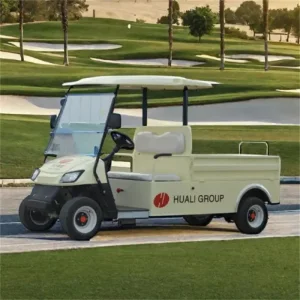
Cheap Cargo Electric Utility Off-Road Truck Golf Cart 48V Utility Golf Cart
Configure Fleet Unit
ODM Wholesale 6-Seat Electric Golf Carts - 72V Lithium, Customized Comfort
Configure Fleet Unit
Cheap 72V New Style Modern Fashion 6-Seat Golf Cart Electric Golf Buggy
Configure Fleet Unit
China 72V Electric Golf Cart - 6-Seater Modern Design Factory Quality Golf Buggy
Configure Fleet Unit
China Leibin (G90) 72V Lithium Battery Solar 4-Seaters Off-Road Electric Golf Cart
Configure Fleet UnitFrequently Asked Questions for Fleet Importers & Sourcing Directors
Exhaustive engineering insights covering battery chemistry, OEM customization, container knockdown logistics (SKD/CKD), and export warranty fulfillment.
What is the primary operational difference between 48V and 72V golf cart systems?
A 72V architecture draws approximately 33% less current (amperes) than a 48V system to produce identical mechanical wattage output (P = V × I). Lower current flow drastically reduces I²R resistive heat dissipation within wire harnesses, motor controllers, and battery cells. This cooler operation prevents thermal throttling on long grades, prolongs component life, and provides superior instantaneous torque for 6-seater and cargo payloads.
How does Leibin guarantee chassis corrosion resistance for seaside resorts?
All Leibin chassis undergo a full immersion 14-stage Cathodic Electrodeposition (CED) electrophoretic bath. Unlike standard spray-applied enamel paint, CED uses an electrical current to deposit uniform epoxy primer on both exterior surfaces and inside closed tubular channels. This creates a non-porous chemical barrier passing 1,000+ hours in ASTM B117 salt spray chambers, providing complete immunity against salty sea breezes and fertilizer chemical runoff.
Can vehicles be ordered in SKD or CKD form to lower ocean freight and import duties?
Yes. We regularly supply Semi-Knocked Down (SKD) and Completely Knocked Down (CKD) configurations for overseas assembly partners. In SKD format, pre-wired chassis, assembled powertrains, and painted body sections are packed in rigid steel pallet frames. This packaging increases 40-foot High Cube (40HQ) container loading capacity from 6 fully assembled units up to 16–22 units, cutting sea freight costs per vehicle by more than 60%.
What safety homologation standards are met for street-legal LSV registration?
Our export units can be configured to comply with US DOT FMVSS 500 standards and European Union L6e/L7e type approvals. We integrate DOT/E-Mark certified shatterproof laminated front windscreens with motor wipers, dual high/low beam LED headlamps, hazard switch circuits, 3-point retractable seatbelts, illuminated digital speedometers, and ISO 3779 compliant 17-digit VIN serial plates.
How does the smart Battery Management System (BMS) protect lithium packs?
The built-in BMS provides individual cell-level active voltage balancing, high/low temperature cut-off triggers (-20°C to 65°C), short-circuit isolation, and secondary over-charge/over-discharge protections. It communicates with the motor controller via an integrated CAN-bus interface, ensuring gradual power step-down (limp-home mode) rather than abrupt cut-offs when approaching 0% SoC.
What OEM/ODM customization options are supported for commercial distributors?
We offer comprehensive private-labeling programs, including custom RAL body paint matching, thermoformed mold modifications, bespoke diamond-stitched marine vinyl seat patterns, integrated lockboxes, tailored aluminum utility bed dimensions, specialized golf bag caddie attachments, and custom branded startup screens on our digital LCD dashboards.