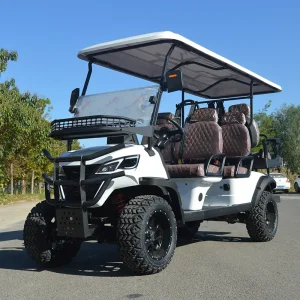
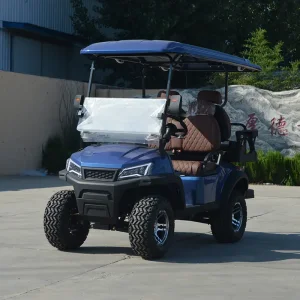
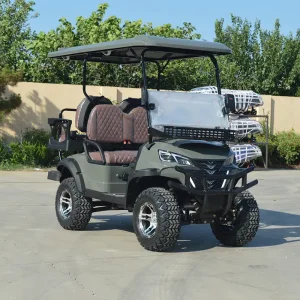
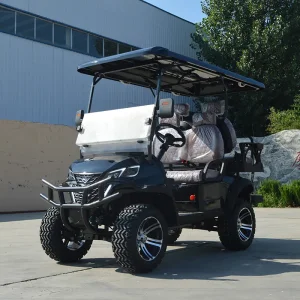
OEM Utility Electric Cart Manufacturer & Factories
Architecting high-torque, modular 72V/48V commercial low-speed electric vehicles (LSVs) and utility fleets. Certified Tier-1 engineering, turnkey ODM customization, and zero-emission off-road utility platforms built for global enterprise logistics.
Direct Factory Deployments
Featured Commercial Utility & Golf Buggy Fleet Units
Precision-machined low-speed utility carriers engineered for industrial campuses, hospitality resorts, urban operations, and municipal facilities.
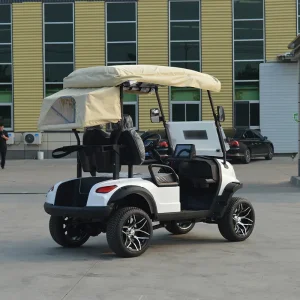
2-Seater OEM
OEM Affordable 2 Seater Mini Sightseeing Car Golf Cart Electric Cars Manufacturer, Suppliers
Global Commercialization of Electric Utility Carts: The Industrial Shift
The international market for Low-Speed Electric Vehicles (LSVs) and utility carts is undergoing a structural paradigm shift from recreational golf applications to mission-critical industrial logistics, campus mobility, and multi-facility freight distribution.
7.8% CAGR
Market Expansion Through 2032
Global industrial decarbonization targets and strict internal emissions limits in closed warehousing, chemical plants, and airport tarmac operations have expanded the light utility electric cart market beyond traditional recreational sectors. Corporate ESG mandates are replacing gas-powered mini-trucks with customized electric utility fleets that offer zero tailpipe emissions and 60% lower operating acoustics.
-54% TCO
Total Cost of Ownership Reductions
Compared to internal combustion utility vehicles (UTVs), modern 72V lithium-ion utility platforms yield an estimated 54% operational cost reduction across a 5-year lifecycle. Savings originate from zero fuel consumption, regenerative dynamic braking that eliminates brake pad wear, and the complete eradication of scheduled oil, belt, and spark-plug servicing.
ISO 9001 / CE
Stringent Regulatory Homologation
Export compliance demands rigorous engineering adherence. In North America, vehicles adhere to DOT FMVSS 500 standards for Low-Speed Vehicles (LSVs) navigating up to 25 mph on secondary roads. In the European Union, homologation under Regulation (EU) No 168/2013 (L6e/L7e light quadricycle) governs commercial road use.
Evaluation Parameter
Legacy Gas / Diesel UTVs
48V Lead-Acid Utility Carts
Leibin 72V Lithium OEM Platform
Powertrain Efficiency
18% - 24% Thermal Efficiency
65% Battery-to-Wheel Delivery
92%+ AC High-Efficiency Synchronous
Battery Cycle Life
N/A (Liquid Fuel Dependent)
400 – 600 Cycles (High Maintenance)
3,500+ Cycles (LiFePO4 with BMS, Zero Maintenance)
Continuous Gradeability
15° - 20° (High Noise / Emissions)
10° - 12° (Current Sag Under Load)
20° - 25° Sustained Slope (High-Torque AC Inverter)
How solid-state controllers, advanced lithium battery management systems, photovoltaic integration, and automotive-grade chassis welding redefine utility electric cart durability.
72V Architecture Migration
The industry standard has transitioned rapidly from 48V to 72V power lines. Operating at higher voltage slashes current draw by 33% for equivalent mechanical wattage. This drastically cuts resistive copper heating ($I^2R$ losses), protects windings, enhances hill-climb stamina, and preserves motor efficiency during high-cargo transport.
Solar Photovoltaic Canopies
Integrated monocrystalline semi-flexible rooftop panels generate continuous trickle charging, delivering an extra 15–25 km of autonomous range daily under daylight operations. Integrated MPPT smart converters match solar voltage dynamically to the high-voltage pack without overcharge risks.
Automotive E-Coated Chassis
Industrial carts deployed in marine environments, coastal resorts, and chemical plants require industrial cathodic electrodeposition (E-coating). Robotically welded high-strength carbon steel structural tubes endure up to 1,000 hours in neutral salt spray testing without structural corrosion.
Cloud Telematics & CAN Bus
Fleet managers can oversee fleet location via GPS geofencing, track real-time State of Charge (SOC), receive predictive battery health alerts, and lock speed profiles remotely. Modern controllers exchange telemetry with centralized automated fleet dispatch systems instantly.
Application Engineering
Engineered Application Profiles & Field Scenarios
A single chassis cannot satisfy all operating environments. We configure suspension geometry, payload distributions, drivetrain gear ratios, and weather enclosures to exact scenario demands.
Heavy Industrial Plants & Warehouses
Demands heavy 500–1000 kg cargo payloads, hydraulic tipping flatbeds, narrow turning radii for tight warehouse aisles, and non-marking industrial solid or semi-pneumatic tires.
Diamond-plate aluminum cargo utility deck
Regenerative descent control on factory ramps
Integrated reverse buzzer, beacon light & E-stop
Eco-Resorts, Islands & Hospitality
Requires whisper-quiet operation below 45 dB, premium hand-stitched weather-resistant marine seating, split-fold utility flip seats for luggage, and high aesthetic curb appeal.
High-efficiency AC silent transaxle
Marine-grade audio, USB-C fast charging console
Solar charging roof extensions for island autonomy
Municipal Campus & Security Patrol
Optimized for continuous 24/7 duty cycles, multi-shift driver rotations, high-intensity perimeter lighting arrays, sirens, and transparent all-weather cabin roll-up covers.
Strobe light bars and public address systems
Quick-swap battery modular architecture
High-strength lockable storage for security gear
Manufacturing Infrastructure
Turnkey OEM & ODM Industrial Solutions: Inside the Factory
From initial 3D parametric chassis modeling to high-throughput laser cutting, robotic welding, and complete container loading optimization inside our 13,000 m² facility.
Custom CAD/CAM Engineering
Whether tailoring a lengthened wheelbase for 8-passenger capacity or developing customized ambulance stretcher carriers, our CAD engineers provide complete FEA stress analyses and rapid prototypes in under 20 business days.
Rigorous End-of-Line QA
Every utility cart undergoes an exhaustive 5-stage inspection protocol: chassis geometry alignment, 30° ramp parking brake stall test, high-pressure monsoon water-ingress verification, and dynamic dynamometer powertrain calibration.
Optimized Knock-Down (SKD/CKD)
To maximize 40HQ ocean freight economics, vehicles are pre-engineered for rapid semi-knocked-down (SKD) or completely-knocked-down (CKD) packing. High-density steel pallet stacking fits up to 18–24 units per 40ft container, reducing landing freight costs per cart.
Full Compliance Documentation
We supply comprehensive homologation dossiers, including complete wiring schematics, brake deceleration test reports, battery UN38.3 test summaries, CE declarations of conformity, and MSDS documentation for seamless customs clearance worldwide.
Strategic Horizons
Technological Roadmap: 2025–2030 Evolution
Anticipating the technological transformation of industrial LSVs from human-piloted vehicles to automated, intelligent micro-utility infrastructure.
Phase 1: 2025 – 2026
Intelligent Power & Universal LiFePO4
Standardization of 72V LiFePO4 chemistry with integrated active cell balancing. Fleet-wide transition to CAN 2.0B protocols with integrated 4G IoT telematics modules, enabling over-the-air (OTA) motor controller tuning and cloud battery degradation tracking.
Phase 2: 2027 – 2028
Drive-by-Wire & Geofenced Autonomy
Integration of electronic drive-by-wire steering actuators and electro-hydraulic brake boosters. Introduction of level 2/3 geofenced autonomous transport modes for campus logistics, airport luggage handling, and resort loops utilizing LiDAR and stereoscopic cameras.
Phase 3: 2029 – 2030
Solid-State Density & V2G Microgrids
Adoption of semi-solid lithium cells boosting volumetric energy density by 40%, cutting overall chassis weight. Implementation of Vehicle-to-Grid (V2G) bidirectional charging, transforming parked resort and corporate fleets into decentralized energy storage systems.
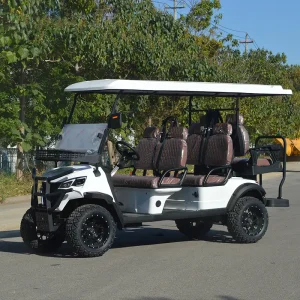
OEM Wholesale Electric Golf Carts from China Suppliers, 72V Lithium 6 Seat Golf Buggy Factory Made for Comfort and Performance Manufacturers, Factories
Authoritative answers on battery architecture, road-legal homologation, customized fabrication, warranty governance, and global container logistics.
What distinguishes commercial utility electric carts from standard golf buggies?
Commercial utility electric carts are engineered around an elevated duty cycle. Unlike standard recreational golf carts designed for intermittent light fairway transit, our OEM utility vehicles utilize reinforced high-tensile steel boxed chassis, heavy-duty rear leaf springs with hydraulic dampeners, automotive-grade four-wheel hydraulic disc brakes, high-torque AC induction or permanent magnet motors, and high-capacity LiFePO4 battery packs equipped with CAN-bus thermal and cell monitoring. They deliver 500–1000 kg carrying capacity and up to 1,500 kg towing capacity.
How do you assist international distributors with road homologation (FMVSS 500 / EU L6e/L7e)?
We configure target vehicles at the engineering level to comply with destination legal codes. For the United States, we equip Low-Speed Vehicles (LSVs) with DOT-approved AS4 windshields with wipers, FMVSS-certified 3-point seat belts, dual automotive side mirrors, certified rear view mirrors, amber turn indicators, high-mounted stop lamps, illuminated license plate brackets, 17-digit VIN engraving, and speed-limiting firmware calibrated to exactly 25 mph (40 km/h). For the European Union, we supply certified lighting packages, hydraulic split braking test data, and full COC/EEC compliance documentation.
Why is a 72V lithium setup superior to a 48V lead-acid system for enterprise fleets?
A 72V system draws significantly fewer amperes than a 48V system to produce equivalent mechanical power ($P = V \times I$). This lower current drastically reduces thermal losses in the wiring harness and controller, preventing thermal throttling on steep inclines (up to 25° grades). Lithium iron phosphate (LiFePO4) chemistry eliminates acid spills, terminal corrosion, and watering maintenance, reduces vehicle curb weight by approximately 150 kg (boosting payload capacity), allows opportunity rapid charging in 2–3 hours without battery memory loss, and delivers over 3,500 charging cycles to 80% DOD.
What specific OEM/ODM customization options are available for fleet buyers?
As a genuine manufacturer with full sheet-metal stamping, robotic welding, and injection molding lines in Dezhou, Shandong, we offer extensive OEM/ODM bespoke options. These include custom RAL pantone color matching, private corporate branding badges, hydraulic automatic dumping cargo beds, aluminum box vans with roll-up shutters, specialized emergency EMS stretcher layouts, security flashers, customized wheel/off-road tire configurations, solar charging hardtops, and complete telematics integration with customer-specific fleet management software APIs.
What is the factory lead time and container packing density for overseas export?
Standard production turnaround for container-scale orders (10 to 50 units) is 20 to 30 calendar days from engineering sign-off and deposit receipt. In terms of freight logistics, units can be shipped fully assembled in heavy-gauge steel framework crates, or in Semi-Knocked-Down (SKD) form to maximize container utilization. A standard 40-foot High Cube (40HQ) container typically holds 18 to 24 units in SKD configuration (depending on wheelbase and seat layout), slashing per-vehicle ocean freight costs.
What after-sales parts support and warranty commitments are provided?
All export utility vehicles are backed by an extensive factory warranty: 5 years on the structural electro-coated chassis and LiFePO4 battery pack, and 2 years on the electric motor, transaxle, and electronic controller. We supply consumable spare parts kits (brake pads, bushings, fuses, lighting assemblies) packed directly inside the container shipments, and maintain an expedited global air-freight spare parts distribution pipeline with wiring schematics and remote engineering video troubleshooting support.