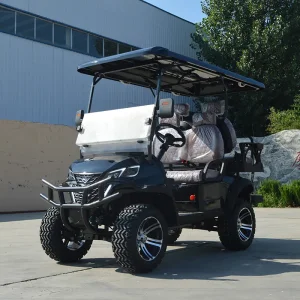
Featured Commercial Fleet & Wholesale Golf Carts
Discover certified low-speed electric vehicles engineered for rugged utility, hospitality guest logistics, and low operational TCO. Explore direct factory specifications below.
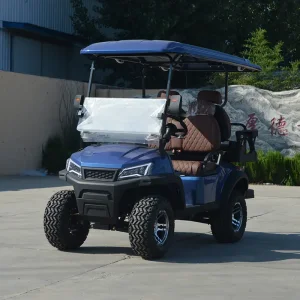
Cheap China Supplier Factory Leibin G90 72V Lithium Battery Off-Road Electric Golf Cart - 4 Seaters, Solar Power, 35 km/h Speed Suppliers, Factory
View Details
Cheap Wholesale China 6 Seat Electric Golf Carts, 72V Lithium Battery, Comfortable Customized Golf Buggy from Suppliers & Factory Factory, Factories
View Details
Wholesale Wholesale 6 Seat Electric Golf Carts from China Suppliers - Customized 72V Lithium Golf Buggy Factory Direct Supplier, Suppliers
View Details
Buy 72V Modern 6-Seater Electric Golf Cart from China Suppliers | Reliable Factory Golf Buggy for On-Road & Off-Road Use Factory, Factories
View Details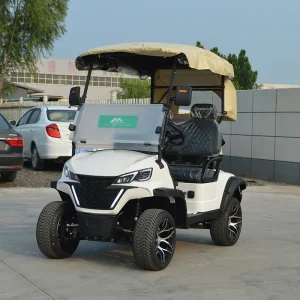
Best The Factory Directly Supplies 2-Seater Electric Sightseeing Cars, Golf Carts, Club Cars and Vans for Sale Manufacturers, Manufacturer
View Details
Wholesale 72V AC Mini Electric Golf Cart Buggy Gold Color 4-Seat Golf Cart with Lithium Battery CE Certified and Tail Caddie Equipment Factory, Factories
View Details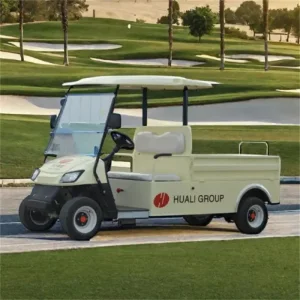
Cheap Cargo Electric Utility off Road Truck Golf Cart 48V Utility Gulf Cart Electric Golf Car Suppliers, Factory
View Details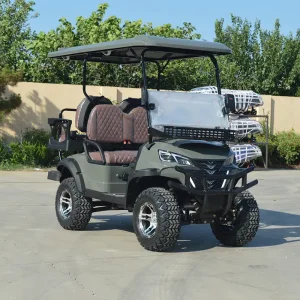
Cheap Cheap Small 4 Seater Electric Golf Carts, Golf Cart Battery, off Road Golf Carts Factory, Factories
View DetailsThe Technological Revolution in Wholesale E-Cart & Golf Cart Engineering
The worldwide commercial low-speed electric vehicle (LSEV) landscape is transitioning from rudimentary, golf-only carriages into high-performance, digitally connected multi-scenario micro-mobility platforms.
Over the past decade, institutional procurement mandates and municipal decarbonization frameworks have completely rewritten the performance benchmarks for commercial golf buggies and electric utility carts. Historically characterized by 36V or 48V series-wound DC motor platforms tethered to heavy flooded lead-acid batteries, the contemporary wholesale market is now overwhelmingly driven by 72V high-energy density Lithium Iron Phosphate (LiFePO4) powertrains coupled with Permanent Magnet Synchronous Motors (PMSM) or vector-controlled AC asynchronous systems. This architectural shift delivers more than a 40% reduction in vehicle curb weight while extending usable daily duty cycles by over 120%, solving the chronic thermal dissipation and mechanical drag issues that have long burdened fleet operators.
Furthermore, integration of advanced vehicle-to-cloud (V2C) CAN-bus telematics has turned standard wholesale e-carts into smart mobility nodes. Modern commercial buyers—ranging from operators of sprawling desert eco-resorts in the Middle East to luxury master-planned communities across North America—now demand real-time telemetry: remote geofencing capabilities, predictive state-of-health (SOH) battery diagnostic monitoring, regenerative braking torque modulation, and algorithmic anti-rollback safeguards on 25%+ gradients. Factories that fail to modernize their baseline electric architectures risk rapid obsolescence in the face of sophisticated institutional procurement standards.
72V LiFePO4 Chemistry
Automotive-grade cell arrangements deliver 3,500+ full discharge cycles at 80% DOD. Negligible self-discharge, zero periodic terminal watering requirements, and a 65% weight reduction versus legacy lead-acid banks.
Integrated IoT Telematics
Enterprise fleet management modules support cellular 4G/GPS tracking, remote speed governor limiting, automated geofencing, maintenance alerts, and live fleet utilization heatmaps via web dashboards.
Solar Auxiliary Top-Up
Monocrystalline photovoltaic canopies produce 150W–300W of supplementary charging during daily idle periods, extending field duty cycles by 12–18 km per daylight shift in sunny resort environments.
Total Cost of Ownership (TCO) & Global Fleet Procurement Intent
Why institutional procurement directors, golf course general managers, and municipal transport contractors evaluate life-cycle asset depreciation over nominal FOB acquisition price.
A critical flaw in historical B2B golf cart acquisition was calculating unit cost purely on the upfront purchase invoice. Under real-world heavy duty operating cycles—such as operating 10 to 14 hours per day transporting guests across undulating tropical terrain—traditional lead-acid vehicles incur exponential maintenance overhead. Frequent water topping, terminal corrosion treatment, acid leaks damaging suspension bushings, and the mandatory replacement of battery sets every 18 to 24 months elevate cumulative operational expenditure well above initial equipment expense.
By deploying factory-direct 72V lithium platforms, enterprise fleet operators realize immediate thermodynamic and electrical efficiency gains. The internal resistance of modern LiFePO4 cells is radically lower than lead-acid equivalents, enabling high-rate dynamic regenerative braking that recaptures up to 22% of spent kinetic energy during deceleration and downhill descent. When evaluated over an operational window of 60 months, the total operational cost per vehicle decreases by 42% to 58%, freeing substantial capital reserves for fleet expandability.
| Evaluation Parameter | Legacy 48V Lead-Acid Fleet | Standard 48V Lithium Platform | Leibin 72V AC/PMSM Lithium (Class-Leading) |
|---|---|---|---|
| Powertrain Peak Output | 3.0 kW – 3.8 kW DC Series | 4.0 kW AC Induction | 5.0 kW – 7.5 kW PMSM High Torque |
| Battery Pack Lifespan | 400 – 600 Cycles (1.5 – 2 Years) | 2,000 Cycles (4 – 5 Years) | 3,500 – 4,000 Cycles (8 – 10 Years) |
| Gradeability (Full Payload) | 12% – 15% Incline Grade | 18% – 20% Incline Grade | 25% – 30% Continuous Grade |
| Daily Operating Range | 45 – 55 km on Flat Turf | 70 – 85 km Mixed Terrain | 110 – 140 km (Solar Extended) |
| Periodic Maintenance | High (Bi-weekly water check/acid cleaning) | Zero Battery Maintenance | Zero Maintenance + Remote OTA Health Check |
| Charge Duration (10-100%) | 8 – 10 Hours (Thermal dissipation risk) | 4 – 5 Hours Standard | 2 – 2.5 Hours (Fast-Charge BMS Enabled) |
Engineering Integrity, Production Automation & Supply Chain Dominance
How our advanced 13,000 m² specialized vehicle manufacturing hub in Dezhou, Shandong, guarantees structural repeatability, salt-spray corrosion resistance, and flexible volume output.
Global procurement directors often encounter severe quality disparities when sourcing electric golf buggies from conventional small-scale assembly workshops. True automotive-grade durability begins at the structural metallurgy level. In our Dezhou smart manufacturing facility, raw tubular and high-tensile rectangular steel profiles undergo robotic high-precision laser tube cutting, automated 5-axis CNC bending, and dual-arm robotic MIG welding in dedicated geometric jigs. This eliminates manual welding variance, ensuring precise chassis alignment, perfect suspension geometry, and eliminating stress fractures during intense off-road operations.
Following fabrication, frames undergo a complete 14-stage automotive cathodic electrophoretic deposition (KTL / e-coat) process, followed by thermal electro-static powder curing. This provides an unyielding barrier against extreme maritime salt mist, humid coastal breezes, and acidic agricultural chemical exposure—easily passing 1,000+ hours of standardized ASTM B117 salt spray testing. By pairing vertical in-house chassis tooling with strategic tier-1 supply alliances for electronic speed controllers (Curtis/Enpower), high-reliability drive axles, and Tier-1 automotive lithium cell suppliers (CATL/EVE), our production ecosystem guarantees exceptional reliability at scalable industrial prices.
Robotic Jig Welding
Automated robotic welding arrays ensure dimensional variance within ±0.3mm across critical suspension pickup brackets and roll-cage anchoring points.
Cathodic E-Coating
Full-immersion cathodic electro-deposition primes internal hollow tubes and external frame members for superior long-term corrosion prevention.
100% Dyno & Water Testing
Every completed vehicle undergoes high-load chassis dyno testing, electronic braking balance verification, and an intense high-pressure rain booth test.
Modular SKD/CKD Packing
Engineered modular steel crating fits up to 24 units into a single 40ft High Cube container, dramatically minimizing transatlantic and transpacific freight costs.
Localized Application Scenarios: Beyond the Traditional Golf Course
Modern low-speed electric vehicles have outgrown fairways. Today, our custom-configured platforms serve four primary global B2B sectors.
Luxury Hospitality & Eco-Resorts
Whisper-quiet electric operation preserves guest privacy in 5-star tropical resorts, island getaways, and nature sanctuaries. Custom 4-seater and 6-seater high-comfort configurations with plush marine-grade vinyl upholstery, onboard phone charging, and insulated beverage cooler integration.
Master-Planned Communities (MPC)
In sprawling residential golf communities in Florida, California, Dubai, and Southern Europe, e-carts act as daily neighborhood electric vehicles (NEVs). Outfitted with street-legal LED headlights, high-mounted brake lamps, automotive turn signals, seatbelts, and DOT-certified windshields.
Industrial Campuses & Logistics
Automotive production plants, shipping ports, pharmaceutical hubs, and university campuses rely on our heavy-duty flatbed utility series. Equipped with hydraulic drop-side aluminum beds, 600kg+ cargo ratings, and heavy tow bars for tooling, cargo, and facility maintenance logistics.
Security, Municipal & Event Patrol
High-visibility security editions featuring strobe warning arrays, PA siren systems, heavy-duty brush guards, and extended-capacity lithium modules. Built to handle 16-hour continuous perimeter patrols at airports, exhibition grounds, convention centers, and municipal parks.
Navigating International Homologation: US DOT, EEC, and CE Standards
Procuring wholesale vehicles from an overseas factory requires rigorous adherence to regional road safety legislation and customs documentation.
Importing commercial low-speed electric vehicles involves navigating distinct regional statutory frameworks. In the United States, golf carts operating on public secondary streets must comply with Federal Motor Vehicle Safety Standard (FMVSS) No. 500 for Low-Speed Vehicles (LSVs) or relevant state-level Neighborhood Electric Vehicle (NEV) statutes. Key requirements include 17-digit ISO VIN generation, FMVSS 209-certified three-point seatbelts, AS4-grade laminated safety glass windshields equipped with wipers, dual exterior rearview mirrors, DOT-approved tires, and strict speed-governor calibration between 20 mph and 25 mph.
Across the European Union, homologation mandates diverge between strictly off-road golf utility machinery (governed by the European Machinery Directive 2006/42/EC and standard CE electrical testing under EN 1175) and public road vehicles conforming to Regulation (EU) No 168/2013 Category L6e (Light Quadricycles) or L7e (Heavy Quadricycles). Our experienced technical export division provides comprehensive documentation—Certificate of Conformity (CoC), electromagnetic compatibility (EMC) test logs, battery UN38.3 transport certifications, and CE dossiers—empowering importers to clear local vehicle registries without expensive secondary testing.
North American LSV / FMVSS 500
Compliant lighting packages, backup camera integration, DOT windshield compliance, and official manufacturer VIN coding support rapid municipal registration across US and Canadian territories.
European CE & L-Category Documentation
Thorough conformity documentation covering electromagnetic compatibility (EMC), CE Machinery Directive certification, and customized lighting arrangements suited for EU low-speed urban mobility.
UN38.3 & MSDS Dangerous Goods Transit
Lithium battery packs strictly pass UN38.3 impact, vibration, thermal shock, and short-circuit tests, paired with complete MSDS and maritime Class 9 hazardous goods shipping compliance.
Frequently Asked Technical & Commercial Questions (FAQ)
Answers to critical engineering, logistics, and customization queries frequently submitted by international fleet procurement professionals.
What are the critical performance advantages of a 72V system over a standard 48V electric golf cart? +
Can our factory brand or private-label vehicles under our own trade name (OEM/ODM support)? +
How are golf carts packaged to prevent transit damage and optimize shipping container space? +
What type of battery management system (BMS) safeguards your lithium battery packs? +
What is your warranty coverage and spare parts procurement protocol for international customers? +
How do your golf carts perform in harsh coastal environments with high salt exposure and humidity? +
Explore Additional Commercial & Sightseeing Vehicles
Select from our versatile lineup of 2-seat utility movers, extended 6-passenger buggies, and specialized CE-approved low-speed electric shuttles for commercial operations.
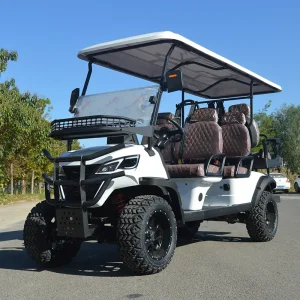
ODM Low-Speed Electric Golf Car from China Suppliers - CE Approved 15-40km/H Beemotors G70-4+2 Factory Model Suppliers, Factories
View Details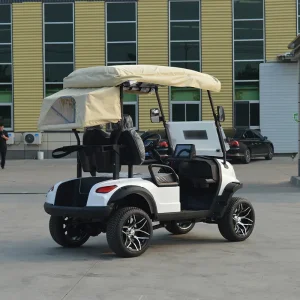
China Affordable Electric 2 Seater Mini Sightseeing Car Golf Cart from China Suppliers and Factory Supplier, Factories
View Details
Best 72V Modern 6-Seater Electric Golf Cart - Factory Direct from China Suppliers, Ideal for On-Road and Off-Road Use Manufacturer, Suppliers
View Details
OEM Affordable 2 Seater Mini Sightseeing Car Golf Cart Electric Cars Manufacturer, Suppliers
View Details
OEM Affordable China 4-Seater Electric Golf Cart - Off-Road Adventure with Custom Battery Options from Trusted Suppliers & Factory Manufacturers, Supplier
View Details
China Wholesale 6 Seat Electric Golf Carts, 72V Lithium Customized Comfortable 4 Seat Electric Golf Buggy Supplier, Suppliers
View Details
Best China Suppliers Factory 72V AC Mini Electric Golf Cart 4-Seat Buggy Gold Color Lithium Battery CE Certified Manufacturers, Supplier
View Details