
Factory-Direct Low Speed Vehicles & Throttle-Equipped Platforms
Direct from our ISO-certified manufacturing base in Dezhou. Every vehicle platform integrates precision throttle response maps configured for safety, durability, and smooth passenger dynamics.
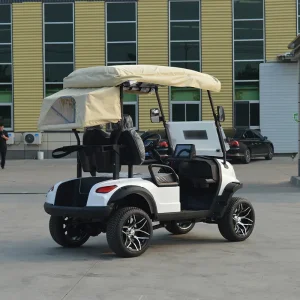
China Affordable Electric 2 Seater Mini Sightseeing Car Golf Cart from China Suppliers and Factory Supplier, Factories
Configure Throttle & Specs
OEM Affordable China 4-Seater Electric Golf Cart - Off-Road Adventure with Custom Battery Options from Trusted Suppliers & Factory Manufacturers, Supplier
Configure Throttle & Specs
Cheap China Supplier Factory Leibin G90 72V Lithium Battery Off-Road Electric Golf Cart - 4 Seaters, Solar Power, 35 km/h Speed Suppliers, Factory
Configure Throttle & Specs
Buy 72V Modern 6-Seater Electric Golf Cart from China Suppliers | Reliable Factory Golf Buggy for On-Road & Off-Road Use Factory, Factories
Configure Throttle & Specs
Best Electric Cars Buggy Golf Beemotors Supply CE Approved 15-40km/H Low Speed Electric Buggy Golf Car Manufacturers, Factories
Configure Throttle & Specs
Best The Factory Directly Supplies 2-Seater Electric Sightseeing Cars, Golf Carts, Club Cars and Vans for Sale Manufacturers, Manufacturer
Configure Throttle & Specs
Wholesale 72V AC Mini Electric Golf Cart Buggy Gold Color 4-Seat Golf Cart with Lithium Battery CE Certified and Tail Caddie Equipment Factory, Factories
Configure Throttle & Specs
Best China Suppliers Factory 72V AC Mini Electric Golf Cart 4-Seat Buggy Gold Color Lithium Battery CE Certified Manufacturers, Supplier
Configure Throttle & SpecsThe Evolution of Electric Golf Cart Throttle Control Systems
How mechanical potentiometers gave way to dual-channel contactless Hall-effect sensors and CANopen drive-by-wire controls in next-generation electric mobility.
Paradigm Shifts in Low-Speed EV (LSV) Signal Modulation
In low-speed electric vehicles (LSVs) and utility carts, the throttle assembly serves as the direct command interface between human intention and battery torque output. Historically, legacy golf buggies utilized physical resistor wiper tracks (0-5kΩ or 5k-0Ω resistive networks). These components suffered from physical friction, wiping wear, ingress of turf moisture, and rapid degradation in high-humidity or coastal resort environments. As fleet operators transition to AC induction and Permanent Magnet Synchronous Motors (PMSM) powered by high-voltage 72V lithium architectures, continuous torque delivery requires millivolt-level accuracy.
Modern throttle controls from top-tier original equipment manufacturers incorporate non-contact magnetic Hall effect transducers or inductive position sensors (inductive proximity arrays). Operating without physical contact friction, these systems boast service lives exceeding 5 million continuous cycles. Signal output maps—spanning traditional analog 0–5V, resistive analog emulation, to high-integrity digital CANbus (J1939/CANopen)—are now programmable via hardware firmware, preventing abrupt initial acceleration surges while providing regenerative dynamic motor braking under deceleration profiles.
Dual-Channel Fail-Safe Redundancy
Eliminates runaway risks entirely. Contemporary MC33035 and CAN-linked controllers demand cross-checking between dual signal curves (e.g., V1 rising from 0.5V to 4.5V while V2 drops inversely). Any signal disparity triggers an instant controller neutral cut-off within 20 milliseconds.
Linear Dynamic S-Curve Acceleration
Replaces rigid linear pedal progression with mathematical S-curve damping. Low-speed creeping through crowded resort clubhouses is smooth and flutter-free, while high-torque uphill acceleration on 30% slopes provides continuous mechanical grip without wheel-slip.
Rugged Solid Cast Aluminum Housings
Factory-molded high-pressure die-cast aluminum alloys equipped with stainless steel torsion return springs. Tested across heavy foot-impact loads, chemical fertilizer exposure, abrasive sand environments, and extreme ambient operating temperatures (-40°C to +85°C).
Global Corporate Sourcing Criteria for Throttle Assemblies
How tier-1 importers, golf fleet managers, and industrial LSV builders benchmark electronic throttle system suppliers.
Controller Cross-Compatibility
Plug-and-play harness interoperability across Curtis, Sevcon, EnPower, Inmotion, Navitas, and Toyota drive units without requiring custom signal converter boxes.
Direct Supply Line Resilience
Direct manufacturer contracts bypass intermediary distributor markups, ensuring rapid spare-part replenishment, batch lot serialization, and 100% traceable electrical testing.
Ergonomic Foot Kinematics
Engineered foot pedal angles (range 25° to 45°) and resistance dampening tailored to reduce operator calf muscle fatigue during lengthy industrial maintenance or hotel rounds.
Turf Chemical & Ingress Defense
IP67-rated waterproof potted internal electronics impervious to daily high-pressure washdowns, salt-air corrosion, and corrosive chemical turf sprays.
| Pedal Technology Architecture | Sensing Mechanism | Typical Cycle Life | Signal Integrity / Redundancy | Environmental Ingress | Recommended LSV Duty Cycle |
|---|---|---|---|---|---|
| Legacy Carbon Potentiometer | Mechanical contact wiper track | < 500,000 cycles | Single channel (high failure/wear rate) | IP54 (susceptible to dust & liquid) | Low-intensity private residential use |
| Inductive Non-Contact Unit | High-frequency coil resonance | 3,500,000 cycles | Single/Dual configurable analog | IP65 (epoxy encapsulated) | Mid-duty golf courses & campus shuttling |
| Hall-Effect Drive-by-Wire (Leibin OEM) | Magnetic flux Hall sensing element | 5,000,000+ cycles | Dual inverse outputs (0.5-4.5V / 4.5-0.5V) | IP67 hermetically sealed enclosure | Heavy commercial, rental resorts & 72V off-road |
| Direct Bus Digital Pedal | Microprocessor CANopen / J1939 | 6,000,000+ cycles | Encrypted digital packet checksums | IP68 military grade seal | Autonomous AGV, patrol & municipal fleets |
Macro Industry Solutions: Powertrain & Throttle Synchronization
Engineering how throttle control interfaces with battery management systems (BMS), motors, and braking subsystems across distinct mobility applications.
Luxury Resort & Hospitality Fleets
Smooth passenger comfort is vital. Throttle integration uses gentle ramp-up torque curve mapping that eliminates neck snapping during starts. Programmable low-speed clubhouse geofencing integrates directly with electronic pedal governing for quiet, safe pedestrian operations.
Industrial Parks & Heavy Cargo Hauling
Heavy utility payloads demand high low-end torque output without rollback on incline ramps. The throttle firmware interfaces with electromagnetic motor parking brakes to hold gradients automatically until forward torque threshold is established.
Hilly Multi-Passenger Sightseeing
Designed for 6-seater and 8-seater buggies navigating varied vertical terrain. Features an intelligent regenerative throttle response map that automatically activates dynamic electric engine braking the instant the operator eases foot pressure off the accelerator.
Localization Support, Homologation, & Quality Governance
Navigating complex international road safety standards with factory-direct compliance engineering.
North American FMVSS 500 & SAE J586
Low-Speed Vehicle (LSV) standards in the USA require maximum forward speed caps between 20 mph and 25 mph. Our throttle controllers feature factory tamper-proof firmware and speed-sensor feedback loop locking that complies with street-legal title requirements across US states.
European CE & L6e/L7e Homologation
Fully compliant with European electromagnetic compatibility directives (EMC EN 61000-6-2/4) to prevent RF interference between throttle controls, onboard chargers, and radio communication gear, facilitating smooth EEC/COC paperwork processing.
On-Demand OEM Custom Harnessing
We supply customized wiring harnesses, waterproof automotive-grade Deutsch/Molex connectors, custom pedal angle brackets, and localized branding options directly tailored to our overseas distributors' fleet service specifications.
Technological Roadmap: 2025–2030 Innovations
From mechanical pedals to edge-AI telemetry: How our powertrain engineering laboratory in Dezhou is shaping future low-speed EV throttle dynamics.
Dual-Hall Solid State
High-precision dual Hall-effect contactless angular sensors with hermetic IP67 potting and integrated brake pedal microswitches.
CANopen Drive-by-Wire
Decentralized CANbus modules providing real-time telemetry streaming, instant diagnostic fault codes, and software-defined driver profiles.
ADAS & Dynamic Speed Limiting
Pedal throttle override triggered by forward ultrasonic/radar collision detection sensors and GPS geofenced speed restrictions on golf courses.
Haptic AI Drive Actuation
Dual-mode manual and autonomous mechatronic drive pedals featuring active force-feedback for unmanned shuttle golf applications.
Explore Further OEM/ODM Models & Fleet Configurations
Pairing advanced throttle stability with 48V/72V lithium drive trains for dependable passenger and cargo transit across world markets.

OEM Wholesale Electric Golf Carts from China Suppliers, 72V Lithium 6 Seat Golf Buggy Factory Made for Comfort and Performance Manufacturers, Factories
Configure Throttle & Specs
Wholesale Electric Golf Cart 4seated Golf Buggy Sightseeing Bus off-Road 72vgolf Cart Manufacturers, Factory
Configure Throttle & Specs
China 72V Electric Golf Cart - 6-Seater Modern Design | China Suppliers & Factory Quality Golf Buggy Manufacturer, Factory
Configure Throttle & Specs
Wholesale 72V Electric Golf Cart - Modern 6-Seater Buggy from China Suppliers | High-Quality Factory Manufacturing Suppliers, Factories
Configure Throttle & Specs
China Leibin (G90) 72V Lithium Battery Solar 4 Seaters off Road Electric Street Legal Golf Carts Manufacturers, Suppliers
Configure Throttle & Specs
China China Suppliers Factory 72V Electric Golf Cart - 4-Seater Off-Road Buggy for Sightseeing, 35 km/h Speed, 150 km Range Suppliers, Factories
Configure Throttle & Specs
OEM Affordable 2 Seater Mini Sightseeing Car Golf Cart Electric Cars Manufacturer, Suppliers
Configure Throttle & Specs
Cheap Cheap Small 4 Seater Electric Golf Carts, Golf Cart Battery, off Road Golf Carts Factory, Factories
Configure Throttle & SpecsFrequently Asked Technical Questions
Clear answers regarding throttle integration, safety redundancy, troubleshooting, and global factory wholesale procedures.