

72V High-Output
Cheap 72V New Style Modern Fashion 6 Seat Golf Cart Electric Golf Buggy Manufacturers, Supplier
View Platform Specs
Explore 8 of our flagship high-demand wholesale configurations. Each vehicle utilizes dedicated jigs, automotive-grade e-coating, and high-efficiency AC powertrains optimized for industrial sites, municipal security, and community patrols.


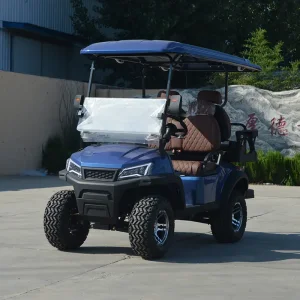
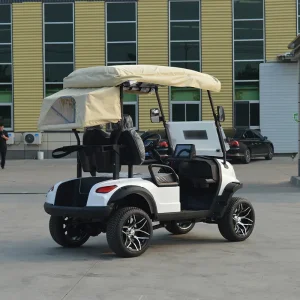
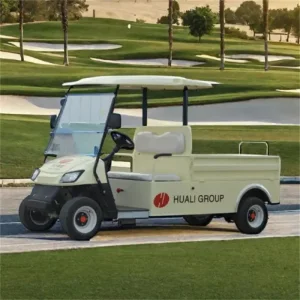
The global electric low-speed vehicle (LSV) and security patrol market is undergoing an accelerated pivot from repurposed consumer buggies toward purpose-engineered industrial patrol units. Driven by strict zero-emission mandates, round-the-clock facility monitoring demands, and the urgent necessity to lower operational total cost of ownership (TCO), leading entities are overhaul-revising their physical security fleets.
Global carbon neutrality benchmarks require major enterprises, seaports, and tech campuses to phase out diesel or gasoline patrol fleets. Custom electric patrol cars eliminate exhaust emissions inside semi-enclosed terminals and underground structures while providing near-silent perimeter security surveillance.
Legacy 36V and 48V lead-acid configurations are swiftly being supplanted by 72V Lithium Iron Phosphate (LiFePO4) systems. These advanced platforms minimize heat dissipation, supply greater torque density for payload transport, and support rapid high-amperage opportunity charging.
Modern security vehicles serve as mobile surveillance nodes. The integration of 360-degree high-definition camera arrays, onboard license plate recognition (LPR), solar supplemental top-charging roofs, and GPS fleet telematics allows operations centers to track guard routes dynamically.
Sourcing from specialized manufacturing hubs such as Dezhou Leibin Vehicle Industry Co., Ltd. in Shandong affords global procurement teams an unmatched balance of technological sophistication, scale, and capital efficiency.
From automated robotic tubular frame welding to in-house electro-deposition (ED) coating, wire-harness assembly, and motor controller tuning, China's end-to-end industrial ecosystem eliminates tier-markup costs and shortens order fulfillment lead times drastically.
Unlike Western assembly lines with rigid option matrices, Chinese factories configure custom body widths, specialized siren lightbars, custom equipment lockers, heavy-duty suspension lifts, and localized voltage converters directly on the primary production assembly track.
Export models undergo rigorous dynamic brake testing, incline torque calibration, continuous salt-spray corrosion analysis, and CE certification protocols to satisfy international standards including US FMVSS 500 and European L6e/L7e type approvals.
Different facilities require distinct mobility characteristics. Our wholesale platforms are purpose-engineered across four primary commercial operational contexts:
Demands continuous 8-to-12 hour shifts, extended cargo capabilities for first-aid gear and fire extinguishers, and rugged high-clearance tires to navigate rail tracks and loading ramps.
Prioritizes ultra-quiet operation, high pedestrian visibility, safety speed limiters (configured at 15–25 km/h), intuitive warning beacons, and approachable non-aggressive vehicle aesthetics.
Demands smooth MacPherson or independent suspension systems, luxury seating, silent drive lines, weather-resistant curtains, and solar roofs to preserve guest experience while patrolling.
Requires zero exhaust emissions for indoor tarmac and luggage hall transit, non-marking tires, precise low-speed maneuvering, and integrated high-frequency radio mounts.
Specifying the correct voltage and energy storage density is essential to eliminate fleet operational failure. Examine the architectural trade-offs to inform your tender documentation.
| Evaluation Parameter | 48V Standard Utility Cart | 72V High-Torque Security Patrol | 72V Solar-Augmented Fleet Unit |
|---|---|---|---|
| Primary Target Application | Flat topography, internal estate maintenance | Continuous multi-shift patrol, steep hills | Perimeter patrols, warm sunny climates |
| Powertrain Peak Power | 3.0 kW - 4.0 kW AC | 5.0 kW - 7.5 kW AC Brushless | 5.0 kW AC + Integrated Solar Inverter |
| Gradeability (Max Incline) | 15% - 20% loaded | 25% - 30% full operational load | 25% - 28% full operational load |
| Typical Battery Chemistry | Flooded Lead-Acid / AGM / Entry LiFePO4 | Automotive Grade LiFePO4 (CAN bus BMS) | LiFePO4 with MPPT Solar Controller |
| Daily Operating Range | 40 - 60 km per charge | 90 - 140 km (depending on kWh) | 110 - 160 km (includes solar offset) |
| Annual Maintenance Overhead | High (water checks, acid corrosion) | Near Zero (sealed pack, dry connections) | Near Zero (sealed pack, periodic solar rinse) |
Essential answers regarding international shipping, homologation standards, chassis customizations, and long-term fleet support directly from our technical directors.
Review our secondary fleet models engineered for mixed-terrain operations, perimeter security patrols, and multi-passenger commercial shuttling.
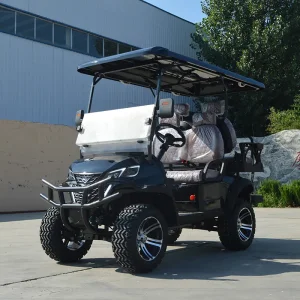
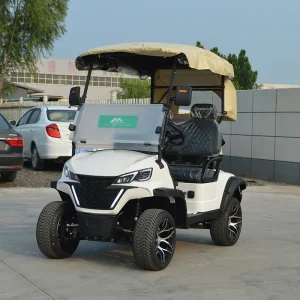
Mitigate procurement risk through our structured 5-stage manufacturing verification roadmap, tailored for international fleet managers and wholesale distributors.
We assess operational gradients, daily transit distances, duty-cycle expectations, and speed regulations to configure appropriate battery storage capacity and drive gear ratios.
Lighting packages, glass certifications, braking components, and reverse safety audible alerts are aligned to meet regional safety mandates (FMVSS, CE, or local L6e quadricycle rules).
Every unit undergoes strict dynamic roll-bench testing, electronic BMS current load evaluation, high-pressure water spray sealing tests, and full suspension inspection before container crating.