
High-Performance Executive Golf Carts & Shuttles
Explore Tier-1 manufactured luxury electric golf cars and multi-passenger utility buggies. Configured with precision 72V/48V powertrains, automotive-grade chassis welding, and CE-compliant safety architectures.







The Paradigm Shift: From Utility Buggy to Executive Fancy LSV
A rigorous examination of high-voltage architecture, advanced lithium chemistry, and tailored OEM engineering driving the low-speed vehicle (LSV) commercial sector.
The global low-speed electric vehicle market has traversed a fundamental transition over the past decade. Previously characterized by simplistic, utilitarian 36V or 48V flooded lead-acid utility runabouts, the contemporary landscape demands sophisticated engineering defined as "Fancy Golf Cars". In enterprise, resort hospitality, and master-planned municipal sectors, a fancy golf cart represents an uncompromising synthesis of high-end automotive design, heavy-duty structural integrity, high-efficiency AC powertrains, intelligent Battery Management Systems (BMS), and street-legal compliance standards.
Dezhou Leibin Vehicle Industry Co., Ltd. (operating a proprietary 13,000 m² state-of-the-art production base in Dezhou, Shandong) has pioneered this industrial evolution. Modern enterprise procurement teams no longer evaluate low-speed electric buggies purely on nominal initial cost. Instead, sophisticated buyers focus on five key performance vectors: thermodynamic efficiency under continuous duty, cycle-life degradation curves of LiFePO4 cells, torsional chassis rigidity, corrosion resistance under aggressive saline or humid micro-climates, and modular platform scalability across 2-seater, 4-seater, 6-seater, and off-road utility formats.
Integrated 72V Architecture
Elevating electrical bus potential to 72V drastically lowers system current (amperage) under peak torque demand, reducing $I^2R$ thermal dissipation losses in motor windings, prolonging controller life, and ensuring 25%+ continuous gradeability.
Automotive LiFePO4 Chemistry
Utilizing high-density Lithium Iron Phosphate chemistry with CAN-bus active cell balancing, ensuring over 3,500 full charge-discharge cycles at >80% State of Health (SOH) and absolute thermal runaway mitigation.
Corrosion-Resistant Metallurgy
Robotic precision gas metal arc welded (GMAW) tubular steel frames subjected to advanced multi-stage cathodic electrophoretic deposition (E-coat) to resist 1,000+ hours of ASTM B117 neutral salt spray exposure.
Engineering Roadmap: Next-Gen Fancy Electric Golf Cars
A comprehensive architectural comparison demonstrating the mechanical and electrical advantages of modern 72V AC propulsion over obsolete low-voltage systems.
High-Efficiency AC Induction vs. Brushless Permanent Magnet (BLDC)
In the high-performance "fancy" buggy category, motor topology governs overall operational uptime. Traditional DC series-wound motors present significant mechanical friction, brush wear, and limited torque density. Leibin deploys AC induction and optimized permanent magnet synchronous motors (PMSM) controlled by sophisticated Vector-Field-Oriented (FOC) algorithmic inverters. The outcome is virtually noiseless acceleration, ultra-fine low-speed throttle modulation (critical for resort and club settings), and dynamic four-wheel electromagnetic regenerative braking that recovers up to 18% of kinetic energy back into the lithium pack during deceleration and downhill descent.
Integrated Photovoltaic Monocrystalline Solar Charging
Pioneered on our flagship Leibin G90 Series, solar integration is executed through aerodynamic, roof-embedded high-efficiency monocrystalline PV panels mated to Maximum Power Point Tracking (MPPT) micro-charge controllers. In sunny operational environments such as Mediterranean luxury retreats, Caribbean resorts, and Middle Eastern desert compounds, this configuration delivers continuous trickling energy (supplementing 15–25 km of autonomous range daily), eliminating battery deep-discharge events and extending overall battery pack lifecycle by up to 30%.
| Engineering Parameter | Legacy Low-Speed Cart (48V Lead-Acid) | Leibin Fancy Enterprise Series (72V LiFePO4) | Operational Impact & ROI Advantage |
|---|---|---|---|
| Operating Bus Voltage | 48V DC nominal | 72V High-Voltage Bus | 33% reduction in current draw; cooler wiring harnesses; sustained torque. |
| Powertrain Technology | DC Shunt / Series Brushed Motor | AC Induction / PMSM with FOC Inverter | Zero brush replacement; regenerative braking; smooth hill-holding. |
| Energy Storage & Weight | Flooded Lead-Acid (~380 kg) | Automotive-Grade LiFePO4 (~95 kg) | Reduces curb weight by ~285 kg, saving turf compaction and boosting range. |
| Charge Cycle Resilience | 500 - 800 cycles (50% DOD) | 3,500+ cycles (80% DOD) | Operational service life exceeds 8–10 years without pack replacement. |
| Chassis Treatment | Standard Primer Paint Dip | Cathodic Electro-Deposition (E-Coat) | Eliminates structural rust under coastal, maritime, and golf fertilizer exposure. |
| IoT Telematics & Fleet CAN | Analog voltmeter only | Cloud CAN-Bus, Geofencing, GPS SOS | Real-time remote diagnostics, speed limiting, and anti-theft fleet tracking. |
Macro Industry Solutions: Configured by Operational Duty-Cycle
Engineered to satisfy the specialized mobility demands of world-class hospitality venues, smart master-planned communities, executive transport corridors, and corporate security fleets.
Luxury Resort & Hotel Hospitality
Designed for premium guest transfer. Models like the G80 Modern 6-Seater deliver silence, plush ergonomic diamond-stitched marine vinyl seating, whisper-quiet independent suspension, and onboard luggage compartments that elevate guest arrival experiences.
Gated Communities & Eco-Estates
For street-legal neighborhood electric vehicle (NEV) utilization. Equipped with automotive LED projector headlamps, DOT-certified safety windshields, 3-point seatbelts, side-view mirrors with integrated turn signals, and digital dash telemetry.
Industrial Campuses & Air Logistics
The G30 Heavy-Duty Utility configurations feature hydraulic or manual dumping cargo beds capable of handling up to 500 kg payloads, perfect for facilities maintenance, aircraft ramp operations, and internal campus distribution.
Municipal Security & Urban Patrol
Engineered for all-day continuous shifts. Configurable with emergency LED warning light bars, PA sirens, high-intensity perimeter searchlights, and high-clearance all-terrain suspension for parkland and urban pedestrian monitoring.
China Factory 4.0: Supply Chain Resilience & Manufacturing Discipline
Inside our 13,000 m² advanced automotive manufacturing facility: how robotic automation, stringent traceability, and vertical integration eliminate procurement risks for international buyers.
A primary failure point in global specialty vehicle procurement is dealing with third-party trading intermediaries who lack engineering governance. Dezhou Leibin Vehicle Industry Co., Ltd. operates an end-to-end vertically integrated production plant in Wucheng County, Dezhou, Shandong. This single-source manufacturing architecture guarantees that every chassis weld, wiring harness crimp, powder coat application, and electronic controller calibration is managed under ISO9001:2015 quality assurance protocols.
Our smart facility incorporates robotic automated welding cells ensuring zero weld porosity and millimeter-precise dimensional tolerances across all frame geometries. After fabrication, components enter our multi-chamber cathodic electrodeposition dipping line, creating an impermeable chemical bond against moisture, fertilizer salts, and road de-icers. By manufacturing proprietary transaxles, steering gearboxes, and injection-molded automotive ABS/PP bodies in-house, Leibin shields wholesale partners from global component volatility, guaranteeing consistent part interchangeability and stable replacement component supply for over a decade.
Precision Robotic Chassis Fabrication
Jig-fixtured, multi-axis automated robotic welding guarantees absolute squareness and dimensional symmetry, eliminating tire scrubbing and uneven suspension wear under demanding fleet duty cycles.
Vertical Cost Engineering (30% Margin Buffer)
Direct factory procurement circumvents intermediary distributor margins. This grants wholesale dealers, commercial fleet buyers, and regional distributors a 25–35% gross margin advantage while maintaining tier-1 components.
Heavy-Duty Crate & SKD/CKD Logistics
Engineered shipping geometry allows maximum volumetric utilization inside standard 40-foot High Cube (40HC) containers. Units ship fully assembled in anti-corrosive steel frames or Semi-Knocked Down (SKD) to minimize destination customs tariffs.
Global Homologation, Safety Protocols & Local Market Compliance
Ensuring frictionless import documentation and road-legal certification across North America, the European Union, Australia, and the Middle East.
Navigating cross-border compliance is critical for commercial importers. A "street-legal" golf cart or fancy LSV must fulfill distinct national vehicle safety standards. Leibin works closely with licensed regional testing authorities to deliver factory-configured compliance packages:
United States (FMVSS 500 / Title 49 CFR Part 571.500): Vehicles categorized as Low-Speed Vehicles (LSV) are certified for operation on public roads with posted speed limits of 35 mph (56 km/h) or lower. Factory configurations include DOT-certified laminated glass windshields with electric wipers, FMVSS 209 3-point retractable seatbelts, DOT-approved reflex reflectors and LED head/tail lamps, illuminated license plate brackets, 17-digit VIN stamping, and maximum electronically governed forward speeds between 20 and 25 mph.
European Union (Regulation EU 168/2013 - L6e / L7e): Quadricycle and light commercial classifications mandate dual-circuit hydraulic braking systems, mechanical parking brakes capable of holding fully loaded units on 20% inclines, E-mark certified safety lighting, audible pedestrian horn warnings, and rigorous electromagnetic compatibility (EMC) testing ensuring zero interference with surrounding electronics.
Battery Safety & Transport Logistics: Every lithium battery platform shipped from the Leibin factory is fully certified under UN38.3 (lithium battery transportation safety), MSDS protocols, and packed under IMDG dangerous goods maritime guidelines, ensuring frictionless customs clearance and warehouse storage approval.
Total Cost of Ownership (TCO): 5-Year Fleet Economics
Why upfront capital costs represent less than 35% of total fleet expenditure: an analytical breakdown of energy consumption, maintenance overhead, and lifecycle longevity.
| Financial Metric (Fleet of 20 Units / 5 Years) | Standard Gas-Powered Fleet | Legacy 48V Lead-Acid Fleet | Leibin 72V Lithium Fleet |
|---|---|---|---|
| Initial Fleet Capital Expenditure (CAPEX) | $140,000 | $110,000 | $128,000 |
| Fuel / Energy Cost (30 km/day/unit) | $58,400 (Gasoline @ $3.50/gal) | $16,800 (Low-efficiency charging) | $9,200 (High-efficiency 72V) |
| Routine Service & Fluid Changes | $24,000 (Oil, filters, spark plugs) | $12,500 (Acid watering, terminals) | $1,800 (Pads, tire rotation only) |
| Mid-Life Battery Replacement (Year 3) | N/A (Starter batteries only: $3,200) | $38,000 (Complete pack swap) | $0 (Zero cell degradation) |
| Labor Overhead & In-Shop Downtime | $18,000 | $14,500 | $2,500 |
| Estimated Residual Fleet Value (Year 5) | -$28,000 | -$14,000 | -$45,000 (High salvage/resale value) |
| Net 5-Year Total Cost of Ownership | $225,600 | $177,800 | $96,500 (Savings of ~$81,300+) |
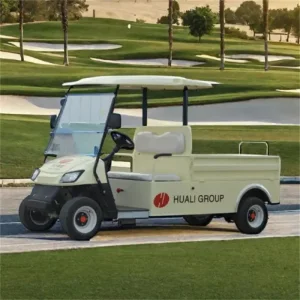
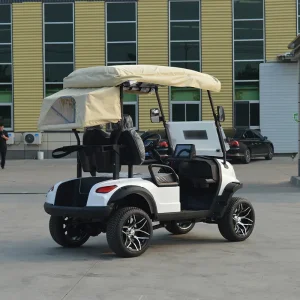
Specialized Utility & Off-Road Sightseeing Buggies
Complete your fleet with factory-direct configurations. Each model is fully customizable via OEM/ODM colorways, seating layouts, and battery capacities for worldwide distribution.

Frequently Asked Questions: Global Sourcing & Engineering
Comprehensive technical and commercial clarifications to support procurement directors, municipal buyers, and regional distributors in vehicle selection.
What engineering distinctions separate a "Fancy Golf Car" from a standard golf cart?
A standard golf cart is designed exclusively for low-duty, 18-hole golf course greens at speeds of 12–15 mph (19–24 km/h), typically using minimal chassis dampening, 48V battery systems, and mechanical drum brakes. In contrast, a Fancy Golf Car represents an automotive-grade light vehicle engineered for mixed off-road and street-legal transportation.
Key engineering differences include: 72V high-efficiency AC induction or PMSM powertrains delivering peak gradeability up to 30%; integrated 4-wheel hydraulic disc brakes with electromagnetic regenerative parking locks; automotive-grade double A-arm independent front suspension with coil-over hydraulic shocks; luxury amenities such as Bluetooth digital multimedia clusters, touchscreens, USB quick-charge ports, and luxury marine upholstery; and full homologation equipment (FMVSS 500 / EU L6e/L7e) including DOT-approved windshields, wipers, mirrors, and lighting.
Why is a 72V Lithium (LiFePO4) architecture superior to traditional 48V lead-acid systems?
The transition from 48V lead-acid to 72V Lithium Iron Phosphate (LiFePO4) addresses fundamental electrical and operational limitations:
- Thermodynamic Efficiency: P = V × I. By raising system voltage to 72V, delivering equal or greater mechanical wattage requires roughly 33% less current (amperes). This minimizes thermal heating across the controller, motor, and cables, resulting in consistent hill-climbing torque without thermal cutoff.
- Weight Reduction & Turf Protection: A typical 48V lead-acid bank weighs approximately 380 kg, whereas an equivalent 72V LiFePO4 battery pack weighs just 90–100 kg. This eliminates roughly 280 kg of dead weight, significantly decreasing tire rolling resistance, increasing range by 40%, and preventing severe soil compaction on delicate fairways and resort turf.
- Cycle Longevity & Zero Maintenance: LiFePO4 cells deliver 3,500+ full charging cycles (at 80% DOD), compared to 600–800 cycles for lead-acid. Additionally, lithium systems eliminate corrosive acid fumes, terminal cleaning, and weekly distilled water replenishment.
How does Leibin support OEM/ODM customization for regional vehicle distributors?
As an original equipment manufacturer operating our own 13,000 m² factory in Dezhou, Shandong, Leibin offers complete end-to-end bespoke customization for international dealers and fleet operators:
Customization scopes include: Pantone-matched exterior body paint and UV-stable powder-coated finishes; custom stitched premium seating with embroidered dealership or resort crests; specialized wheel and tire configurations (from 10-inch turf tires to 14-inch aggressive off-road alloy packages); integrated solar-charging roof canopies; cargo box configurations (utility dump beds, ambulance stretcher beds, lockable luggage compartments); and custom digital dashboard splash screens with programmable speed governors tailored to municipal or private facility safety mandates.
What specific documentation is provided to guarantee legal import and customs clearance?
Every vehicle shipment from our facility is accompanied by complete regulatory, logistical, and technical compliance dossiers, including:
- Vehicle Identification: Official 17-digit ISO 3779 standard VIN (Vehicle Identification Number) stamped onto the structural chassis and displayed on the B-pillar vehicle data plate.
- Certificates of Conformity: CE Declaration of Conformity under the European Machinery Directive 2006/42/EC and Low Voltage Directive 2014/35/EU; along with FMVSS 500 low-speed vehicle component certification test records.
- Battery Safety Documentation: Comprehensive UN38.3 test reports, Material Safety Data Sheets (MSDS), and drop-test packaging compliance certificates required for maritime ocean carriage.
- Customs Documents: Commercial Invoices, Packing Lists detailing serial numbers, Bill of Lading (B/L), and country-of-origin certificates (CO / Form E / Form F / EUR.1) to optimize destination customs tariff treatment.
How does Leibin manage international after-sales warranty and spare part distribution?
We provide a multi-tiered global warranty and spare parts program designed for high-uptime enterprise operations. The primary structural chassis carries a 5-year structural warranty, the LiFePO4 battery pack carries a 3- to 5-year performance warranty (guaranteeing >75% SOH), and electronic controllers/motors carry a 2-year warranty.
For fleet orders, Leibin supplies a "Fast-Mover" maintenance spare parts package inside the container, including spare brake pads, suspension bushings, electronic relays, switches, and LED lighting fixtures. Replacement electrical components are supported via remote video diagnostic triage with our factory technicians, with emergency parts dispatched internationally within 48 to 72 hours via DHL/FedEx air freight.
What are the optimal container loading and shipping configurations?
Shipping economics represent a critical component of wholesale unit pricing. Leibin engineers shipping packaging to optimize volume density:
Fully Built Units (FBU): Vehicles are packaged within heavy-gauge, anti-corrosive steel frame crates, stacked securely inside standard shipping containers. A standard 40-foot High Cube (40HC) container typically accommodates 8 to 12 fully assembled units depending on seating layout (2-seat, 4-seat, or 6-seat formats).
Semi-Knocked Down (SKD): By detaching roof canopies, rear seats, and front wheel assemblies, packing density in a 40HC container can be increased to 16–22 units. This dramatically reduces ocean freight cost per unit by up to 45%, with final reassembly requiring only basic hand tools and 45 minutes per vehicle using our step-by-step video assembly guides.