
Featured Commercial Fleet & Off-Road Platforms (Part I)
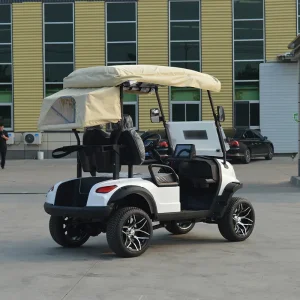
High-performance 72V lithium and 48V AC powertrain units engineered for extreme duty cycles, gradient climbing, and multi-passenger hospitality mobility.
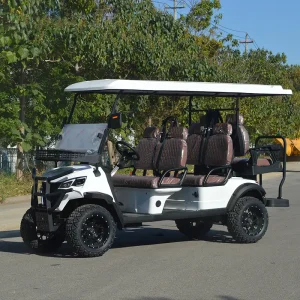
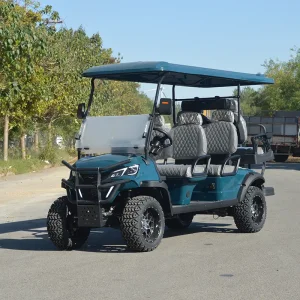
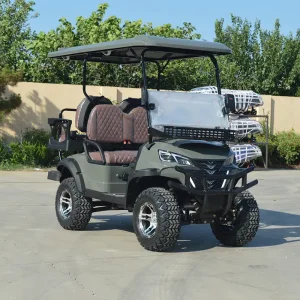
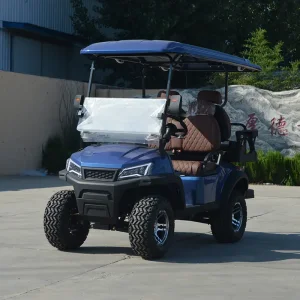
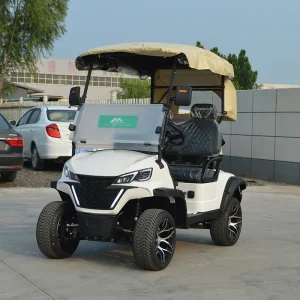
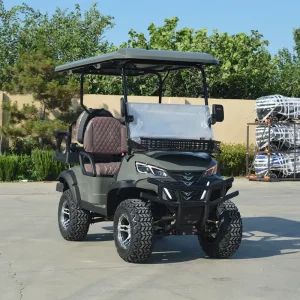
Why Top Global Fleet Operators Source from Chinese Powerful Golf Cart Factories
Modern Low-Speed Vehicle (LSV) manufacturing has migrated far beyond manual garage assembly. China's integrated industrial hubs deliver precision robotics, end-to-end lithium supply chain control, and rapid prototyping that reduces total landed capital expenditure by 38% to 52% without compromising mechanical durability.
Hyper-Localized Battery & Motor Supply Clusters
In specialized industrial corridors like Dezhou, Shandong, Chinese factories benefit from immediate co-location with world-leading lithium battery cells (CATL, EVE, Gotion) and advanced AC synchronous brushless motor fabricators. The transport distance from raw cell fabrication to automated pack welding is measured in kilometers, driving down production overhead and accelerating custom battery pack builds.
- Direct procurement of Tier-1 Grade-A LiFePO4 cells
- Zero middleman markups on magnetic rotors and IPM motors
- Just-in-time component staging eliminating inventory bloat
Automated Jig Welding & Automotive Electrophoresis
Unlike small regional workshops that rely on manual stick welding and air-dry spray paint, established Chinese facilities utilize multi-axis robotic laser tube cutting, pneumatic clamping jigs, and full-immersion cathodic electro-deposition (E-coat) primer pools. This guarantees sub-millimeter chassis squareness and superior rust prevention indispensable for humid coastal courses and islands.
- High-strength seamless Q235B micro-alloy steel chassis
- 1000+ hour salt-spray resistant cathodic electrophoresis (KTL)
- Torsional rigidity exceeding standard golf cart duty by 40%
Aggressive Capital Efficiency & Volume Scalability
Economies of scale achieved through expansive domestic municipal fleets, overseas resort conglomerates, and massive commercial parks allow Chinese tier-1 factories to maintain lower bill-of-materials (BOM) thresholds. Sourcing managers can deploy a 100-unit fleet of 72V commercial lithium buggies at the identical capital budget that would yield only 45-50 legacy lead-acid vehicles from Western brands.
- Direct factory tier pricing without multi-layer dealer cuts
- Flexible high-volume tooling for custom body styling
- Pre-engineered container loading strategies maximizing packing density
Technology Architecture: The Next Generation of Powerful Golf Carts
The golf cart category is transitioning from simple low-speed recreational caddies to sophisticated commercial transport appliances. Here is how modern powertrain engineering is fundamentally redefining fleet longevity and torque response.
72V High-Voltage Architecture vs Legacy 48V
By shifting from conventional 48V configurations to high-efficiency 72V architectures, electrical current draw is reduced by approximately 33% for the equivalent mechanical watt output (P = V × I). Less current translates directly into lower thermal dissipation in motor windings, eliminating mid-shift thermal throttling on steep inclines and extending overall MOSFET life inside the motor controller.
- Lower Joulean heating: $I^2R$ electrical losses diminished by 55%
- Instantaneous hill-start torque without amp-surge cutoffs
- Slimmer wire harnesses with optimized electromagnetic shielding
Integrated Bifacial Monocrystalline Solar Roofs
Equipping golf carts with automotive-grade tempered PV solar canopies (150W to 280W) converts ambient sunlight directly into continuous trickle charging while parked outdoors or traversing open courses. Under typical sunny operations (5.5 peak sun hours), onboard solar charging injects 10–18 km of supplementary range daily, preventing deep battery depletion and flattening commercial utility grid demand curves.
- High-efficiency MPPT (Maximum Power Point Tracking) controllers
- Extends usable operational duty cycle by up to 25% without grid plugin
- Mitigates premature cell sulfurization and voltage sagging
Telematics IoT, Smart BMS & Fleet Geo-Fencing
Modern enterprise procurement demands remote operational visibility. State-of-the-art Chinese golf carts integrate CAN-bus telematics gateways equipped with 4G/LTE connectivity, GPS geo-fencing, and real-time remote cell diagnostics. Fleet controllers can automatically govern vehicle velocity in pedestrian zones, track real-time SOC (State of Charge), and receive predictive service alerts before a mechanical breakdown occurs.
- Remote electronic speed governor and path restriction
- Cell-level thermal monitoring and automatic voltage balancing
- Cloud-based dispatch software integration via open REST APIs
Localized Deployment Scenarios: Matching Machine Specs to Terrain
Procuring a fleet without analyzing grade gradients, road crown roughness, and duty-hour duty cycles results in early powertrain fatigue. Here is how modern powerful golf carts are deployed across key commercial domains.
Luxury Resorts, Island Hospitality & Gated Villas
Island resorts in the Maldives, Caribbean, and Mediterranean require near-silent mobility and superior weatherproofing. Vehicles must resist continuous exposure to salt-laden airborne sea spray, tropical downpours, and intense UV degradation.
- Stainless steel hardware and IP67 sealed harness connectors
- Whisper-quiet AC induction motors preventing guest disturbance
- Premium marine-grade synthetic vinyl seating with UV blockers
Industrial Complexes, Airport Tarmacs & Campus Patrol
Security patrol and maintenance operations demand vehicles capable of 16-to-24 hour rotational work shifts with intermittent high-speed responses and heavy tool carrying capability.
- Heavy-duty diamond-plate aluminum rear utility boxes with drop tailgates
- Roof-mounted LED strobe beacons, searchlights, and PA siren packages
- Hydraulic four-wheel disc braking systems for short stopping distances
Eco-Tourism, Nature Reserves & Mountain Courses
Sites characterized by steep terrain, switchbacks, and unpaved gravel require lifted chassis, large all-terrain mud tires, and differential lock assist to prevent traction loss during wet weather tours.
- Independent double A-arm front suspension with coilover shocks
- Electric hill-hold assist preventing dangerous rollbacks on 25°+ slopes
- High-torque reduction transaxles tailored for aggressive ascent rates
Macro Industry Solutions: Fleet Total Cost of Ownership (TCO) Comparison
Strategic enterprise buyers evaluate vehicles across a 5-to-8 year lifecycle. The table below outlines empirical maintenance, operational energy, and capital depreciation profiles comparing factory-direct Chinese 72V Lithium golf buggies against legacy lead-acid and gas-powered alternatives.
| Evaluation Parameter | Factory-Direct 72V Lithium (China) | Legacy 48V Flooded Lead-Acid | Gasoline IC-Engine Fleet (400cc) |
|---|---|---|---|
| Initial Acquisition CapEx | Competitive Factory OEM Level | Low Initial, High 3-Year Replacement | High Initial (Engine + Emission Systems) |
| Battery Pack Life Expectancy | 8–10 Years (3,500+ cycles to 80% SOH) | 2–3.5 Years (500–800 cycles with watering) | N/A (Crank battery replaced every 2 yrs) |
| Routine Maintenance Overhead | Zero acid watering, zero brush changes | Weekly hydrometer checks, terminal cleaning | Oil, filters, spark plugs, belts, exhaust servicing |
| Energy Cost per 100 km | ~$1.10 – $1.60 USD (Electric Grid average) | ~$2.20 – $2.80 USD (Higher charging losses) | ~$7.50 – $11.00 USD (Based on local fuel costs) |
| Hill Climb Performance (30% Grade) | Continuous full-torque delivery without lag | Voltage sag, overheating, drastic speed drop | High engine RPM, loud noise, clutch belt wear |
| Eco-Compliance & Decibel Footprint | Zero emissions, < 42 dB operating volume | Lead hazard disposal, hydrogen outgassing | CO2, NOx emissions, > 78 dB engine noise |
| Fleet Telematics & Remote Diagnostics | Standard integrated CAN-bus IoT gateway | Rare / costly third-party aftermarket patch | Limited mechanical telemetry, difficult integration |
Global Sourcing Matrix: Auditing Chinese Golf Cart Factories
Navigating cross-border procurement requires rigorous engineering verification. Ensure your procurement team evaluates the following critical audit dimensions before issuing a purchase order.
1. International Homologation & Road Legal Standards
Determine whether destination operations require Low-Speed Vehicle (LSV) public highway transit. For North America, units must comply with FMVSS 500 / SAE J2358, requiring 17-digit VIN issuance, DOT-stamped AS4 laminated windshields, reflex reflectors, and three-point seatbelts. In Europe, type approval falls under EU L6e/L7e framework.
- Verify manufacturer's WMI (World Manufacturer Identifier) code
- Confirm valid CE, EEC, and ISO 9001 certified QA processes
- Ensure battery packs carry UN 38.3, MSDS, and IEC 62133 certifications
2. Packaging Architecture: SKD vs. CKD Logistics
Shipping completely built-up (CBU) vehicles results in high freight rates due to empty container air space. In contrast, advanced Semi-Knocked Down (SKD) or Completely Knocked Down (CKD) packing in purpose-built welded steel frames can triple shipping volume density, cutting per-unit freight costs by up to 65%.
- 40-ft High Cube container loads up to 18–24 SKD units
- Customized steel cradles designed for quick forklift unloading
- Pre-labeled wiring harnesses for rapid 45-minute terminal reassembly
3. Aftermarket Parts Buffer & Warranty Service Level Agreements
A reliable factory contract includes a standard 3% to 5% consumable wear parts kit (brake pads, micro-switches, tie rod ends, relays) shipped alongside the primary vehicle container. Furthermore, factories must provide direct access to chief electrical engineers via remote video diagnostics and dispatch critical warranty parts within 72 hours via air courier.
- Guaranteed 5-year chassis frame and lithium pack warranty terms
- Full schematic wiring blueprints and English service literature
- BMS programming cables and diagnostic software tools included
Frequently Asked Technical & Procurement Questions (FAQ)
Authoritative answers to common questions raised by resort directors, municipal buyers, golf club general managers, and international distributors.
What is the typical lead time for a wholesale customized fleet order (20–100 units)?
Standard production cycles for standardized 72V lithium golf carts typically run between 18 to 28 calendar days following technical configuration freeze and deposit receipt. If your order requires specialized custom injection molding, bespoke RAL exterior paint codes, branded embossed vinyl upholstery, or specialized utility cargo beds, production ranges from 30 to 35 days. Ocean shipping times vary by destination port: 14–18 days to US West Coast, 28–35 days to US East Coast, 25–32 days to European main ports (Rotterdam/Hamburg), and 12–16 days across Southeast Asia and Australia.
How does a 72V AC motor system outlast older 48V DC systems on hilly terrains?
Older 48V direct-current (DC) motors rely on carbon mechanical brushes that cause physical friction, sparks, and intense localized heat when subjected to sustained high torque. Under continuous uphill load, 48V systems draw excessive amperage, causing battery voltage drop and brush degradation.
A 72V AC induction or permanent magnet synchronous motor (PMSM) has no brushes, produces zero mechanical friction within the stator-rotor air gap, and operates at a substantially higher electrical potential. Because current ($I$) is lower for any given power requirement, the motor runs up to 30°C cooler, delivering consistent hill-climbing torque on 25%–30% slopes without thermal cut-offs or brush replacements.
What battery chemistry is utilized, and how is safety maintained in high-heat climates?
Our factory standardizes strictly on Lithium Iron Phosphate ($\text{LiFePO}_4$) chemistry, known for its superior thermal stability compared to conventional NMC or polymer lithium batteries. $\text{LiFePO}_4$ features an extremely stable cathode that resists thermal runaway at temperatures up to 270°C (518°F).
Every pack is managed by an integrated Automotive-Grade Smart BMS (Battery Management System) that monitors each cell's voltage, active balance, and internal core temperature in real time. If temperatures exceed 55°C during rapid charging or heavy driving in desert environments (e.g., Middle East or Southwest USA), the BMS automatically scales back peak discharge or halts charging until safe temperature thresholds are restored.
Can the factory engineer vehicles to meet US FMVSS 500 or European L7e road regulations?
Yes. As an OEM manufacturer, our engineering lines can integrate all federally mandated street-legal compliance hardware during chassis welding and harness routing. For US FMVSS 500 (Low-Speed Vehicle) compliance, we equip the units with DOT-approved laminated glass windshields with electric wipers, three-point inertia-reel seatbelts, illuminated side and rearview mirrors, high/low beam headlights, turn indicators, hazards, horn, illuminated license plate bracket, and speed limiters calibrated to 20–25 mph (32–40 km/h).
We issue official 17-digit VIN identifiers and supply the Certificate of Origin (COO) and homologation documentation required by state DMVs or national transport agencies.
How does the factory support warranty repairs and replacement parts overseas?
Our warranty agreements provide 5 years of structured coverage on the lithium battery pack and main chassis, and 2 years on motor controllers, transaxles, and chargers. To ensure zero operational fleet downtime, every containerized order includes a complimentary spare parts buffer containing wear items (brake pads, bushings, fuses, lighting modules, switches).
For critical warranty issues, replacement components are dispatched directly via DHL/FedEx priority air freight. Technicians have direct access to our factory engineering team via dedicated video support for step-by-step troubleshooting, wire trace verifications, and controller firmware tuning.
Featured Commercial Fleet & Off-Road Platforms (Part II)
Explore specialized 2, 4, and 6-seater high-torque variants, versatile utility models, and multi-purpose electric sightseeing vehicles ready for worldwide fleet export.
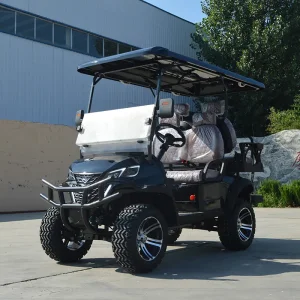
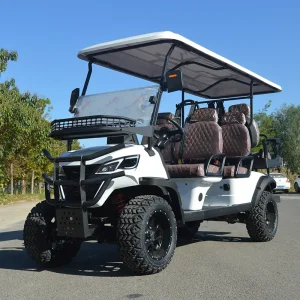
Initiate Your Factory-Direct Procurement & Custom Specification Dialogue
Whether you require containerized shipments of 72V lithium passenger buggies, customized resort shuttle configurations, or specialized heavy-duty industrial utility haulers, our senior manufacturing engineers are ready to calculate your gradient profiles, payload balances, and shipping packing schemes.