
Flagship Roadworthy Golf Carts & Shuttles
Direct factory-manufactured 2-seater, 4-seater, and 6-seater high-torque low-speed electric vehicles engineered for resort corridors, municipal transit, and private estates.
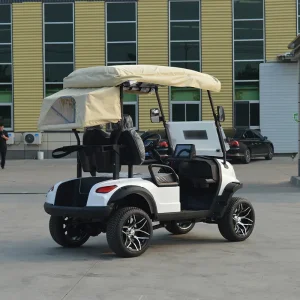
China Affordable Electric 2 Seater Mini Sightseeing Car Golf Cart
Request Fleet Spec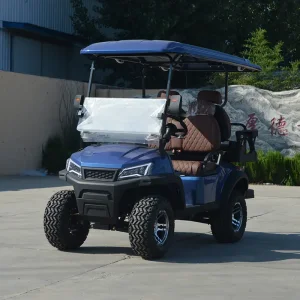
Cheap China Supplier Factory Leibin G90 72V Lithium Off-Road Cart
Request Fleet Spec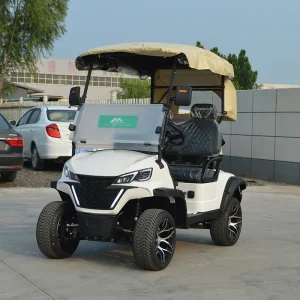
Wholesale China Factory 2-Seater Sightseeing Cart Versatile G70
Request Fleet Spec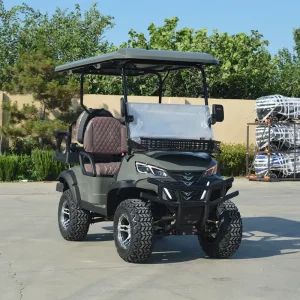
Wholesale 72V AC Mini Electric Gold 4-Seat Golf Cart CE Certified
Request Fleet Spec
Best Factory Directly Supplies 2-Seater Electric Sightseeing Cars
Request Fleet Spec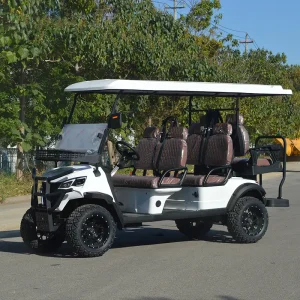
OEM Wholesale Electric Golf Carts 72V Lithium 6 Seat Golf Buggy
Request Fleet Spec
China Leibin (G90) 72V Lithium Solar 4 Seaters Street Legal Golf Cart
Request Fleet Spec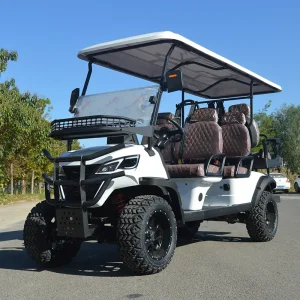
ODM Low-Speed Electric Golf Car CE Approved 15-40km/h G70-4+2
Request Fleet SpecThe Paradigm Shift Toward Roadworthy Low-Speed Electric Vehicles (LSVs)
Analyzing structural market transitions: How traditional golf carts evolved into street-legal, homologated micro-mobility transport platforms across international territories.
Over the last decade, commercial procurement for small-footprint electric vehicles has undergone an irreversible structural transformation. What was once recognized strictly as a specialized turf carriage for 18-hole sports facilities has morphed into a sophisticated category of Roadworthy Electric Golf Carts, legally categorized worldwide as Low-Speed Vehicles (LSV), Neighborhood Electric Vehicles (NEV), or Micro-Mobility Transporters. Driven by progressive municipal emission caps, skyrocketing urban maintenance overheads, and the rapid expansion of master-planned eco-resorts and gated micro-cities, global fleet operators require vehicles capable of traversing both private fairways and public municipal access corridors with zero compromise on active or passive safety.
Achieving true roadworthiness is not an cosmetic retrofit; it demands deep engineering integration from the chassis frame up. In jurisdictions enforcing North American DOT FMVSS 500 or European EEC/ECE L6e and L7e type approvals, roadworthy classifications require automotive-grade laminated AS1 safety windshields, multi-point inertia-reel seatbelts, four-wheel hydraulic disc braking configurations with electronic brake-force distribution (EBD), integrated LED photometric matrices (high/low beams, directional indicators, side marker clearance lights), and precision dual-speed governing algorithms. As an integrated China manufacturer with over two decades of dedicated low-speed vehicle development, Leibin Vehicle Industry engineers its platforms directly against these regulatory frameworks, eliminating the technical friction global importers typically face when homologating imported commercial fleets.
Strategic Advantages of China's Dezhou EV Manufacturing Cluster
How geographic concentration of high-voltage lithium technology, automated robotic tooling, and complete localized supply chains deliver unmatched commercial value.
Tier-1 Vertical Integration
Unlike regional assemblers reliant on multi-tier third-party component sourcing, our Dezhou facility consolidates tubular steel laser cutting, CNC robotic jig welding, electrocoating (cathodic dip), thermoforming body moulding, and powertrain testing on a single managed footprint.
LiFePO4 Lithium Dominance
Direct supply partnerships with domestic lithium chemical giants ensure Leibin vehicles integrate the latest lithium iron phosphate (LiFePO4) cell chemistries, proprietary CAN-bus smart Battery Management Systems (BMS), and extreme thermal dissipation designs suited for tropical and desert climates.
Export Container Geometry
Every chassis family—including G30, G70, G80, and G90—is designed for nested containerized shipping. Optimized structural knock-down (SKD/CKD) and engineered steel transport cradles maximize 40HQ container volumetric capacity, driving down maritime freight cost per unit by up to 28%.
B2B Procurement Insight: Sourcing directly from an established OEM/ODM manufacturing facility in Shandong eliminates the compounding 20% to 35% markups imposed by regional commercial agents while establishing direct engineering communication channels for custom homologation requirements, harness alterations, and localized branding.
Roadworthy Compliance & Powertrain Systems Architecture
Deconstructing the structural, electrical, and mechanical parameters that distinguish industrial street-certified LSVs from basic recreational buggies.
Dual-Circuit Hydraulic Discs
Front and rear hydraulic disc brakes with independent dual-circuit redundancy guarantee rapid stopping distances (< 4.5m from 35 km/h) even under gross vehicle weight load conditions on steep downhill grades.
72V High-Torque AC Induction
72V AC motor architectures deliver instantaneous low-end starting torque with negligible thermal drift. Compared to 48V legacy DC systems, the 72V platform operates at lower amperage, reducing heat stress on copper windings.
Monocrystalline Solar Integration
Integrated flexible rooftop solar collectors directly trickle-charge the main auxiliary bus, delivering an extended passive daily range of 8–15 km under ambient sunlight, minimizing deep battery cycling in utility applications.
MacPherson Independent Struts
Automotive-grade front double A-arm or MacPherson-style coil-over struts paired with rear trailing arms ensure superior tire contact patch stability, preventing chassis roll during sharp urban evasive maneuvers.
| Evaluation Parameter | Conventional Golf Buggy | Leibin 72V Roadworthy LSV Series | Commercial Value & Compliance Benefit |
|---|---|---|---|
| Powertrain Architecture | 48V DC Shunt-Wound Motor | 72V AC Brushless Asynchronous / PMSM | High Efficiency 30%+ increase in hill-climbing torque, zero brush wear |
| Braking Architecture | Rear Mechanical Drum Brakes | 4-Wheel Hydraulic Disc + Regenerative + Auto Park | FMVSS Compliant Rapid thermal dissipation, energy recuperation on descents |
| Battery Chemistry & Life | Lead-Acid Flood (500–700 Cycles) | LiFePO4 Lithium (3,500+ Cycles to 80% DoD) | Zero Maintenance 70% lighter pack weight, no water top-ups, 8-year operational life |
| Chassis Corrosion Barrier | Standard Primer Spray | Cathodic Electrophoretic Deposition (E-Coat) | Coastal Ready 1,000+ hour ASTM B117 salt-spray resistant for seaside resorts |
| Lighting & Signaling | Auxiliary Halogen Spotlights | E-Mark / DOT Certified Full LED Projector Array | Street Certified Low power consumption, compliant daytime running lamps (DRL) |
Engineered for Demanding Commercial Scenarios
From gated residential corridors to sprawling industrial complexes, discover how custom-configured roadworthy golf carts optimize operational workflow.
Master-Planned Gated Communities
Modern luxury communities in North America, Australia, and the Middle East operate internal road networks with 25 mph (40 km/h) speed limits. Leibin LSVs provide quiet, pollution-free transport with automotive-grade comfort, three-point seat belts, and secure weather-sealed cabin options.
Eco-Resorts & Hospitality Corridors
High-end island retreats and mountain golf hotels require silent passenger movement across variable gradients. Our 72V 4-seater and 6-seater platforms (G80/G90) conquer 25% slopes fully loaded while solar canopies continually maintain battery charge under direct sun exposure.
Industrial Parks, Ports & Warehousing
Facility maintenance, security monitoring, and inventory movement across vast manufacturing campuses demand rugged utility vehicles. The Leibin G30 cargo configuration replaces oversized pickup trucks, dramatically shrinking site carbon footprints and maintenance overhead.
University Campuses & Medical Facilities
Zero-emission passenger shuttles (G70-4+2) provide on-demand, ADA-adaptable mobility for students, faculty, and clinical teams across pedestrian-heavy campus zones without diesel fumes, particulate emissions, or disruptive engine noise.
Municipal Law Enforcement & Security
Equipped with customized warning beacon lightbars, public address (PA) sirens, and specialized telematics, Leibin electric patrol vehicles deliver visible, accessible deterrence through public parks, historic city centers, and transit stations.
Airport Apron & Ground Support
Low-profile electric tow tugs and passenger transit carts operate inside hangars and baggage handling zones where internal combustion engines are strictly prohibited under international aviation safety and clean air protocols.
Total Cost of Ownership (TCO): 5-Year Fleet Financial Analysis
Comparing capital expenditure, consumable maintenance, energy conversion, and residual value between legacy internal combustion carts and Leibin 72V Lithium LSVs.
82% Reduction in Energy Expenditure
Electricity consumption costs average approximately $0.03 per mile ($0.019/km) compared to $0.18 per mile for equivalent small-displacement 4-stroke gasoline engines, yielding immediate operational savings for commercial 24/7 duty cycles.
Zero Routine Powertrain Lubrication
By eliminating motor oil changes, spark plug swaps, fuel filters, drive belt tensioning, and carburetor rebuilds, commercial fleet technicians recover hundreds of operational labor hours annually.
Extended LiFePO4 Useful Life
While traditional lead-acid batteries degrade rapidly within 24 to 36 months, premium Grade-A LiFePO4 cells maintain over 80% original capacity after 3,500 daily cycles, delivering an 8 to 10 year service life without expensive battery pack replacements.
For corporate purchasing committees, municipal procurement boards, and commercial rental investors, initial factory unit acquisition cost represents merely 35% to 40% of the five-year Total Cost of Ownership. Selecting Leibin factory-direct roadworthy electric golf carts with integrated CAN-bus telemetry enables centralized predictive maintenance, real-time geofencing, over-the-air performance diagnostics, and automated fleet battery health monitoring. This level of digital oversight mitigates unplanned downtime and maximizes asset liquidation values at end-of-lifecycle retirement.
End-to-End Factory Production & Verification Protocol
How Leibin executes rigorous engineering verification across five distinct manufacturing gates inside our Dezhou industrial base.
Robotic Chassis Fixturing
High-tensile seamless steel chassis tubing is shaped by 3D laser cutters and secured on hydraulic robotic welding jigs, guaranteeing dimensional tolerances within ±0.5mm across high-volume production batches.
Anti-Corrosive E-Coating
Completed chassis frames undergo an 11-stage automated pre-treatment bath followed by cathodic electrophoretic immersion and 180°C high-temperature curing to seal tubular interiors against humidity and road salt.
Powertrain Dyno Calibration
Each 72V AC motor and programmable controller pairing undergoes automated dynamometer load-testing to calibrate torque curves, verify regenerative deceleration settings, and program market-specific speed governors.
Dynamic Track Verification
Prior to export crating, each cart completes our multi-surface test track, validating emergency brake deceleration, 30% ramp hold stability, acoustic insulation, steering alignment, and 30-minute water spray waterproofing.
Specialized Utility, Off-Road & Multi-Seat Carts
Commercial-duty electric cargo haulers, CE-approved low-speed buggies, and extended multi-passenger transport shuttles for comprehensive facility support.
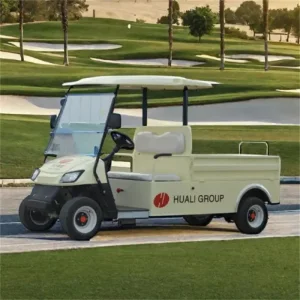
Cheap Cargo Electric Utility off Road Truck Golf Cart 48V Bed
Request Fleet Spec
Best Electric Cars Buggy Supply CE Approved 15-40km/h Low Speed
Request Fleet Spec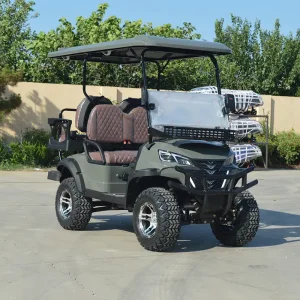
Cheap Small 4 Seater Electric Golf Carts Battery Off-Road Factory
Request Fleet Spec
Best China Factory 72V AC Mini Electric 4-Seat Gold Cart CE
Request Fleet Spec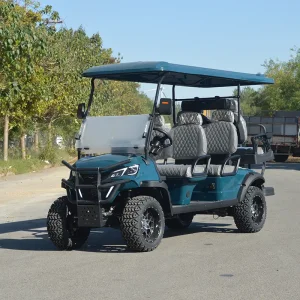
Wholesale 72V Electric Golf Cart Modern 6-Seater Buggy High Quality
Request Fleet Spec
Cheap Wholesale China 6 Seat 72V Lithium Customized Golf Buggy
Request Fleet Spec
Cheap 72V New Style Modern Fashion 6 Seat Electric Golf Buggy
Request Fleet Spec
Wholesale 6 Seat Electric Golf Carts Customized 72V Lithium Buggy
Request Fleet SpecFrequently Asked Questions by Global Fleet Importers
Authoritative technical answers covering homologation procedures, electrical system architectures, maritime logistics, and warranty terms.
What specific standards determine road legal status for electric golf carts in the US and Europe?
In the United States, public roadway operation requires compliance with NHTSA 49 CFR Part 571.500 (FMVSS 500) governing Low-Speed Vehicles (LSVs) capable of 20 to 25 mph. This mandates AS1 laminated glass, three-point seat belts, DOT-rated tires, rear-view mirrors, illuminated license plate brackets, and specific photometric lighting. In the European Union, vehicles are regulated under Regulation (EU) No 168/2013 for L6e-A (Light quadricycles) or L7e (Heavy quadricycles), requiring strict CoC (Certificate of Conformity) documentation. Leibin provides factory-configured lighting, VIN stamping, and homologation paperwork to streamline local DMV or transport ministry registration.
Why is a 72V LiFePO4 platform superior to a 48V lead-acid system in commercial use?
P=V×I physics dictates that achieving equivalent motor output at 72V requires 33% less electrical current than a 48V configuration. Lower current drastically reduces heat accumulation in copper motor windings and solid-state controller MOSFETs, extending component lifespan during continuous operation. Additionally, LiFePO4 cells yield 3,500+ deep discharge cycles compared to 500–700 cycles for lead-acid, maintain steady voltage throughout discharge without power sag on uphill gradients, and eliminate corrosive acid outgassing and distilled water replenishment routines.
How does rooftop solar integration function under real-world operating conditions?
Leibin G90 models integrate an industrial monocrystalline flexible solar panel embedded flush within the thermoformed composite roof structure. Connected through a high-efficiency MPPT (Maximum Power Point Tracking) step-up charge controller, the solar array continuously channels ambient photovoltaic energy directly into the high-voltage lithium battery bank whenever ambient illumination permits. Under average sunny conditions (approx. 800 W/m² solar irradiance), the panel delivers 100–150W of auxiliary current, adding 8 to 15 kilometers of free operational range per day and preventing self-discharge when stored outdoors.
What is the factory lead time, container packing density, and logistics procedure?
Standard production cycles range between 15 and 25 calendar days depending on custom fleet configurations, livery selections, and accessory installations. For sea freight optimization, vehicles can be shipped completely assembled (FBU) inside reinforced steel stackable frames or in semi-knocked-down (SKD) configuration. A standard 40-foot High Cube (40HQ) maritime container accommodates between 8 and 18 units depending on wheel diameter, seat capacity, and roof bracket detachment. Full dangerous goods (UN 3480) maritime documentation, MSDS certificates, and sea-freight tie-down plans are supplied prior to port dispatch.
Can Leibin support custom OEM/ODM fleet branding and bespoke utility configurations?
Yes. As a primary manufacturer, Leibin accommodates custom corporate pantone body color matching, embroidered commercial logo headrests, specialized hydraulic dump utility boxes, ambulance stretcher extensions, resort luggage carrier racks, and police lightbar integrations. We supply customized user manuals, digital wiring schematics, and white-label VIN identification plates for brand distributors building localized electric vehicle lines under their proprietary brand marks.
What warranty and international technical after-sales support protocols are provided?
We provide comprehensive commercial warranty protection: 5 years or 10,000 operational hours on LiFePO4 battery modules, 3 years on AC motors and controllers, and 2 years on chassis structural components. For international importers, we dispatch critical wearable spare parts kits (brake pads, bushings, relays, switches) packed directly inside the primary shipping containers. Our bilingual technical engineering team provides video call diagnostics, circuit troubleshooting, and express air courier dispatch for critical electrical components.
Engage Directly with Our Factory Engineering Team
Whether you require a trial demo vehicle, customized municipal homologation documentation, or a tiered container-load wholesale quotation, our technical sales engineers in Dezhou are prepared to review your route specifications.