
⚡ Featured Autonomous & Electric Golf Fleet Lineup
Explore our engineering-certified autonomous and low-speed electric mobility products built for resorts, golf courses, and industrial utility operations.

72V Modern 6-Seater Electric Golf Cart Buggy (On & Off-Road)
View Specifications
ODM Low-Speed Electric Golf Car 15-40km/H CE Certified (G70-4+2)
View Specifications
Factory Direct 2-Seater Electric Sightseeing & Club Utility Cart
View Specifications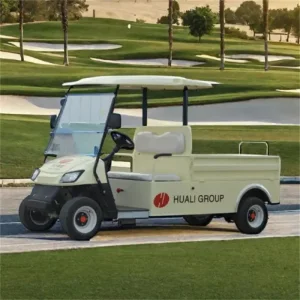
Heavy-Duty 48V Cargo Electric Utility Off-Road Truck Golf Cart
View Specifications
Wholesale 72V AC 4-Seat Golf Cart with Tail Caddie Equipment
View Specifications
Modern 72V 6-Seat Extended Electric Golf Buggy Fleet Model
View Specifications
CE Certified 15-40km/H Low-Speed Electric Buggy Vehicle
View Specifications
G70 Platform 2-Seater Compact Electric Sightseeing Vehicle
View Specifications🌐 The Evolution of Autonomous Golf Bag Mobility: Global Market Drivers
A comprehensive analysis of how edge computing, robotic computer vision, and autonomous low-speed navigation are transforming traditional golf courses and commercial resort operations worldwide.
UWB & RTK High-Precision Tracking
Modern self-driving golf bag carts utilize Ultra-Wideband (UWB) centimeter-level beacons combined with Real-Time Kinematic (RTK) GPS corrections. This dual-layer architecture guarantees robust "Follow-Me" accuracy even under dense tree canopies where standard satellite connectivity degrades.
Edge AI Vision & Dynamic Obstacle Avoidance
Incorporating monocular/stereoscopic vision paired with Solid-State LiDAR arrays, autonomous golf carts compute predictive motion paths locally. Neural-network accelerators detect bunkers, water hazards, rough grass boundaries, and pedestrian movements in sub-15ms latency intervals.
Automated Fleet Geofencing & Optimization
Centralized cloud fleet management platforms enforce 90-degree cart rules, restricted greens boundaries, and dynamic speed zones automatically. Operators achieve complete telematics oversight, remote diagnostics, and automated return-to-base docking protocols.
CAGR Growth in Autonomous LSV Systems (2024-2030)
Operational Cost Reduction vs. Manned Fleet Logistics
Relative Positioning Precision via UWB/LiDAR Sensor Fusion
Charge Cycles Supported via LiFePO4 Automotive Grade Cells
🏭 Tier-1 Manufacturing Capabilities & Chinese Supply Chain Synergy
How specialized engineering clusters in Dezhou, Shandong deliver unmatched cost efficiency, rapid prototyping, and automotive-grade reliability for global wholesale importers.
Robotic Chassis Welds & Cathodic E-Coating
All load-bearing structures undergo automated robotic fixturing, electro-phoretic immersion coating, and high-salinity salt-spray testing exceeding 1,000 hours for total rust prevention in coastal golf resort climates.
Integrated BMS & 72V High-Torque Powertrains
By leveraging domestic lithium iron phosphate (LiFePO4) cell dominance, our platforms feature intelligent Battery Management Systems with CAN bus communication, IP67 thermal insulation, and multi-sensor safety redundancy.
Rapid ODM/OEM Prototyping
From initial CAD modeling and finite element stress analysis to functional pre-series prototypes in 30 days. Full customization of industrial design, wheelbase, gear ratios, and autonomous sensor placement.
Optimized Container Knock-Down (CKD/SKD)
Engineered modular sub-assemblies ensure up to 40% higher container packing efficiency. Pre-tested wiring looms and quick-coupling mechanical mounts reduce local destination assembly times to under 45 minutes per unit.
📊 Engineering Matrix: Autonomous Caddies vs. Conventional Golf Buggies
A side-by-side engineering breakdown designed to inform corporate procurement committees, resort operators, and B2B fleet managers.
| Evaluation Parameter | Conventional Electric Golf Carts (48V/72V) | Autonomous Self-Driving Bag Carts (Edge AI/UWB) | Hybrid Autonomous Multi-Passenger Buggies |
|---|---|---|---|
| Primary Architecture | Manual driver operation, rack & pinion steering | Drive-by-Wire (DbW) electro-mechanical actuators | Dual-Mode (Manual override + Autonomous patrol) |
| Navigation Sensors | None / Basic external telematics GPS | UWB transponder, Dual IMU, 3D LiDAR, RGB-D Vision | RTK-GNSS, Ultrasonic arrays, Solid-State LiDAR |
| Braking & Safety | Mechanical drum / Hydraulic disc brake | Electronic regenerative braking + Fail-safe park brake | Redundant dual-circuit braking + Emergency stop bumpers |
| Turf Impact & Footprint | Moderate compaction (400-600kg vehicle curb weight) | Ultra-low turf stress (<45kg unladen weight) | Balanced distributed load with low-pressure turf tires |
| Target Application | General player mobility, club rentals, estates | Walking-golfer health niche, club bag automation | Large-scale scenic resorts, automated park shuttles |
| Compliance Standard | CE, ISO9001, FMVSS 500 | CE-RED, EN 301 489, FCC Part 15 | CE, L6e/L7e Homologation Ready |
⛳ Localized Deployment & Cross-Industry Application Frameworks
Self-driving cart technologies expand far beyond fairway fairways—transforming internal micro-mobility across high-density facilities globally.
Championship Resorts & Premium Golf Clubs
Preserve traditional walking etiquette while alleviating physical burdens. Self-driving golf bag carriers shadow players at a discrete 2-meter gap, stopping automatically when the player addresses the ball and accelerating smoothly along contours.
Luxury Hospitality & Island Resort Shuttling
Configured for luggage handling and guest accompaniment within pedestrian-first resort villages. Whisper-quiet AC drive units preserve serene guest environments while eliminating intra-resort emissions entirely.
Automated Industrial & Campus Logistics
Adapted as autonomous tool caddies and material transfer shuttles for aircraft hangars, high-tech campuses, and cleanroom facilities where automated follow-mode transport saves man-hours and repetitive injury risks.
🚀 Macro Industry Outlook: 2025–2030 Procurement Forecast
Key technological vectors and supply chain considerations driving the next wave of capital investments in autonomous low-speed vehicles (ALSV).
Solid-State Batteries & Inductive Charging
The industry is transitioning toward wireless inductive floor charging pads at bag-drop areas and semi-solid lithium chemistry, offering 2.5x volumetric energy density and extreme cold-weather operational integrity.
MaaS (Mobility-as-a-Service) & App Ecosystems
Integration with club management software (EZLinks, GolfNow) allows players to book, unlock, and customize autonomous bag carts directly via smartphone, creating new subscription-based revenue streams for course managers.
Standardized ISO Safety Architectures
Global regulatory bodies are harmonizing safety protocols for driverless low-speed devices. Procurement mandates require suppliers to show ISO 26262 functional safety roadmaps and verifiable software fail-safes.
❓ Enterprise Procurement & Technical Q&A
Direct technical responses addressing common procurement, integration, safety, and supply chain questions from international wholesalers and distributors.
What differentiates autonomous golf bag carts from conventional remote-control caddies?
How does the autonomous follow-me system perform in wet, rainy, or high-glare conditions?
What are the OEM and ODM customization parameters for wholesale orders?
How are lithium battery certifications managed for international maritime shipping?
What warranty and spare parts lifecycle guarantees are provided to distributors?
🛒 Extended Fleet Mobility & Wholesale Portfolio
Review our specialized utility, multi-passenger, and high-capacity low-speed vehicles available for immediate bulk order and customized engineering runs.
72V AC Mini Electric Golf Cart 4-Seat Lithium Model (CE Certified)
View Specifications
Factory-Direct 72V Modern 6-Seater Golf Buggy for Mixed Terrains
View Specifications
Wholesale 6-Seat 72V Lithium Customized High-Comfort Golf Buggy
View Specifications
Customized 72V Lithium 4/6 Seater Commercial Transport Buggy
View Specifications
OEM 4-Seater Off-Road Adventure Electric Cart with Custom Battery
View Specifications
Wholesale 4-Seater Sightseeing Bus & 72V Off-Road Heavy Cart
View Specifications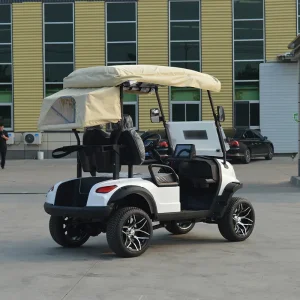
Affordable Compact 2-Seater Electric Mini Sightseeing Car & Cart
View Specifications