
Priority G30 Series & Low-Speed Electric Vehicles for Italy
Engineered for Italian terrain—from rolling Tuscan vineyard topographies and Ligurian coastal gradients to historic resort complexes requiring CE-compliant quiet utility.
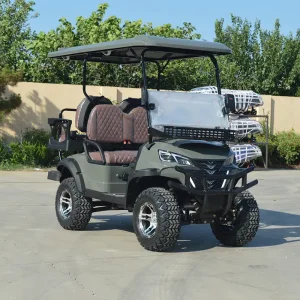
G30 Series 4-Seater Off-Road Golf Cart for Italian Agriturismi & Resorts

G30 6-Seat 72V Lithium Luxury Buggy for Lake Garda & Amalfi Fleets
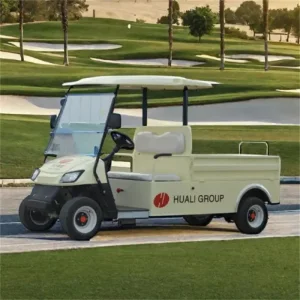
G30 Heavy Cargo Utility Truck with Hydraulic Bed for Italian Port & Vineyard Duty
G30 Premium 6-Seater Guest Shuttle for Italian Heritage Hotels & Country Clubs
The Italian Low-Speed Vehicle Landscape & Direct Factory Sourcing
A detailed technical evaluation for procurement managers, estate directors, and fleet leasing operators navigating the shift toward high-performance electric utility vehicles (LSVs) across Italy.
Across the Italian peninsula, from the high-density agritourism regions of Tuscany, Umbria, and Veneto to the luxury hospitality sectors of the Amalfi Coast, Lake Como, and Sardinia, the demand for resilient, low-noise, and zero-emission utility mobility has reached an inflection point. Italian commercial operators face a triple challenge: steep and undulating topographies requiring high starting torque, strict environmental and acoustic regulations in protected historical and natural landscapes, and the economic imperative to minimize vehicle total cost of ownership (TCO).
Historically, Italian enterprises sourced low-speed vehicles through localized intermediaries who imported re-badged units at markups of 40% to 65% above ex-factory costs, coupled with protracted lead times for proprietary replacement components. As Italian enterprises align with the European Green Deal and the Piano Nazionale di Ripresa e Resilienza (PNRR) decarbonization targets, direct factory collaboration with specialized Chinese original equipment manufacturers (OEMs)—such as Dezhou Leibin Vehicle Industry Co., Ltd.—has emerged as the definitive procurement methodology for institutional buyers.
Italian Market Demand Vectors: Why the G30 Platform Dominates
Analyzing four core business environments driving the transition to high-voltage lithium utility vehicles across Italy's major commercial regions.
Agriturismi & Wine Estates
Tuscan and Piedmontese vineyards require quiet, high-traction vehicles capable of handling up to 25% slopes while carrying guests, luggage, or harvested produce without compacting fragile root zones or disrupting estate tranquility.
Historic Hotels & Coastal Resorts
From the cliffside corridors of Positano to large-scale golf clubs in Lombardy, five-star resorts demand whisper-quiet 72V lithium passenger buggies with bespoke marine-grade upholstery and automotive clear-coat finishes resistant to salt air.
ZTL Heritage Logistics & Ports
Strict Zero Emission / Zona a Traffico Limitato (ZTL) urban centers and container freight facilities in Genoa and Ravenna utilize the G30 Cargo variant for agile last-mile distribution where standard commercial vans cannot operate.
Engineering Architecture of the Leibin G30 Platform
Engineered to eliminate the failure modes common to legacy lead-acid fleet carts through automotive-standard production protocols.
Corrosion Protection: KTL Electrophoresis
Operating along the Tyrrhenian and Adriatic coastlines exposes vehicle undercarriages to rapid chloride-induced corrosion. The Leibin G30 chassis is fabricated from high-strength robotic-welded carbon steel tubing, subjected to a multi-stage hot-dip pre-treatment and cathodic electrodeposition (KTL) primer coating. This automotive-grade surface treatment withstands over 1,000 hours of continuous ASTM B117 neutral salt spray testing, guaranteeing zero structural oxidation across Mediterranean resort operating cycles.
Powertrain Topology: 72V AC Induction / PMSM
Unlike older 36V or 48V DC motor architectures that suffer thermal derating and brush wear on prolonged grades, the G30 series utilizes high-efficiency brushless AC motors and permanent magnet synchronous motors (PMSM) paired with intelligent Curtis or Enpower vector controllers. The 72V architecture draws 33% less current than equivalent 48V systems for the same mechanical output, dramatically reducing I²R heat losses, extending wire harness durability, and supplying sustained hill-climbing torque on Italian slopes.
Automotive-Grade LiFePO4 Chemistry & BMS
Standard lead-acid traction batteries suffer catastrophic capacity degradation within 18–24 months under daily fleet cycles. The G30 platform incorporates lithium iron phosphate (LiFePO4) cell chemistry rated for >3,500 full charge cycles at 80% Depth of Discharge (DoD). An integrated intelligent Battery Management System (BMS) provides active balancing, over-voltage/under-voltage isolation, multi-point thermal monitoring, and CAN-bus telemetry for zero-maintenance operation without dangerous acid evaporation or water-topping requirements.
Regenerative Braking & Dual-Circuit Hydraulics
Safety across Italian hillside operations is paramount. The G30 series features intelligent regenerative braking that recovers electrical energy on downhill descents, smoothly regulating vehicle velocity while returning up to 14% of kinetic energy back into the lithium pack. For physical stoppage, an automotive dual-circuit hydraulic four-wheel disc braking system with an integrated electronic parking brake (EPB) prevents uncommanded rollbacks on grades exceeding 30%.
Five-Year Fleet TCO Comparison: Leibin G30 Lithium vs. Legacy European Options
A quantitative operational expenditure analysis based on a standard commercial deployment of 10 utility/passenger vehicles operating in Italian resort and estate environments.
| Evaluation Parameter | Traditional European Dealer (Lead-Acid) | European Brand Re-Badged Lithium | Leibin G30 Factory Direct (72V Lithium) |
|---|---|---|---|
| Initial Capex (10 Units) | €95,000 – €110,000 | €145,000 – €170,000 | €65,000 – €78,000 (Ex-Factory + Freight) |
| 5-Year Battery Replacement | €22,000 (2 complete replacements) | €0 (Included in original pack) | €0 (3,500+ Cycle LiFePO4 Life) |
| Daily Energy Cost / Cycle | ~€3.80 / vehicle (Higher internal resistance) | ~€2.40 / vehicle | ~€2.10 / vehicle (96% Charge Efficiency) |
| Maintenance Overhead | High (Acid top-offs, post-terminal cleaning) | Low (Electronic diagnostic visits) | Zero Battery Maintenance, Modular Spares |
| 5-Year Net Operational Cost | €162,000+ | €189,000+ | €89,500 (Projected Savings: ~45–52%) |
| Warranty & Factory Access | 12–24 Months Intermediary Warranty | 24 Months Restricted Dealer Network | Direct Core Component Warranty + Engineering Support |
Direct procurement through Dezhou Leibin eliminates the multi-tier distributor markup that inflates vehicle capital expenditures in Italy. Furthermore, by packaging containerized orders (typically 4–6 units per 20GP or 12–16 units per 40HQ container in semi-knocked-down SKD format), per-unit freight costs to ports such as Genoa, La Spezia, Naples, and Ravenna are minimized to negligible fractions of total procurement value.
The Dezhou Manufacturing Cluster Advantage for Italian Fleets
Why the world's most competitive low-speed electric vehicles originate from our vertically integrated industrial center in Shandong.
100% In-House Metal & Body Tooling
Leibin operates complete in-house laser cutting, robotic stamping, and high-precision welding lines. We do not source generic aftermarket frames; every G30 chassis is fixtured and checked on coordinate-measuring machines to prevent structural misalignment under Italian road loads.
Tier-1 Component Integration
Our supply chain ecosystem incorporates tier-1 partners for power electronics, including genuine Curtis vector drives, Tianneng/CATL-grade lithium chemistry, and Wanxiang drive axles, ensuring international spare-part interchangeability and software diagnostics.
Custom OEM/ODM Tailoring
Whether matching the specific corporate Pantone color of a Tuscan hospitality brand, installing solar charging roofs for extended sunny Mediterranean duty cycles, or adding specialized luggage racks for hotel shuttle services, our engineering team implements alterations at CAD level before fabrication.
Compliance, Safety Directives & Homologation Readiness for Italy
Eliminating procurement ambiguity surrounding EU Directives, private estate deployment, and Italian municipal road circulation.
Navigating Private Estate vs. L6e/L7e Public Road Circulation
A primary compliance distinction for Italian corporate buyers is between closed-campus/private domain utility and public road circulation under the Italian Codice della Strada:
- Private Estates, Golf Clubs & Closed Industrial Hubs: Governed by the European Machinery Directive (2006/42/EC), Low Voltage Directive (2014/35/EU), and Electromagnetic Compatibility Directive (2014/30/EU). All Leibin G30 configurations are delivered complete with manufacturer CE Declarations of Conformity, technical dossiers, and emergency shutoff systems required by Italian workplace safety authorities (INAIL/ASL).
- Public Road & Historic Center ZTL Logistics: Vehicles intended for public streets must comply with EU Regulation No. 168/2013 under Category L6e-A (Light on-road quadricycle) or L7e-CP (Commercial quadricycle). Leibin works proactively with Italian importers and homologation engineering agencies, pre-configuring G30 units with E-mark certified LED lighting systems, dual-circuit hydraulic braking, certified laminated windshields with wipers, seat belts (ISO 6683), and calibrated electronic speed governors (restricted to 25 km/h or 45 km/h).
Comprehensive G30 & Commercial Fleet Lineup for Italy
Select from our specialized passenger carriers, heavy utility flatbeds, and off-road models available for full container direct shipment to Italian ports.
OEM 4-Seater Off-Road Adventure Electric Cart for Italian Rural Terrain
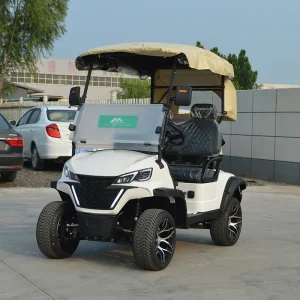
2-Seater High-Efficiency Club Car & Sightseeing Buggy for Italian Golf Courses
ODM 6-Seat 72V Lithium Luxury Sightseeing Cart for Italian Theme Parks
Commercial 6-Seat 72V Lithium Passenger Transport for Italian Airport & Resort Hubs
72V High-Torque 6-Seat Guest Transporter for Alpine & Mountain Resorts
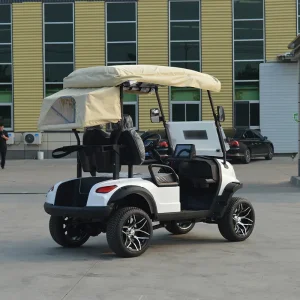
OEM Mini 2-Seater Electric Sightseeing & Security Patrol Car for Italian Campuses

Modern Aero-Design 6-Seat Golf Buggy for Italian Marina & Waterfront Promenades
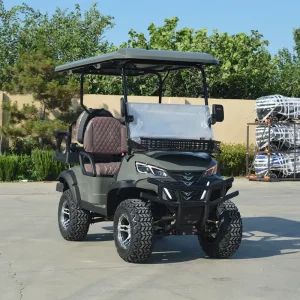
72V AC Mini Electric Golf Cart (4-Seat Lithium, CE Certified) for Italian Fleets
Direct Container Freight: From Dezhou to Italy
Optimized freight paths, customs protocols, and packing architectures guaranteeing undamaged, zero-defect delivery across Italian destination ports.
SKD / CKD Crating Optimization
Vehicles are secured inside engineered steel-tube cradles, bubble-wrapped, and vacuum-sealed against maritime salt fog. A standard 40-foot High Cube (40HQ) container safely accommodates up to 16 disassembled G30 units or 8 fully assembled carts, maximizing freight efficiency.
Direct Maritime Corridors
Shipments depart directly from Qingdao or Tianjin ports on direct maritime routes calling at Genoa (Liguria), La Spezia, Naples (Campania), Civitavecchia (Lazio), and Ravenna/Trieste (Adriatic), with transit durations averaging 28 to 35 calendar days.
Customs & Taric Documentation
Leibin supplies the complete export documentation package required by Italian Customs (Agenzia delle Dogane e dei Monopoli), including commercial invoices under TARIC code 8703.10.1800, packing lists, Bill of Lading, Certificate of Origin, and UN38.3 lithium safety data sheets.
Frequently Asked Questions: Sourcing G30 Vehicles for Italy
In-depth regulatory, electrical, warranty, and logistics answers compiled by our international trade engineering desk.
Can the Leibin G30 electric vehicle be driven on public roads in Italy?
Why should Italian operators choose a 72V system over a standard 48V configuration?
What is the typical shipping timeline from your Shandong factory to Italian ports?
How are replacement parts, warranty claims, and technical servicing handled in Italy?
Can Italian buyers customize branding, colorways, and cargo beds (OEM/ODM)?
What are the import duties and VAT obligations when importing into Italy?
How does the G30 LiFePO4 battery behave in cold Northern Italian winters?
Modernize Your Italian Fleet with Factory-Direct G30 Engineering
Connect directly with our senior vehicle engineering team in Dezhou. Request a complete technical spec sheet, customized CIF quotation to Italian ports, or schedule a live video factory inspection.