
Flagship 72V Lithium Fleet Solutions Serving Canadian Operators
Factory-direct electric golf carts optimized for rugged Canadian topographies, extended seasonal duty cycles, and superior gradeability across British Columbia, Alberta, Ontario, and Quebec.

Canada Heavy-Duty 6-Seat Electric Golf Cart, 72V Lithium Battery & Cold-Weather Pre-Heating Pack
Canadian Resort Custom 6-Seat & 4-Seat Electric Passenger Buggy, 72V AC High-Efficiency Powertrain

Canada Modern Series 72V Electric 6-Seater Golf Buggy, Anti-Corrosive Electrocoating for Harsh Winters
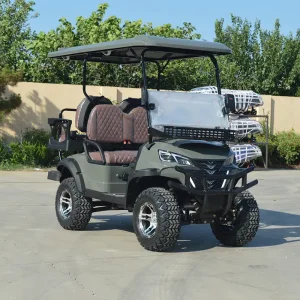
Canada All-Terrain 4-Seater Off-Road Electric Golf Cart, High Ground Clearance & Custom LiFePO4 Options
Navigating the Canadian Commercial & Industrial Low-Speed EV Market
A data-driven engineering assessment of fleet conversion, cold-weather powertrain thermodynamics, and Canadian provincial regulatory frameworks.
Severe Sub-Zero Thermal Management
Standard electric low-speed vehicles experience up to 45% electrochemical capacity loss when ambient temperatures plummet below -10°C in provinces such as Ontario, Quebec, and Alberta. Sourcing for Canadian commercial enterprises requires specialized Lithium Iron Phosphate (LiFePO4) chemistry integrated with closed-loop positive temperature coefficient (PTC) heating blankets. These smart systems maintain battery cell cores within an optimal 15°C to 25°C thermal band during charging and operational cycles, preserving discharge efficiency and cycle life throughout freezing winter conditions.
Transport Canada & Provincial Homologation
Navigating Canadian procurement requires rigorous alignment with national and regional low-speed vehicle (LSV) criteria. While Transport Canada defines core safety standards under the Motor Vehicle Safety Regulations (MVSR Standard 111 and CMVSS low-speed mandates), provinces maintain autonomous roadway and private property road-allowance guidelines. In British Columbia and Ontario, low-speed zero-emission utility buggies deployed in master-planned golf communities and resort networks mandate DOT-approved three-point inertia-reel seatbelts, automotive-grade AS1 tempered glass windshields with electric wipers, dual-circuit hydraulic braking systems, and certified LED optical signal arrays.
Aggressive Anti-Corrosion Metallurgy
Canada’s extensive deployment of road de-icing salts, combined with the damp maritime environments of Vancouver Island and Nova Scotia, rapidly degrades untreated chassis frames. Advanced manufacturing addressing Canadian procurement demands requires electrophoretic dip coating (e-coat) paired with heavy hot-dip galvanized robotically-welded tubular steel or aerospace-grade 6061-T6 aluminum ladder frames. This metallurgical barrier inhibits ferric oxidation, salt-spray pitting, and frame fatigue, ensuring minimum 10-year structural integrity for municipal, mining, and golf club fleets.
Cold-climate LiFePO4 configuration engineered for high-torque gradeability
Operating thermal tolerance with integrated internal thermal heating pads
Deep discharge battery lifespan at 80% DOD, exceeding standard lead-acid by 4x
Flexible containerization maximizing shipping cube efficiency to Vancouver & Montreal
Global Low-Speed EV Dynamics & The Factory-Direct Direct Supply Advantage
Bridging Tier-1 manufacturing excellence with direct Canadian institutional purchasing to remove dealer markups and optimize fleet ROI.
Global Electrification Shift
Worldwide demand for electric golf carts and specialized utility low-speed vehicles is growing at an unprecedented CAGR of 6.8%, driven by carbon-neutral mandates across hospitality, institutional facilities, and private leisure sectors. North American fleet managers are rapidly retiring antiquated internal combustion engine (ICE) buggies to eliminate petroleum costs, localized noise pollution, and crankcase maintenance. The modern low-speed EV is no longer merely a sporting cart; it has evolved into a strategic logistical workhorse for short-distance micro-mobility.
Dezhou Precision Industrial Cluster
Located in Shandong’s premier electric mobility hub, our advanced 13,000 m² facility capitalizes on world-class industrial cluster economics. By vertically integrating continuous automated robotic welding lines, computer-controlled cathodic electrodeposition painting, proprietary AC induction motor assembly, and digitized end-of-line dyno testing, we eliminate intermediary subcontractor margins. This centralized ecosystem ensures rigorous quality control while delivering substantial cost advantages to Canadian institutional importers.
Direct OEM/ODM Engineering Control
Unlike third-party regional trading companies that rebrand generic stock buggies, direct engagement with our engineering team unlocks comprehensive OEM/ODM customization. We tailor torque-curve mapping for hilly Canadian terrains like the Laurentians or Okanagan Valley, install heavy-duty insulated roof canopies, specify custom payload utility dump boxes, integrate proprietary telematics systems for live fleet GPS diagnostics, and factory-brand chassis aesthetics with high-durability UV-resistant automotive finishes.
| Performance & Engineering Variable | Traditional 48V Flooded Lead-Acid | Commercial 72V LiFePO4 Platform (Canadian Spec) | Operational Impact for Canadian Fleets |
|---|---|---|---|
| Sub-Zero Thermal Discharge (-15°C) | 50% – 60% Capacity Drop; Risk of Freezing | <10% Capacity Loss with Automatic PTC Heating | Enables year-round winter operation in snow & ice resorts without premature battery failure. |
| Torque Output & Hill Climbing | Noticeable voltage sag under load (15° max grade) | Constant AC torque delivery (25° – 30° gradeability) | Effortlessly climbs steep resort inclines with full 6-passenger load and luggage. |
| Pack Weight & Turf Compaction | 320 kg – 380 kg (Heavy surface pressure) | 90 kg – 130 kg (65% Weight Reduction) | Significantly reduces fairway soil compaction and preserves delicate Canadian golf greens. |
| Maintenance & Winterizing Requirements | Bi-weekly distilled water topping; off-season trickle | Zero maintenance; Integrated Smart CAN-Bus BMS | Eliminates terminal acid corrosion, winter electrolyte boiling, and labor overhead. |
| Level-2 Fast Charge Turnaround | 8 to 10 Hours slow replenishment | 2.5 to 3.5 Hours (Supports opportunity charging) | Allows continuous double-shift operation across commercial campuses and municipal facilities. |
Tailored Application Scenarios Across Canadian Territories
Engineered specifically to solve climate, logistical, and terrain challenges unique to Canada’s commercial enterprises.
Premier Golf Clubs & Mountain Resorts
From Whistler and the Okanagan Valley in British Columbia to the Niagara Peninsula in Ontario, golf courses require dependable high-torque passenger buggies capable of mastering 25%+ rolling slopes without damaging fairway turf. Our low center of gravity, ultra-quiet AC motors, and soft-tread turf tires deliver an elevated player experience while providing golf operators with low TCO.
Remote Industrial Campuses & Mining Operations
Mining exploration sites, hydro complexes, and resource processing facilities across Alberta, Northern Ontario, and the Northwest Territories require robust, zero-emission internal transport. Equipped with heavy-duty diamond-plate aluminum cargo boxes, all-terrain coil-over-shock suspensions, and sealed waterproof electrical enclosures (IP67), our utility carts excel under continuous heavy payload duty.
Master-Planned Communities & Eco-Estates
Gated residential communities, retirement villages, and private lakefront estates in Muskoka and Vancouver Island frequently utilize low-speed electric mobility as primary neighborhood transport. Our vehicles feature automotive comfort styling, custom plush leatherette seating, crystal-clear digital LCD instrument clusters, Bluetooth sound systems, and full DOT-compliant night-driving lighting suites.
Municipal Parks, Universities & Security Patrol
Canadian municipalities, university campuses (such as in Toronto, Montreal, and Calgary), and international transit hubs require round-the-clock silent security and sanitation patrol. With programmable electronic speed governors (15 to 40 km/h), high-visibility strobe bars, public address speaker systems, and optional rooftop solar panels, our carts support non-stop shift rotations.
Canadian B2B Procurement: Optimizing Container Yield, Tariffs & Compliance
From Qingdao to the Ports of Vancouver, Prince Rupert, and Montreal: A transparent logistics execution framework.
SKD vs. CBU Container Optimization
Freight economics directly dictate landed per-unit costs. We provide Canadian buyers with two precision shipping configurations. Completely Built-Up (CBU) inside welded structural steel crates allows immediate roll-off drive-away deployment with zero assembly overhead. Alternatively, Semi-Knocked Down (SKD) shipping removes roofs, front cowls, and wheels, allowing up to 18 to 22 units inside a standard 40ft High Cube (HC) container—reducing ocean freight overhead per unit by more than 40%.
Customs Tariff Classification & Documentation
Exporting to Canadian businesses requires strict compliance with the Canada Border Services Agency (CBSA). Our documentation specialists supply exact Harmonized System (HS) classifications (typically HS Code 8703.10 for specialized golf vehicles and electric micro-transporters), alongside full Commercial Invoices, Packing Lists with detailed VIN sequences, CE conformity declarations, and Certificate of Origin documents to accelerate customs clearance through Canadian borders.
Critical Spare Parts & Local Servicing Kits
A recurring pain point for Canadian fleet operators is prolonged downtime while awaiting overseas spare parts. We address this vulnerability by supplying comprehensive "First-Season Maintenance Packs" with every container order. These include high-wear items such as hydraulic brake pads, tie-rod ends, steering knuckle bushings, electrical contactors, CAN-bus cables, and plug-and-play controller harnesses, supported by factory video diagnostic guidance.
Ready to Secure Factory-Direct Fleet Pricing for Canada?
Connect with our senior bilingual automotive engineers today. We will prepare custom technical specification sheets, 3D CAD vehicle layouts, and a transparent FOB/CIF container shipping quotation to your nearest Canadian port.
Send Inquiry NowExplore Our Full Range of Canadian-Serving Golf Buggies & Utility Shuttles
Factory-engineered configurations spanning compact 2-seat utility runabouts, luxury 4-seat off-road buggies, and commercial sightseeing transports.
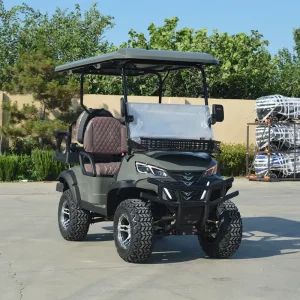
Canada Luxury 72V AC Mini Electric Golf Cart, 4-Seat Lithium Battery CE Certified Golf Buggy
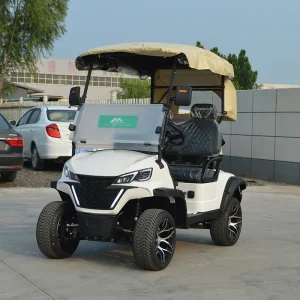
Canada Direct Factory 2-Seater Electric Sightseeing Car & Compact Golf Club Utility Cart
Canada Heavy-Duty 72V AC Mini Electric Golf Cart, 4-Seat LiFePO4 Battery Commercial Model
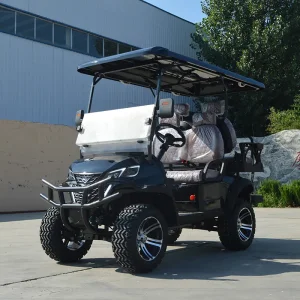
Canada Rugged 4-Seater Off-Road Golf Buggy & Resort Sightseeing Bus, 72V High-Torque System
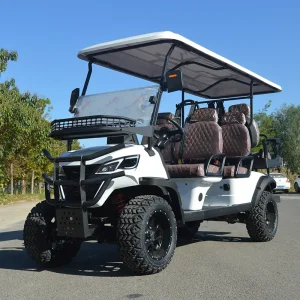
Canada ODM Low-Speed Electric Golf Car, CE Approved 15-40 km/h G70-4+2 Passenger Model
Canada Modern 72V 6-Seater Electric Golf Cart for On-Road Neighborhoods & Off-Road Resorts
Canada ODM Wholesale 6-Seat Electric Golf Cart, 72V Lithium Customized Ergonomic Fleet Buggy
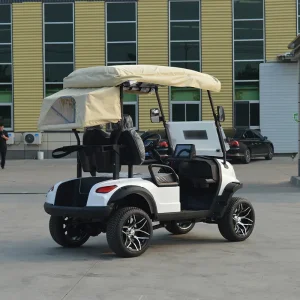
Canada OEM Affordable 2-Seater Mini Sightseeing Car & Low-Speed Electric Maintenance Runabout
Frequently Asked Questions for Canadian Institutional Buyers
Transparent engineering, regulatory, and logistics answers addressing Canadian business sourcing concerns.
Standard commercial LiFePO4 cells lose substantial operational efficiency in freezing environments because electrolyte viscosity surges and lithium ion transfer slows down. For vehicles shipped to Canada, our factory installs integrated closed-loop automated heating blankets directly around the cell modules. Controlled by a smart CAN-Bus Battery Management System (BMS), these heating pads activate automatically when plugged into a 110V/220V Canadian power outlet before charging cycles commence. This ensures battery cell core temperatures remain safely above 5°C during charging, preventing lithium plating, maintaining full driving range, and guaranteeing reliable cold-morning starts in Calgary, Winnipeg, and Montreal.
Public road legality is governed at the provincial and municipal level in Canada, rather than federally. Transport Canada sets safety construction standards under MVSR 111, while provinces such as British Columbia (under the Motor Vehicle Act Low-Speed Vehicle pilot) and Ontario (under Highway Traffic Act LSV pilot programs) permit low-speed zero-emission utility vehicles on municipal roads with posted speed limits of 40 km/h or 50 km/h. To qualify, vehicles must be configured from our factory with DOT-approved tempered safety glass, certified three-point seat belts, exterior mirrors, turn indicators, high-mounted brake lights, reflectors, an electric windshield wiper, and a verified speed governor (typically capped at 32 km/h to 40 km/h). We provide complete homologation documentation and spec sheets to assist Canadian clients in completing local municipal registration.
Our standard OEM/ODM production minimum starts at 2 to 4 units for custom evaluation orders, though optimal ocean freight economics are achieved with full container loads (FCL): either a 20ft container (holding 4 to 6 units CBU/SKD) or a 40ft High Cube container (holding 12 to 22 units depending on wheelbase and knocking-down state). Standard manufacturing lead times are 15 to 25 business days from CAD configuration approval, with direct ocean transit from Qingdao Port to the Port of Vancouver requiring approximately 14 to 18 days, or roughly 28 to 35 days for East Coast delivery via the Port of Montreal.
Every commercial fleet vehicle delivered to Canada is protected by our comprehensive B2B warranty coverage: 5 years on our LiFePO4 battery modules and intelligent BMS, 3 years on AC induction motors and electric controllers, and 2 years on structural chassis assemblies. In the rare event of a component failure, our technical diagnostic team provides immediate video analysis via digital CAN-Bus fault readout. Critical replacement electrical modules, sensors, and structural components are air-dispatched directly to your facility via DHL Express or FedEx International Priority within 48 to 72 hours, minimizing fleet disruption.
Yes, full OEM/ODM engineering flexibility is our core manufacturing advantage. We routinely execute custom client requirements including exact Pantone-matched corporate color paint schemes, laser-etched resort or municipal logos, custom extended heavy-gauge aluminum cargo dump beds with hydraulic lifting assist, enclosed all-weather transparent canvas or hard polycarbonate weather enclosures with in-cabin heating modules, elevated suspensions with heavy-lug all-terrain tires, and rooftop solar charging panels configured to extend daily off-grid operational range.
Looking to Upgrade Your Canadian Fleet with Factory-Direct Pricing?
Direct factory pricing, dedicated engineering customization, and proven cold-climate resilience. Request your custom specification quote today.
Send Inquiry Now