
High-Efficiency Polish Route Solutions: Core Sightseeing Portfolio
Engineered for low maintenance, superior gradeability on cobbled streets, and thermal stability in central European climates.
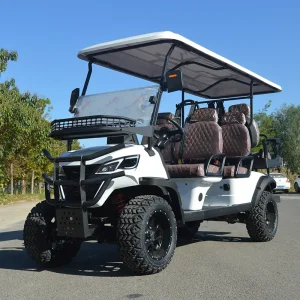
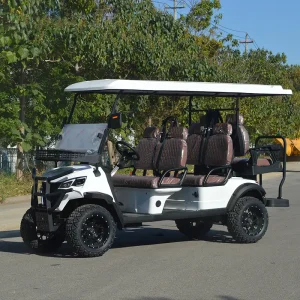
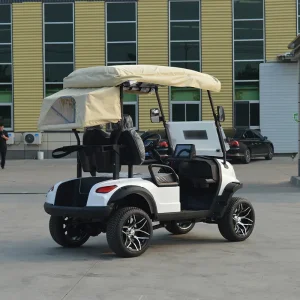
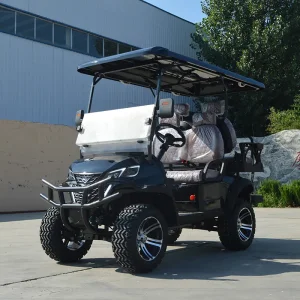
Macro-Industry Dynamics & The Poland Commercial EV Landscape
Strategic shift towards zero-emission perimeter logistics, historic city micro-transit, and hospitality fleet optimization across Poland.
Total Cost of Ownership (TCO)
The Polish market exhibits acute sensitivity to lifecycle Capex/Opex amortization. Shifting from internal combustion to factory-direct 72V AC lithium drivetrains slashes operational energy expenses by up to 74% per passenger kilometer across high-utilization hospitality circuits.
Poland's Clean Transport Mandates
Under the Polish Act on Electromobility and Alternative Fuels (Ustawa o elektromobilności i paliwach alternatywnych), urban Low Emission Zones (Strefy Czystego Transportu - SCT) in metropolitan hubs like Warsaw and Kraków require zero-emission low-speed passenger transport.
Global Supply Chain Decoupling
Mid-tier European enterprises are bypassing costly local re-branders. Factory-direct engineering integration ensures rapid containerized distribution, transparent component traceability, and cost efficiency without trading house margins.
Ruggedized Architecture for Central & Eastern European Climates
Low-temperature operating thresholds, active battery thermal control, and electro-phoretically deposited corrosion barriers.
LiFePO4 with Intelligent Heating Matrices
Polish winters routinely subject vehicles to sub-zero temperatures down to -20°C in regions such as Lesser Poland and Podlasie. Conventional lead-acid packs experience severe capacity degradation (up to 50%) under these conditions. Our LiFePO4 cells feature embedded thermal jackets powered by smart BMS units, maintaining core cell temperatures at +10°C during charge/discharge cycles to guarantee 92% usable discharge capacity year-round.
Cathodic Electrodeposition (E-Coat) Anti-Corrosion
Winter road maintenance in Polish municipalities relies extensively on sodium chloride and calcium chloride de-icing brines. To counteract structural degradation, our vehicle frames undergo a complete 18-stage dipping and electrophoretic surface passivation process. This delivers salt spray test endurance exceeding 1,200 hours under ASTM B117 standards, securing chassis integrity for long asset lifetimes.
Technical Verification Standard: AC induction and permanent magnet synchronous motors (PMSM) paired with Curtis or EnPower high-efficiency controllers deliver regenerative braking capabilities. This recuperates up to 14.5% of kinetic energy on descending grades, a critical operational advantage when navigating hilly botanical parks and historic castle elevations in southern Poland.
| Evaluation Parameter | Traditional Regional Lead-Acid Carts | Factory OEM 72V LiFePO4 Solutions | Direct Impact on Polish Operators |
|---|---|---|---|
| Cycle Life Expectancy | 500 - 750 cycles (Frequent watering) | 3,500 - 4,000 cycles (Maintenance-free) | Eliminates mid-lifecycle battery replacement cycles |
| Sub-Zero Thermal Loss | -40% to -55% capacity at -10°C | < -10% capacity via internal PTC pre-heating | Ensures full winter tour schedules without stalled routes |
| Gradient Climb (Full Load) | 12% - 15% maximum slope | 25% - 30% sustained gradeability | Effortless climb in Carpathian and Sudeten foothill resorts |
| Controller Efficiency | DC Chopper (~82% efficient) | High-frequency 3-Phase AC / Vector (~96% efficient) | Extended real-world operational range on a single charge |
High-Yield Application Scenarios Across Poland
Bespoke configurations matching operational environments from Baltic beach promenades to Silesian industrial hubs.
Baltic Coast Resorts & National Parks
Coastal resort towns like Sopot, Kołobrzeg, and Świnoujście experience heavy pedestrian traffic and salty sea breezes during the high summer season. Our rust-proof composite body panels, sun-shading roofs, and zero noise emissions allow silent passenger movement without disrupting delicate ecologies like Wolin National Park.
Historic Centers & Monumental Complexes
Navigating the narrow cobblestone alleys of Old Town Kraków, Toruń, and Gdańsk requires specialized vehicle geometry. The compact 2-seater and 4-seater models feature tight turning radii (≤3.8m) and heavy-duty double-wishbone independent suspension systems that protect structural cobbles while providing supreme passenger comfort.
Industrial Parks & Logistics Hubs
Poland's status as the logistics backbone of Central Europe (SEZ areas like Katowice, Wrocław, and Łódź) demands durable perimeter transit. Configurable low-speed EV platforms with enclosed weather curtains and rear utility boxes facilitate staff patrol, intra-facility cargo shuttling, and safety oversight across multi-hectare distribution complexes.
European Homologation, Safety Protocols & Polish Compliance
Minimizing import risk through adherence to EU machinery and low-speed road vehicle directives.
Machinery Directive 2006/42/EC & CE Marking
Every commercial sightseeing car exported to Poland includes authentic CE certification supported by notified body technical construction files. Our vehicle engineering aligns with EMC Directive 2014/30/EU and low-voltage standards, guaranteeing that commercial premises inspectors (Państwowa Inspekcja Pracy) and insurance assessors validate operation without regulatory hesitation.
L7e-CP Homologation Capabilities
For municipal operators seeking authorization to traverse designated public thoroughfares in Polish towns, our manufacturing facility supports custom chassis builds equipped with full automotive-grade illumination (E-Mark LED headlamps, indicators, brake assemblies), laminated tempered windscreens with DOT-certified wipers, hydraulic dual-circuit four-wheel disc braking, and certified 3-point seatbelts.
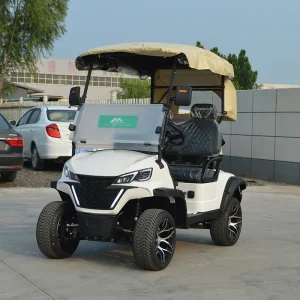
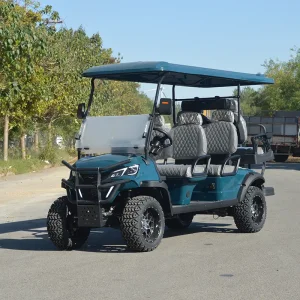
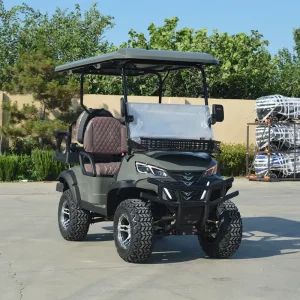
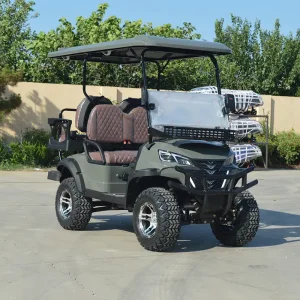
Comprehensive Electric Sightseeing & Golf Cart Fleet Collection
Explore complete specifications, powertrain variations, and seating configurations available for direct export to Gdynia and Szczecin.
Technological Roadmap: The Next Era of Commercial Low-Speed EVs
Anticipating operational needs through smart telematics, solar integration, and automated fleet distribution algorithms.
IoT Telematics & 4G Polish SIM Integration
Our upcoming controller releases feature integrated CAN-bus 4G IoT telematics modules compatible with major Polish telecom carriers (Orange Polska, Play, Plus). Fleet directors can monitor real-time battery cell voltages, geographic positioning, and geofencing limits to protect historic assets directly from cloud management dashboards.
Monocrystalline Photovoltaic Hard-Tops
Maximizing range without grid reliance: Our auxiliary roof surfaces integrate flexible monocrystalline solar layers delivering up to 350W peak charging power. In active open-air tourist centers like the Masurian Lake District, solar trickling adds 12–18 km of autonomous daily operating range during daylight tours.
Modular Quick-Swap Battery Compartments
Eliminating charging downtime across high-density operations: Next-generation chassis incorporate lateral drawer slide mechanisms that allow rapid pack changeout within 3 minutes using standard forklift or pallet-jack equipment, ensuring 24/7 continuous duty cycles during holiday events.
Frequently Asked Procurement Questions (FAQ)
Comprehensive operational, legal, and shipping inquiries answered for commercial Polish buyers.