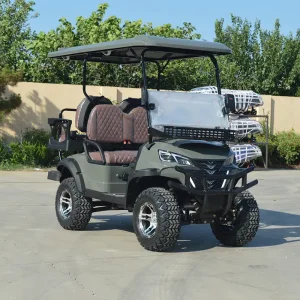
High-Torque G70 Commercial Vehicles for Brazil Sourcing
Engineered by China’s premier manufacturing plant with cathodic electrophoretic chassis protection, intelligent BMS thermal controllers, and localized Brazilian homologation readiness.
G70-2S Brazil Resort
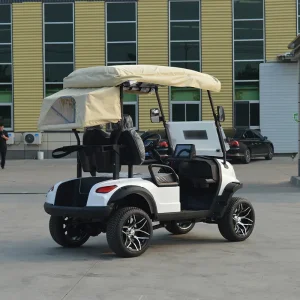
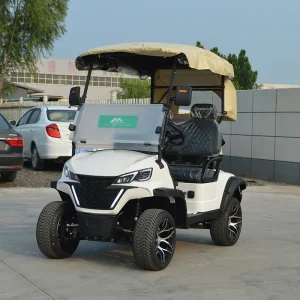
G70 São Paulo Series: OEM 2-Seater Mini Sightseeing EV & Golf Cart
The Electrification Boom of Low-Speed Utility Fleets in Brazil
Brazil is currently executing one of the most dynamic micro-mobility and closed-circuit commercial vehicle transitions in the Southern Hemisphere. As the largest economy in Latin America, Brazil faces a dual imperative: navigating stringent decarbonization initiatives aligned with national ESG mandates (such as the *Programa Mobilidade Verde e Inovação* - Mover) while offsetting escalating domestic combustion fuel expenditures and maintenance overhead.
Across massive horizontal residential developments (*condomínios fechados*) throughout the state of São Paulo, Rio de Janeiro, and Minas Gerais, combustion engine utility vehicles are being systematically phased out due to acoustic disturbance and local particulate emissions. Simultaneously, Brazil's expanding ultra-luxury hospitality corridors—stretching from Trancoso in Bahia to Jericoacoara in Ceará—demand heavy-duty low-speed passenger shuttles that resist severe coastal salt spray (*maresia*) while operating continuously on tropical duty cycles.
Key Market Insight: Sourcing the G70 platform directly from our China manufacturing base provides Brazilian enterprise buyers with Tier-1 automotive architecture, superior 72V LiFePO4 battery integration, and direct factory-level compliance documentation for CONTRAN Resolution 996/2023 at an unmatched total cost of ownership.
Furthermore, Brazil's sprawling agribusiness giants (*fazendas*) across Mato Grosso and Goiás require ruggedized off-road transport vehicles that operate maintenance-free on red-dirt access roads without risk of overheating under sustained ambient temperatures exceeding 38°C. The G70 series bridges the critical gap between lightweight domestic recreational carts and costly full-size commercial utility trucks.
72V
LiFePO4 Architecture
100km
Single-Charge Range
40%
Max Gradeability
3,500+
BMS Battery Cycles
Direct China Factory Supply Advantages for Brazil
✔CKD / SKD Assembly Modularity: Optimize Mercosur Common External Tariff (TEC) and domestic Brazilian IPI taxes via flexible knocked-down shipping formats.
✔Tropicalized Powertrains: IP67-sealed AC traction motors, heavy-gauge wire harnesses, and potting-sealed electronic controllers engineered for humid sub-equatorial heat.
✔Homologation Backing: Factory-direct test reports, ISO 9001 certifications, and CE compliance documentation tailored for INMETRO and Brazilian transit authority verifications.
Tailored Regional Engineering
Localized Brazil Application Scenarios for G70 Fleets
From saline coastal hospitality corridors to private gated master-planned cities, the G70 series is tuned to match the exact topography and operating conditions of Brazil's commercial hubs.
Operating in intense equatorial heat and continuous marine atmospheric salinity (*maresia*). Standard steel chassis corrode within 24 months. The G70 delivers automotive-grade electro-coated chassis undercarriages, stainless hardware, marine-grade synthetic upholstery with antifungal UV inhibitors, and high-efficiency AC motors that eliminate carbon brushes.
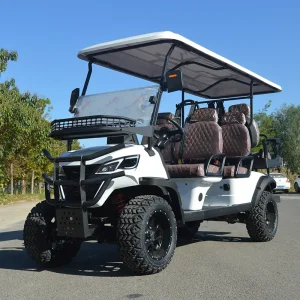
Recommended Configuration: G70 6-Seater 72V Lithium with Solar Charging Canopy & Heavy-Duty Saline Seal.
Gated Master Communities (Alphaville, São Paulo, Campinas)
Private residential estates featuring steep topography, multi-kilometer arterial perimeters, and zero-emission acoustic bylaws. The G70 delivers downhill regenerative braking with anti-rollback safety logic, LED projector headlights, full street-legal turn indicators, side mirrors, and whisper-quiet helical gearboxes designed for smooth residential transit.
Recommended Configuration: G70 4-Seater / 4+2 Executive with High-Torque 5kW AC Drive & Hydraulic 4-Wheel Brakes.
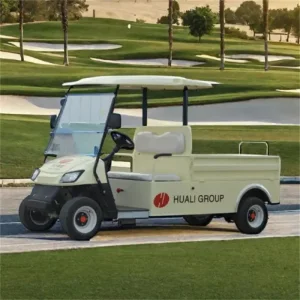
Heavy logistics facilities, grain processing centers, and sprawling agricultural headquarters require reliable personnel and light cargo movement across unpaved roads. The G70 Utility models feature lifted double-A arm front suspensions, 23-inch all-terrain tires, reinforced aluminum cargo beds, and 48V/72V high-capacity lithium packs immune to dust clogging.
China G70 Platform vs. Legacy Brazilian Fleet Alternatives
A rigorous engineering and economic evaluation comparing China Tier-1 manufactured G70 electric platforms against traditional imported North American gas carts and local legacy 48V lead-acid builds.
Evaluation Parameter
China G70 72V Lithium Platform (Factory Direct)
Legacy 48V Lead-Acid Carts (Local Brazil)
Imported Gas Utility Carts (Gasoline / Flex)
Battery Chemistry & Life
LiFePO4 Lithium (3,500+ cycles to 80% DoD, 8-10 yrs)
Flooded Lead-Acid (500–750 cycles, 2-3 yrs max)
N/A (Combustion Internal Engine)
Powertrain Technology
5kW / 7.5kW AC Induction or Permanent Magnet Motor
2.5kW – 3.5kW DC Brushed Motor (High maintenance)
9–14 HP Single-Cylinder Petrol Engine
Chassis Rust Inhabitation
Full-Immersion Cathodic E-Coat + Hot Dip Galvanizing
Standard Spray Paint (Rapid salt corrosion)
Standard Powder Coated Carbon Steel
Operating Energy Cost
Approx. R$ 4.50 per 100 km (Brazilian Grid Tariff)
Approx. R$ 9.20 per 100 km (Low charging efficiency)
Approx. R$ 48.00 - 62.00 per 100 km (Gasoline)
Braking & Regeneration
4-Wheel Hydraulic Disc + Dynamic Energy Recovery
Rear Mechanical Drum Brakes (Fades on hills)
Rear Mechanical Drums / Limited Hydraulic
Routine Maintenance
Virtually Zero (No acid top-up, no filter/belt changes)
Bi-weekly distilled water refills, terminal scrubbing
Importing China G70 Carts into Brazil: A Complete Guide
Successfully importing electric vehicle fleets into Brazil requires in-depth understanding of customs categorization (*Nomenclatura Comum do Mercosul* - NCM), homologation requirements from the *Secretaria Nacional de Trânsito* (SENATRAN), and taxation structuring. As an experienced OEM/ODM factory partner, we assist Brazilian fleet buyers, resort operators, and automotive distributors throughout every phase of the international procurement workflow.
1. Harmonized Tariff Code Optimization (NCM)
Electric golf buggies and low-speed sightseeing vehicles generally classify under NCM 8703.10.00 (vehicles specially designed for traveling on snow, golf carts, and similar vehicles). Depending on import configurations, specialized electric cargo utility trucks may be declared under NCM 8704.90.00, allowing commercial logistics operations to benefit from tailored customs duty structures.
2. CONTRAN Resolution 996/2023 Compliance
In 2023, Brazil’s National Transit Council updated classification frameworks distinguishing individual micro-mobility devices from low-speed electric vehicles (*veículos autopropelidos* vs. *ciclomotores* vs. light passenger EVs). The G70 series is engineered to be equipped with certified lighting (low/high beam, rear brake, hazard indicators), horn, rearview mirrors, seatbelts, and electronic speed limiters (programmable to 20 km/h, 25 km/h, or 40 km/h), satisfying private property regulations and public-thoroughfare municipal permissions where registered.
3. Shipping Architecture: CBU vs. SKD Container Loads
To maximize ocean freight efficiency through major Brazilian ports such as Port of Santos, Port of Paranaguá, and Port of Suape, our factory offers custom steel-crated completely built units (CBU) or semi-knocked-down (SKD) packaging. In a standard 40-foot High Cube (40'HQ) container, careful modular dismounting of roofs, windscreens, and wheel packages allows up to 18–24 units to be shipped per container, dramatically driving down landed per-unit shipping amortizations.
Factory Quality Assurance Protocols
Every G70 unit rolling off our Dezhou robotic manufacturing lines must pass rigorous 5-stage quality verification before export container sealing:
1
Dynamic Dyno Test:
Powertrain torque curves, controller current limits, and continuous high-temperature load endurance testing.
2
Monsoon Rain & Ingress Simulation:
High-pressure water jet spraying against all electrical compartments to certify true IP67 weatherproof durability.
3
Braking & Ramp Gradient Stressing:
Loaded gradeability tests exceeding 30% slopes with automatic regenerative hold and emergency mechanical locking.
4
Full Battery Discharge & CAN-bus Diagnostics:
Cell balancing checks, over-current cutoff triggers, and short-circuit protection calibration.
Technical & Procurement FAQ
Frequently Answered Questions for Brazilian Enterprise Buyers
In-depth technical answers addressing battery degradation in tropical climates, spare parts availability, customs logistics, and custom OEM branding.
How does the G70 LiFePO4 battery cope with Brazilian ambient heat?
Unlike conventional ternary lithium (NMC) chemistries that suffer thermal degradation above 35°C, our G70 platform utilizes premium Lithium Iron Phosphate (LiFePO4) chemistry boasting thermal runaway thresholds above 270°C. Coupled with our custom-engineered automotive CAN-bus Battery Management System (BMS), the pack continuously monitors individual cell temperatures, equalizing voltage across high thermal cycles common in Brazilian summers (Rio, Northeast, and Center-West regions) while delivering 3,500+ full charge cycles.
Can the G70 series be driven on public streets in Brazil?
Public thoroughfare legality is governed by CONTRAN Resolution 996/2023 and municipal transit guidelines. Vehicles operating inside gated communities, private resorts, industrial parks, airports, and sports complexes require no municipal plates. For public roadway use, we supply G70 models configured with DOT/E-Mark certified automotive safety windshields, 3-point seatbelts, side rearview mirrors, horn, high-visibility LED signals, hydraulic four-wheel braking systems, and digital speedometers required for formal local homologation.
How are replacement parts and warranty handled in Brazil?
Our factory provides comprehensive export warranty packages including 5 years on LiFePO4 battery packs, 3 years on AC motors and controllers, and 2 years on structural chassis components. For commercial fleet orders, we supply a "Critical Spares Kit" alongside the container shipment—including suspension bushings, brake pads, controller sensors, relays, and LED assemblies. Furthermore, our engineering team provides complete schematics, digital wiring diagrams, and direct video troubleshooting support for your local technical crews.
Can you provide custom branding, paint colors, and luxury options?
Yes. We are an OEM/ODM manufacturing facility. For resort hospitality operators, condominium management firms, or distributors, we offer custom Pantone/RAL metallic exterior paints, embroidered marine leather seating, wood-grain or carbon-fiber dash finishes, 10-inch multimedia touchscreens with reverse cameras, integrated Bluetooth soundbars, integrated solar charging canopies, and custom laser-cut corporate branding plates.
Complete Commercial Product Catalog
Full Range: Heavy-Duty Electric Golf Carts & Utility Vehicles
Explore our complete export lineup of 2-seat, 4-seat, 6-seat, and heavy-cargo electric platforms ready for Brazilian dealership distribution and commercial fleet operation.
G70 Modern 6-Seat
Best 72V Modern 6-Seater Electric Golf Cart for On/Off-Road Brazil Resorts
Initiate Your Brazil Fleet Sourcing with Direct China Factory Pricing
Whether you are an established automotive dealership network in Curitiba, a luxury resort conglomerate in Salvador, or a property developer across Greater São Paulo—our engineering team delivers customized container loading, technical homologation files, and wholesale factory terms.