
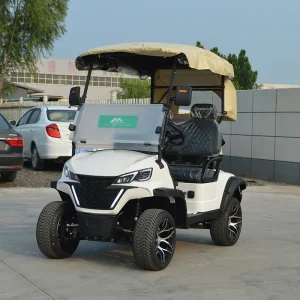
G30 Platform Core Fleet Selection (Hamburg Region)
Configured with KTL anti-corrosion chassis, IP67 waterproof powertrains, and high-density LiFePO4 batteries engineered for Northern Germany's maritime industrial conditions.
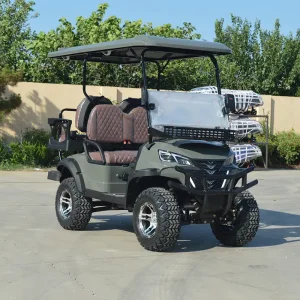

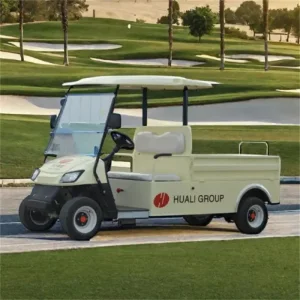
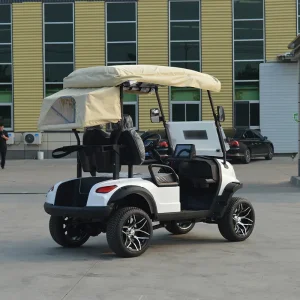
Hamburg’s Decarbonization Mandate & Low-Speed Electric Mobility Demands
The Free and Hanseatic City of Hamburg represents one of Europe's most vital economic engines. Anchored by the Port of Hamburg (the third-largest container port in Europe) and world-class industrial clusters like Airbus Finkenwerder, Lufthansa Technik, and the sprawling logistics corridors of Waltershof and Billbrook, the metropolitan area faces stringent carbon emission regulations. Under the Hamburg Climate Action Plan (Hamburger Klimaschutzgesetz), municipal authorities and industrial enterprises are legally compelled to cut CO2 emissions by 55% by 2030 and achieve carbon neutrality by 2045. This legislative pressure has transformed intra-facility logistics, campus transport, and private utility fleets from legacy internal combustion engines to specialized low-speed electric vehicles (LSVs).
However, the operational reality in Hamburg imposes relentless environmental and mechanical stress on electric utility fleets. The North Sea maritime microclimate subjects vehicles to persistent rain, high humidity, dense fog, and saline air. Standard low-cost golf carts imported without industrial-grade rust mitigation suffer catastrophic chassis oxidation, electrical harness corrosion, and rapid battery cell degradation within 18 to 24 months. For Hamburg fleet managers, procurement criteria have pivoted decisively away from low-spec hobby buggies toward heavy-duty, KTL (cathodic electrodeposition) dipped, IP67-rated platforms like the Leibin G30 series.
Hamburg 2030 CO2 Cut Target
LiFePO4 Deep Discharge Cycles
Salt-Spray Corrosion Resistance
High-Efficiency AC Architecture
Global Low-Speed Electric Vehicle (LSV) Market Dynamics
Globally, the commercial golf cart and low-speed utility vehicle sector is undergoing an unprecedented structural transition. Valued at over USD 3.8 billion in 2023, the market is expanding at a compound annual growth rate (CAGR) exceeding 6.8% through 2032. The primary demand driver is no longer traditional 18-hole golf recreation; over 62% of new commercial procurements are deployed in "non-golf" industrial, municipal, and commercial sectors:
- Intermodal Terminals & Free-Trade Zones: Facilities require compact, maneuverable zero-emission cargo platforms capable of continuous 16-hour multi-shift operation without thermal overload.
- Luxury Hospitality & Urban Eco-Tourism: Heritage districts such as Hamburg’s UNESCO-listed Speicherstadt and Kontorhausviertel require silent, zero-vibration passenger shuttles that navigate narrow historic cobblestone alleys without damaging pavers or producing exhaust fumes.
- Mega Healthcare & Educational Campuses: As campuses expand, medical personnel, security patrols, and maintenance engineers require on-demand micro-mobility solutions with low total cost of ownership (TCO).
- Corporate ESG Standards: Enterprise procurement directors are required by institutional investors to audit supply chains for measurable carbon mitigation, replacing diesel service vans with electric utility vehicles (UTVs).
The Dezhou Manufacturing Engine: Vertical Integration & Cost Arbitrage
Procuring commercial utility fleets through European distributors often involves layered markups of 40% to 70%, driven by intermediaries, re-branding agents, and third-party logistics overhead. As a dedicated OEM/ODM manufacturer headquartered in Dezhou, Shandong, Leibin Vehicle Industry operates an integrated 13,000 square meter facility that directly bridges industrial engineering with European commercial requirements.
Our manufacturing philosophy eliminates supply chain friction through comprehensive vertical integration across every critical vehicle subsystem:
Automated Robotic Chassis Welding
Structural steel tubular frames are precision-cut using high-speed fiber lasers and assembled in hydraulic jig fixtures by 6-axis robotic welders, guaranteeing sub-millimeter chassis alignment and high torsional rigidity under heavy payload conditions.
Automotive KTL Cathodic Dip
Every G30 chassis undergoes an automated 14-stage immersion pre-treatment, culminating in cathodic electrodeposition (KTL) that penetrates internal tubing walls. Tested to survive over 1,000 hours of continuous salt-spray exposure according to ISO 9227 standards.
Tier-1 LiFePO4 & Smart BMS
Utilizing automotive-grade prismatic Lithium Iron Phosphate cells paired with intelligent Battery Management Systems (BMS). Features thermal self-heating, real-time CAN-bus communication, overcurrent safeguards, and active cell balancing.
European Homologation Adaptation
Vehicles can be customized on the assembly line with full E-mark certified safety glass, 3-point retractable seatbelts, LED road-legal signaling packages, dual-circuit hydraulic braking, and electronic speed limiters ready for German TÜV inspection.
Direct Container Stowage Efficiency
Engineered for intermodal maritime transport from Qingdao to Hamburg Port (HHLA). Utilizing modular steel knockdown frames (SKD/CKD), packing density is maximized to fit up to 18 units in a standard 40ft HQ container, slashing landed shipping costs.
Full OEM/ODM Corporate Livery
Precision automotive electrostatic painting matches bespoke enterprise pantones (e.g., Hamburg Port blue, municipal white, or corporate branding). Tailored seat upholstery, custom CNC roof racks, and integrated telemetry tracking available factory-direct.
Targeted Commercial Applications across Hamburg & Northern Germany
The G30 modular vehicle architecture is engineered to fulfill diverse operational profiles across Hamburg's premier industrial and commercial sectors:
| Hamburg Deployment Sector | Operational Profile & Challenge | Recommended G30 Configuration | Engineering Value Add |
|---|---|---|---|
| Port of Hamburg & Intermodal Freight (HHLA / Eurogate) | Harsh outdoor saline conditions, rough concrete aprons, round-the-clock maintenance gear hauling. | G30 Utility Cargo Truck (48V / 72V 5kW AC Motor, Reinforced Diamond-Plate Bed) | Cathodic KTL rustproof frame, heavy leaf-spring rear suspension, 500kg cargo load capacity. |
| Aviation Campuses (Airbus Finkenwerder / Lufthansa Technik) | Massive indoor hangar transit, strict FOD (Foreign Object Debris) limits, silent zero-emission personnel transfer. | G30-6 Passenger Shuttle (72V 105Ah Lithium, Non-Marking Industrial Tires) | Zero emissions, smooth regenerative AC braking, regenerative deceleration preventing brake dust buildup. |
| Speicherstadt & Historic Center Shuttles | Cobblestone terrain, tight historic turning angles, continuous high-duty tourist sightseeing loops. | G30 4-Seater & 6-Seater Buggy (Independent MacPherson Front Struts, Premium Comfort Seats) | Dual A-arm suspension dampens cobblestone vibration; high ground clearance protects underbody components. |
| Championship Golf Courses (Falkenstein, Treudelberg, Holm) | Turf preservation, steep undulating slopes, wet grass traction requirements during autumn/spring. | G30 Standard 4-Seat Golf Cart (Wide Turf-Friendly Low-PSI Tires, Solar Top Canopy) | Low vehicle curb weight minimizes soil compaction; integrated roof solar cells extend daytime operational range. |
| Hamburg Messe und Congress & Event Centers | Rapid exhibition reconfiguration, equipment transport, VIP guest shuttles across mixed halls. | G30 2-Seater + Rear Utility Box (Quick-Change Modular Cargo Deck) | Tight 3.2m turning radius allows fluid maneuvering through standard freight elevators and exhibition aisles. |
Engineering Evaluation: 48V Lead-Acid vs. 72V Lithium-Iron (LiFePO4)
A frequent dilemma for commercial fleet directors in Germany is balancing initial capital expenditure against long-term operational resilience. The G30 platform provides two drivetrain topologies, engineered for distinct operational requirements:
1. The 48V AC System (Standard Duty): Best suited for level topography, private residential communities, and standardized 18-hole golf rounds with daily mileage under 40 km. While initial procurement cost is lower, lead-acid variants introduce severe operational overhead in cold climates: vehicle weight increases by up to 130 kg, charging times average 8–10 hours, and lead plates suffer permanent sulfation if ambient temperatures drop below 0°C in Hamburg winter storage without constant maintenance watering.
2. The 72V LiFePO4 System (Industrial Grade): The definitive standard for industrial plants, multi-shift logistics, and commercial shuttle fleets. Running at 72 volts cuts operating amperage in half for identical wattage outputs, drastically minimizing $I^2R$ thermal heat losses across copper wiring and controllers. This results in superior gradeability (easily conquering 25%+ gradients when fully loaded), sub-3.5-hour fast charging capabilities, and over 3,500 full charge cycles at 80% Depth of Discharge (DoD)—representing an operational service life of 10+ years without pack replacement.
Total Cost of Ownership (TCO) Analysis: 5-Year Commercial Audit
When evaluated over a 60-month industrial fleet lifecycle in Northern Germany, procuring factory-direct G30 72V lithium vehicles yields substantial economic advantages compared to traditional diesel utility vans or domestic dealership-brokered golf buggies:
| Cost Category (5-Year Horizon) | Standard Diesel Utility Van (1.5L) | Third-Party Brokered 48V Golf Buggy | Leibin G30 72V Lithium (Factory Direct) |
|---|---|---|---|
| Initial Capital Acquisition (CAPEX) | €28,000 - €34,000 | €12,500 - €15,000 (Local Dealer) | €4,200 - €6,800 (FOB Factory Direct) |
| Energy / Fuel Consumption (20,000 km) | €3,800 (€1.80/L Diesel @ 8L/100km) | €1,150 (Inefficient 48V Lead-Acid) | €620 (High-Efficiency 72V AC Regen) |
| Battery Replacement / Overhaul | N/A (Engine maintenance applies) | €2,400 (Lead packs fail every 24 mos) | €0 (LiFePO4 lifespan exceeds 10 yrs) |
| Scheduled Maintenance & Fluid Changes | €4,200 (Oil, filters, emissions, brakes) | €1,200 (Watering, terminal cleaning) | €350 (Brushless AC, sealed gearbox) |
| German Vehicle Tax & Emissions Levies | €950 | €0 (Low-Speed Category) | €0 (Zero-Emission LSV Exempt) |
| Estimated 5-Year Total Cost | €36,950+ | €17,250+ | €5,170 - €7,770 (Net Savings: >55%) |
The financial takeaway is unequivocal: By eliminating intermediary dealer margins and leveraging factory-direct export engineering from Dezhou, enterprise clients in Hamburg recover the entire vehicle procurement cost within the first 14 to 18 months of active deployment.
Technical & Logistical Questions from European Fleet Buyers
Clear, authoritative technical answers addressing EU homologation, German climate resilience, shipping customs to Hamburg Port, and factory warranty protocols.
Can the G30 series be homologated for public road use in Germany (StVZO / TÜV approval)?
How does the G30 lithium battery system endure cold North German winters in Hamburg?
What is the exact logistics workflow and transit time from the Dezhou factory to the Port of Hamburg?
Can our enterprise order custom paint schemes (RAL colors) and bespoke corporate branding?
How are warranty claims, maintenance wear-parts, and technical servicing handled in Europe?
What is the minimum order quantity (MOQ) and sample vehicle evaluation process?
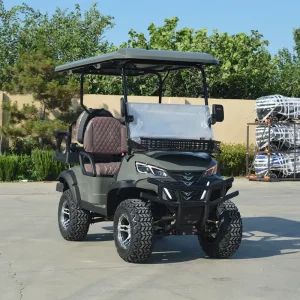
Industrial & Sightseeing Vehicles: Full Commercial Lineup
Explore our full line of OEM/ODM electric utility vehicles, high-capacity passenger shuttles, and solar-assisted resort carts ready for European export.


Equip Your Fleet with Direct Factory Engineering
Consult with our senior technical engineers for customized CAD chassis layouts, 72V lithium pack sizing, Hamburg Port delivery schedules, and wholesale pricing sheets.