
Bangkok Strategic Deployments: Core G70 Series
Engineered for five-star resorts along the Chao Phraya, golf estates in Pathum Thani, and heavy industrial compounds across the Eastern Economic Corridor (EEC).
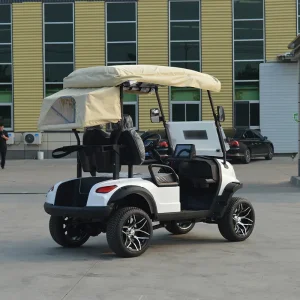
OEM Affordable 2 Seater Mini Sightseeing Car Golf Cart Electric Cars
- 48V/72V High Energy Density LiFePO4
- Compact 2.4m Turning Radius
- Marine Anti-Corrosion Undercoating
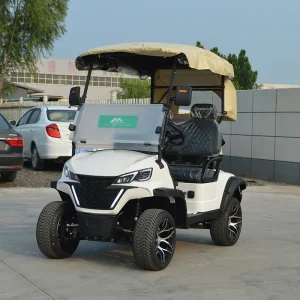
Factory Directly Supplies 2-Seater Electric Sightseeing & Club Cars
- 5.0 kW AC Induction High-Torque Motor
- 35 km/h Regulated Max Speed
- Regenerative Intelligent Braking
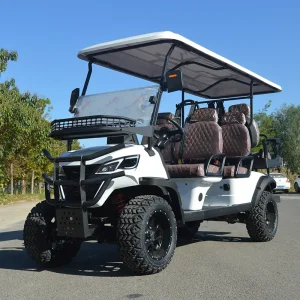
CE Approved 15-40km/H Low Speed Electric Buggy Golf Car
- Multi-Voltage 48V/72V Configuration
- MacPherson Independent Front Struts
- Integrated LED Lighting Architecture

Customized 72V Lithium 6-Seat Golf Buggy Factory Direct
- 105Ah LiFePO4 Smart CAN-BMS
- 30% Dynamic Gradeability
- Heavy-Duty Aluminum Ladder Frame
Bangkok & EEC Industrial Landscape: The G70 Imperative
Strategic analysis of the low-speed electric vehicle (LSV) market within the Greater Bangkok Metropolitan Region and the Eastern Economic Corridor.
The manufacturing and deployment landscape for light electric vehicles in Thailand has reached an unprecedented inflection point. As Bangkok accelerates its transition toward smart-city carbon neutrality under Thailand's National EV Policy Committee "30@30" roadmap, commercial facilities, international airport hubs (Suvarnabhumi and Don Mueang), luxury hospitality chains along the Chao Phraya, and manufacturing plants across Samut Prakan, Chonburi, and Rayong are executing complete fleet electrification programs. Within this macro shift, the G70 vehicle platform represents the benchmark standard for utility, resort shuttles, and light logistics operations.
Unlike standard recreational golf buggies designed exclusively for temperate lawn environments, industrial applications in Greater Bangkok require a fundamentally re-engineered powertrain. Bangkok's sub-tropical climate presents extreme operating parameters: continuous ambient temperatures exceeding 38°C, relative atmospheric humidity levels reaching 90% during the monsoon season, persistent road spray containing dissolved particulates, and prolonged duty cycles demanding uninterrupted uptime. Industrial operators in estates such as Amata City, Bangpoo Industrial Estate, and Lat Krabang cannot afford downtime induced by thermal battery throttling or lead-acid maintenance overhead.
Sourcing Channels & Bangkok Regional Supply Chain Dynamics
Procuring G70 vehicles in Bangkok generally follows two structural pathways: Tier-1 specialized local assembly utilizing semi-knocked-down (SKD) kits combined with local homologation, or direct primary factory supply chains backed by comprehensive enterprise warranties. The strategic alliance between high-output manufacturing centers in Dezhou and Bangkok distribution infrastructure enables institutional buyers to leverage state-of-the-art automated robotic welding, cathodic electrodeposition (e-coating), and precision powertrain dyno-testing while retaining local post-sale technical support, immediate parts dispatch, and regional service technicians.
Enterprises operating across Thailand's Eastern Seaboard utilize G70 platforms not merely as personal transport, but as mission-critical mobile infrastructure. From specialized maintenance configurations outfitted with hydraulic dump-beds to high-density 6- and 8-seat VIP passenger shuttles operating continuous 16-hour shifts between terminal complexes, the modern G70 architecture provides the deterministic reliability required by multinational asset managers.
Macro Powertrain Architecture: 48V Legacy vs. 72V Lithium Platforms
A technical assessment of energy density, duty-cycle thermal characteristics, and lifecycle economic yields for fleet directors.
The transition from traditional 48V deep-cycle flooded lead-acid (FLA) configurations to integrated 72V Lithium Iron Phosphate (LiFePO4) systems represents the single most significant advancement in commercial low-speed electric transport. In the intense ambient heat of Thailand, lead-acid systems suffer from accelerated water evaporation, terminal sulfation, significant voltage sag under climb conditions, and severe battery capacity degradation when exposed to temperatures exceeding 35°C.
By contrast, the 72V architecture implemented across the G70 series lowers the current requirement by approximately 33% for any given power output (P = V × I). Lower amperage drastically reduces the $I^2R$ resistive heating losses within the wiring harness, motor windings, and solid-state controller. Consequently, the powertrain runs substantially cooler, effectively eliminating the thermal shutdown events common in legacy buggies operating continuous midday routes across Bangkok's sprawling resort campuses.
| Engineering Attribute | Legacy 48V Lead-Acid System | Standard 48V Li-Ion Retrofit | G70 Commercial 72V LiFePO4 Platform |
|---|---|---|---|
| Pack Energy Density | 30 – 40 Wh/kg | 90 – 110 Wh/kg | 140 – 160 Wh/kg (Prismatic Cell) |
| Operating Thermal Threshold | Degrades rapidly >32°C | Moderate; BMS throttling >45°C | Stable -20°C to +60°C (Active Heat Sink) |
| Deep Discharge Cycles (80% DoD) | 500 – 700 Cycles | 1,500 – 2,000 Cycles | 3,500 – 5,000+ Full Cycles |
| Max Hill Climb (Full Load) | 15% – 18% (With Voltage Sag) | 20% (Brief Surge) | 28% – 32% Continuous Gradeability |
| Chassis Ingress Protection | IP54 Open Battery Well | IP65 Enclosed Box | IP67 Fully Sealed & Pressure Breather |
| Routine Maintenance | Weekly Distilled Water Top-ups | Terminal Inspection Monthly | Zero Maintenance / Smart CAN Telematics |
Tropical Environmental Hardening: Anti-Monsoon & Salt-Spray Resistance
Standard automotive finishes fail within 24 months when subjected to Bangkok's high sulfur-dioxide urban environment paired with seasonal tropical rainfall. The G70 manufacturing protocol incorporates a multi-stage structural defense process:
- Structural Chassis Pretreatment: High-tensile seamless tubular steel undergoes complete automated submersion through seven chemical baths, removing oils, scale, and surface oxides prior to zinc-phosphate conversion coating.
- Cathodic Electrodeposition (E-Coat): A 25-micron uniform epoxy layer is applied via 200V electrostatic immersion, ensuring 100% internal cavity penetration that surpasses 1,000 hours of continuous ASTM B117 salt spray testing.
- Monsoon Ingress Safeguards: All electrical terminal junctions are housed within IP67-rated waterproof connectors, with high-mount controller bays positioned 450mm above axle centers to facilitate clearance through typical urban flash-water accumulation during Bangkok downpours.
- UV-Resistant Polypropylene (PP) Body Cladding: Automotive-grade thermoplastic body panels utilize molded-in color pigments with proprietary UV stabilizers, preventing micro-crazing, fading, and brittleness under intense equatorial solar radiation.
Global Fleet Sourcing: Total Cost of Ownership (TCO) Economics
Quantifying financial efficiency, fleet telematics integration, and carbon abatement metrics for institutional asset managers.
5-Year CAPEX / OPEX Realization
While the initial acquisition cost of a 72V lithium G70 vehicle commands an 18-22% premium over obsolete lead-acid equivalents, operational parity is attained within 14 months of daily commercial operation through zero-battery replacements, 88% higher charging efficiency, and total elimination of battery maintenance personnel hours.
Fleet Telematics & CAN-Bus 2.0B
Every G70 unit natively supports cloud-integrated 4G GPS/CAN telematics modules. Fleet managers in Bangkok monitor state-of-charge (SoC), real-time battery cell balance voltages, GPS geofencing boundaries, driver speed infractions, and impact sensor alarms through a single unified enterprise dashboard.
ESG Verification & Carbon Offsets
Adopting zero-tailpipe emission G70 fleets generates verifiable ESG credits compliant with ISO 14064 GHG accounting principles. For hospitality corporations and airport logistics concessionaires, shifting 50 internal-combustion or lead-acid utility vehicles to 72V lithium G70 units eliminates over 142 metric tons of CO2 annually.
Thailand Regulatory Framework: TISI, BOI Incentives & Port Logistics
Essential guidance on importing, clearing, and operating low-speed electric vehicles within the Thai legal framework.
Navigating commercial procurement of LSVs in Thailand requires rigorous adherence to local statutory requirements managed by the Thai Industrial Standards Institute (TISI), the Department of Land Transport (DLT), and the Board of Investment (BOI). Understanding these parameters ensures smooth customs processing at Laem Chabang Port and Bangkok Port (Klong Toey).
Key Compliance Checkpoints for Fleet Directors:
- TISI Standardization (TIS 2214-2548 & Battery Standards): Industrial low-speed vehicles must demonstrate battery safety compliance under UN38.3 vibration, thermal shock, and short-circuit testing protocols. G70 lithium packs carry full international test certifications compatible with TISI inspection clearances.
- Private Land vs. Public Highway Classification: Under DLT regulations, standard low-speed golf buggies and sightseeing cars are strictly categorized for off-highway usage (private communities, industrial parks, ports, golf courses, and resort perimeters). For public-road micro-mobility shuttles, vehicles require DOT/CE lighting homologation, shatterproof laminated windshields, dual-circuit braking, and designated seatbelt assemblies.
- ASEAN-China Free Trade Area (ACFTA / Form E): Direct factory shipments of G70 vehicles manufactured under certified standards benefit from preferential tariff schedules under Form E documentation, significantly reducing duty structures compared to standard Western OEM imports.
- Bangkok Regional Service Hub: Technical support relies on structured parts availability. Core components—including Curtis/Inbol controllers, permanent-magnet synchronous motors (PMSM), master cylinders, and steering gearboxes—are stocked regionally to ensure 48-hour MTTR (Mean Time to Repair) across client sites in Bangkok.
Next-Generation G70 Architecture: Autonomy, Solar & V2G
The evolutionary trajectory of industrial micro-mobility platforms across Southeast Asia.
Drive-by-Wire & Level 4 Autonomy
The latest G70 chassis integrates full CAN-bus controlled drive-by-wire steering, braking, and throttle actuators. Partnering with robotics providers in Bangkok, G70 chassis are currently being deployed as autonomous baggage carriers, university transport pods, and automated night-patrol platforms equipped with solid-state LiDAR and RTK-GNSS positioning.
Integrated Monocrystalline Solar Roofs
Capitalizing on Thailand's annual solar irradiance of over 1,800 kWh/m², the G70 Solar series embeds high-efficiency (22.8%) monocrystalline PV panels into the structural roof canopy. The system continuously delivers up to 450W of auxiliary charging directly into the 72V pack, extending daily operating range by 18-25 km without grid connection.
Solid-State Batteries & V2G Capabilities
Field-testing is underway on semi-solid-state lithium cell configurations offering thermal stability up to 120°C and double the gravimetric energy density. Coupled with bidirectional onboard DC-AC inverters, upcoming G70 models will function as mobile emergency microgrids (Vehicle-to-Load/V2L) during disaster relief or power outages.
Bangkok Enterprise Fleet Series: Extended Models
Factory-direct configurations available for immediate production and export delivery to Bangkok and ASEAN distribution points.
72V Lithium 6 Seat Golf Buggy Factory Made for Comfort and Performance
- Dual-Rate Coilover Suspension
- 4-Wheel Hydraulic Disc Brakes

72V Modern 6-Seater Electric Golf Cart On-Road & Off-Road
- Raised 210mm Ground Clearance
- All-Terrain 23-Inch Radial Tires
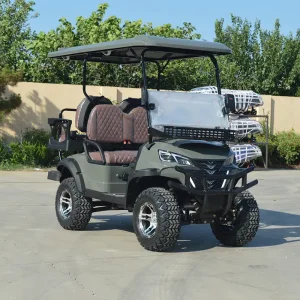
Compact 4 Seater Electric Golf Carts with Advanced Battery System
- Fold-Down Rear Cargo Deck
- Onboard High-Frequency Charger

Electric Golf Cart 4-Seated Sightseeing Bus Off-Road 72V
- Reinforced Steel Bull Bar Assembly
- 5.5kW AC Continuous Duty Motor
Versatile G70 Electric Sightseeing Vehicle 2-Seater Edition
- Modular Rear Utility Deck Mounting
- Ergonomic Marine-Grade Upholstery
4-Seater Electric Golf Cart Off-Road Adventure with Custom Battery
- Reinforced Roll-Cage Framing
- 12-Inch Machined Alloy Wheels
Affordable 2 Seater Mini Sightseeing Car Compact Micro-EV
- Ultra-Light Curb Weight (<480kg)
- Fast Direct-Plug 3.3kW Charging
ODM Low-Speed Electric Golf Car CE Approved G70-4+2 Model
- Forward + Flip-Over Rear Seating
- 40 km/h Programmable Top Speed
Frequently Asked Questions: G70 Fleet Procurement
Authoritative answers addressing engineering parameters, delivery timelines, customs clearance, and Bangkok regional operations.
What is the standard lead time for volume G70 orders shipped to Bangkok?
Standard industrial fleet production runs (10–50 units) require 15 to 20 business days from engineering sign-off to factory crating. Maritime transit from Qingdao/Tianjin ports directly to Laem Chabang or Bangkok Modern Terminal (BMT) typically requires 10 to 14 days, followed by 3 to 5 business days for customs clearance and destination uncrating.
Can G70 electric vehicles be customized with specialized commercial utility beds?
Yes. G70 vehicles are manufactured on an adaptable ladder-frame chassis. We offer factory-engineered aluminum cargo boxes, hydraulic tipping beds, food-service insulated containers, ambulance/first-aid stretchers, and security patrol lightbars directly integrated during the primary assembly stage.
How does the 72V LiFePO4 battery perform under Bangkok's high ambient heat?
Our lithium battery packs utilize grade-A prismatic LiFePO4 cells with high chemical decomposition thresholds (>270°C). Each pack is managed by a CAN-connected Battery Management System (BMS) with multi-point temperature sensors, automatic over-temperature throttling at 55°C, and aluminum heat-sink enclosures tailored for continuous tropical operation.
What documentation is provided to support Thailand customs clearance?
Every export shipment is accompanied by a complete commercial dossier, including the original Bill of Lading, Commercial Invoice, Packing List, Certificate of Origin (Form E for duty exemption under ACFTA), UN38.3 Lithium Battery Safety Report, MSDS, and factory CE Compliance Certificates.
What is the expected operating lifespan of the G70 structural frame?
The G70 high-strength steel chassis features automated submerged e-coating combined with powder coating. In tropical outdoor resort environments, this structural anti-corrosion barrier provides an engineered design life of over 10 years, supported by a 5-year primary chassis warranty.
How are warranty claims and replacement spare parts handled in Thailand?
Critical wear items (brake pads, steering tie-rods, suspension bushings, electronic relays) are maintained in our regional supply hub. High-level diagnostic issues are supported via direct video link with factory engineers, and replacement modules are air-freighted via DHL within 48 to 72 hours under warranty coverage.
Equip Your Bangkok Enterprise Fleet with G70 Precision
Consult with our lead powertrain engineers to receive tailored fleet CAD layouts, custom payload schematics, lifecycle ROI models, and direct factory export quotations.