
Featured British Commercial & Golf Deployments
Engineered for high-duty cycle resort operations, commercial campuses, and undulating parklands across England, Scotland, Wales, and Northern Ireland.

Wholesale 72V AC Mini Electric Golf Cart Buggy Gold Color 4-Seat Golf Cart with Lithium Battery CE Certified and Tail Caddie Equipment Factory, Factories
Explore UK Fleet Specs →
Cheap 72V New Style Modern Fashion 6 Seat Golf Cart Electric Golf Buggy Manufacturers, Supplier
Explore UK Fleet Specs →
Wholesale Electric Golf Cart 4seated Golf Buggy Sightseeing Bus off-Road 72vgolf Cart Manufacturers, Factory
Explore UK Fleet Specs →
Wholesale Wholesale 6 Seat Electric Golf Carts from China Suppliers - Customized 72V Lithium Golf Buggy Factory Direct Supplier, Suppliers
Explore UK Fleet Specs →Quantitative Fleet Performance Benchmarks
Realized metrics across estate operations, port logistics, and multi-passenger links under rigorous UK operating cycles.
1. UK Market Dynamics & Commercial Landscape Analysis
The market for light electric utility vehicles and golf fleet solutions across the United Kingdom is experiencing an unprecedented structural transition. Propelled by the UK Government's Net Zero Strategy, the tightening of clean air zones (CAZ) in metropolitan hubs, and the ESG (Environmental, Social, and Governance) mandates governing Tier-1 leisure corporations, the legacy reliance on petrol-driven and heavy lead-acid carts is no longer economically viable. Operating estates, prestigious golf links in St Andrews, Surrey, and Cheshire, alongside high-density distribution complexes such as the Golden Triangle logistics corridor, face intensifying cost pressures regarding carbon taxation, fuel storage compliance, and recurring maintenance overheads.
In this evolving commercial landscape, the G80 platform acts as an engineered operational bridge. United Kingdom buyers are discerning: the damp maritime climate, variable temperature swings, aggressive salt-fog coastal corridors, and challenging topography require a low-speed vehicle chassis engineered far beyond standard resort transport. Sourcing from a factory-direct G80 supplier ensures that British fleet managers eliminate cascading distributor markups while securing granular customization over electronic powertrain controllers, sealed lithium-iron phosphate battery chemistries, and structural rust-preventative cathodic dip-coatings.
2. Macro Engineering Solutions & Systemic Decarbonisation
From a macro-engineering perspective, fleet decarbonisation cannot simply substitute internal combustion engines with basic DC battery circuits. The G80 modular architecture represents an integrated systems solution. Operating on high-efficiency 72V alternating current (AC) induction drive systems, the platform minimizes I²R thermal dissipation throughout the cabling harness, ensuring maximum energy recovery via regenerative electronic braking (E-Braking).
This energy regeneration capability is essential across Britain’s undulating terrain, such as the Scottish Highlands or Welsh parklands, where descents automatically replenish the onboard lithium pack instead of wearing out mechanical brake linings. The macro integration of intelligent Battery Management Systems (BMS) with CAN-bus communication telematics offers commercial operators centralized diagnostic visibility. Fleet operators can remotely audit State of Charge (SoC), thermal profiles, preventative cell balancing metrics, and geospatial parameters across thousands of deployed units in real time.
| Engineering Vector | Traditional Legacy Vehicles | G80 72V Engineering Architecture | British Fleet Strategic Value |
|---|---|---|---|
| Powertrain Potential | 48V DC Shunt-Wound | 72V AC Induction / Permanent Magnet | +38% High-End Torque Margin |
| Energy Density | Flooded Lead-Acid (Deep Cycle) | Automotive LiFePO4 Chemistry | Zero Maintenance, -60% Net Weight |
| Chassis Treatment | Standard Spray Primer | Hot-Dip Galvanized & Cathodic Electrocoating | Withstands UK Road Salt & Rain |
| Braking Architecture | Drum Mechanical Friction | 4-Wheel Hydraulic Disc + Electro-Regenerative | Superior Wet Stopping Distance |
3. Global Sourcing Evolution & Supply Chain Resilience
On the international stage, the supply chain for low-speed electric transport has transitioned decisively from small-scale regional fabricators to consolidated advanced manufacturing centers. Historically, British enterprises relied heavily on domestic assembly lines that imported third-party components from fragmented sub-tier vendors, inflating procurement lead times and multiplying spare-parts obsolescence risks.
Today, Tier-1 manufacturing facilities like Leibin’s 13,000 m² smart production base integrate the entire lifecycle: robotic structural welding, automated powder application lines, harness production, dynamometer testing, and precision containerized export logistics. By establishing a direct, unmediated procurement channel with a specialized G80 supplier, UK fleet buyers insulate their operations against third-party distributor insolvencies, volatile logistics markups, and component supply mismatches.
4. Localized British Support, UKCA Compliance & Standards
Deploying low-speed electric vehicles within the UK demands precise compliance with domestic regulatory and safety frameworks. Following post-Brexit transitions, compliance is anchored on the UKCA (UK Conformity Assessed) framework alongside existing retained CE harmonization standards:
Statutory Safety Compliance: All G80 units are pre-engineered to conform with electromagnetic compatibility regulations, low-voltage safety directives (Machinery Directive 2006/42/EC and equivalent UK statutory instruments), and BS EN ISO 12100 risk mitigation mandates. When specified for road-adjacent municipal operations or registered transport under the DVLA as light quadricycles (L7e/L6e classifications), configurations are adapted with UK-standard homologation packages: E-marked automotive shatterproof glass windscreens, dynamic wiper assemblies, twin rear-view mirrors, dynamic LED indicator groupings, daytime running lights (DRL), dual-circuit brake systems, and integrated speed limiters conforming strictly to British regional road safety bylaws.
Weatherproofing for the UK Climate: Standard golf carts designed for arid climates frequently succumb to electrical harness oxidation and controller burnouts in British downpours. The G80 platform counters this vulnerability through IP67-rated waterproof wire harnesses, marine-grade Deutsch multi-pin connectors, and hermetically sealed Curtis/Enpower AC controllers protected within weather-shielded bulkheads.
5. British Commercial Application Scenarios
Championship Golf & Country Clubs: Across undulating courses in Surrey, Kent, and the Scottish links, the G80 delivers the high low-end torque required to effortlessly scale gradients over 30% while carrying four passengers, complete golf kits, and caddie equipment. The high-displacement turf tires and balanced multi-link coil-over-strut suspension distribute axle weight evenly, mitigating soil compaction and preserving manicured turf.
Historic Estates & Luxury Hospitality: British heritage estates, National Trust locations, and luxury boutique hotels rely on the G80 6-seat variants for discrete, near-silent guest movement. Operating at below 52 dB(A), the vehicles preserve the quiet ambiance of historical properties while lowering operational costs compared to diesel estate vehicles.
Industrial, Logistics & Civil Infrastructure: In industrial operations such as the Port of Felixstowe, intermodal logistics depots, and healthcare complexes across the NHS, the G80 flatbed utility iterations serve as robust light cargo movers. They handle tools, maintenance personnel, and internal freight runs without contributing tailpipe emissions inside indoor or semi-enclosed facilities.
6. Technological Roadmap & Future Outlook (2025–2030)
The technological roadmap for the G80 product matrix focuses on three core domains: energy storage integration, telemetry-driven autonomous safety, and sustainable manufacturing practices:
Solid-State Battery Architectures: Looking toward 2026, research and development pipelines are actively validating semi-solid-state lithium cells. These packs promise up to 40% higher volumetric energy density, wider operational temperature tolerances (eliminating thermal degradation down to -25°C), and enhanced cell safety under high-impact conditions.
Advanced Driver Assistance Systems (ADAS) & Geofencing: Next-generation G80 platforms integrate RTK-level GPS modules paired with forward-facing stereoscopic LiDAR sensors. This architecture allows UK fleet directors to enforce geofenced speed restrictions around pedestrian pathways, prevent rollovers on excessive inclines, and coordinate fully automated return-to-base charging protocols during off-peak hours.
Cradle-to-Cradle Recyclability: In response to the UK Waste Electrical and Electronic Equipment (WEEE) regulations and End-of-Life Vehicles (ELV) frameworks, future chassis designs utilize recyclable aluminum alloy structures and non-halogenated polymer body moldings, delivering low cradle-to-grave carbon impacts.
Complete Commercial & Utility Fleet Series
Review the comprehensive selection of multi-seat and utility models designed for international markets and British fleet import requirements.
China Wholesale 6 Seat Electric Golf Carts, 72V Lithium Customized Comfortable 4 Seat Electric Golf Buggy Supplier, Suppliers
Review Technical Data →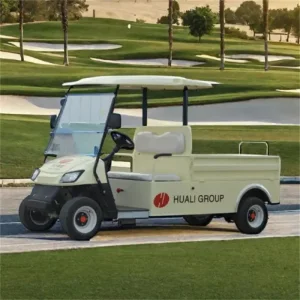
Cheap Cargo Electric Utility off Road Truck Golf Cart 48V Utility Gulf Cart Electric Golf Car Suppliers, Factory
Review Technical Data →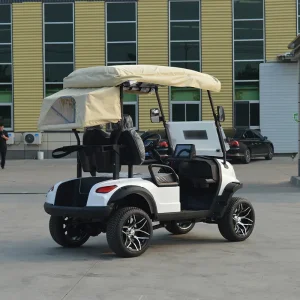
China Affordable Electric 2 Seater Mini Sightseeing Car Golf Cart from China Suppliers and Factory Supplier, Factories
Review Technical Data →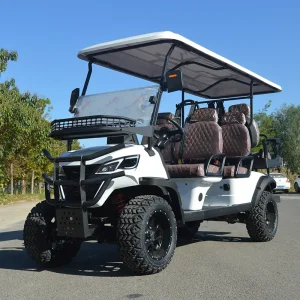
Best Electric Cars Buggy Golf Beemotors Supply CE Approved 15-40km/H Low Speed Electric Buggy Golf Car Manufacturers, Factories
Review Technical Data →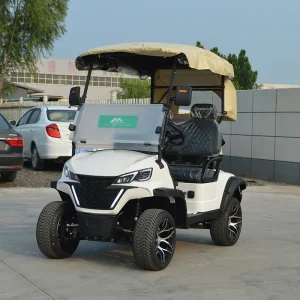
Best The Factory Directly Supplies 2-Seater Electric Sightseeing Cars, Golf Carts, Club Cars and Vans for Sale Manufacturers, Manufacturer
Review Technical Data →
Wholesale 72V AC Mini Electric Golf Cart Buggy Gold Color 4-Seat Golf Cart with Lithium Battery CE Certified and Tail Caddie Equipment Factory, Factories
Review Technical Data →
ODM Wholesale 6 Seat Electric Golf Carts - 72V Lithium, Customized Comfort from China Suppliers and Factory Supplier, Factory
Review Technical Data →
OEM Affordable 2 Seater Mini Sightseeing Car Golf Cart Electric Cars Manufacturer, Suppliers
Review Technical Data →Frequently Asked Questions for UK Sourcing
Direct technical and commercial insights for British procurement teams and fleet directors.